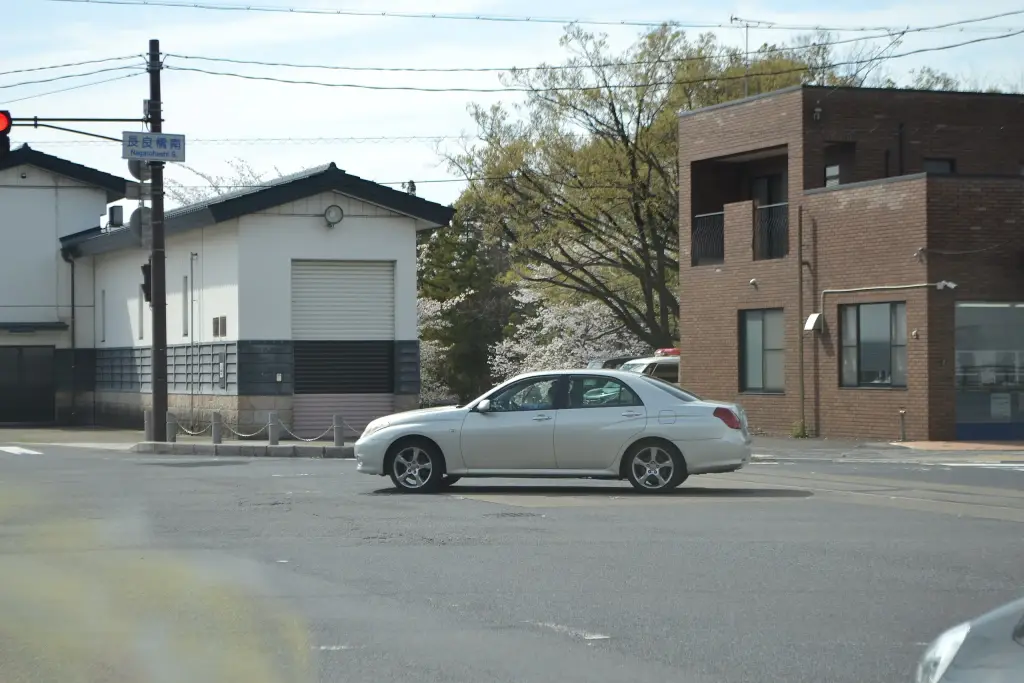
The Toyota Verossa was a mid-size saloon produced for Japan from June 2001 to April 2004 and sold exclusively at Netz Store as a smaller companion to the Aristo. It replaced the Chaser and Cresta, combining the Chaser’s sporting side with the Cresta’s luxury, and it was larger than the Altezza that had debuted in 1998.
Toyota Verossa at a glance
| Maker | Toyota |
|---|---|
| Production | June 2001 – April 2004 |
| Market | Japan |
| Class | Mid-size saloon |
| Layout | Front engine, rear- or four-wheel drive |
| Engines | 2.0, 2.5 and turbocharged 2.5-litre straight-six |
| Top version | VR25 with 280 PS |
| Gearboxes | Four- or five-speed automatic, five-speed manual on the VR25 |
| Sold through | Netz Store |
| Replaced | Chaser and Cresta |
| Name | From the Italian vero and rosso |
Based on one source: the English Wikipedia article on the Toyota Verossa.
History of the Toyota Verossa
Place in the range
The Verossa arrived in June 2001, launched alongside the Toyopet Store Progrès and the Toyota Store Brevis. It exceeded Japanese dimension and engine-size rules, so it fell into the larger tax class, and it offered a rear-wheel-drive platform at a time when the 2001–2006 Camry of similar size was front-wheel drive. Unlike the Camry it could also be ordered with four-wheel drive. It shared its “X” chassis code with the Mark II, Chaser and Cresta it replaced, and it was sold only through Netz Store as the smaller companion to the Aristo. The name is coined from the Italian words vero, meaning true, and rosso, meaning red.
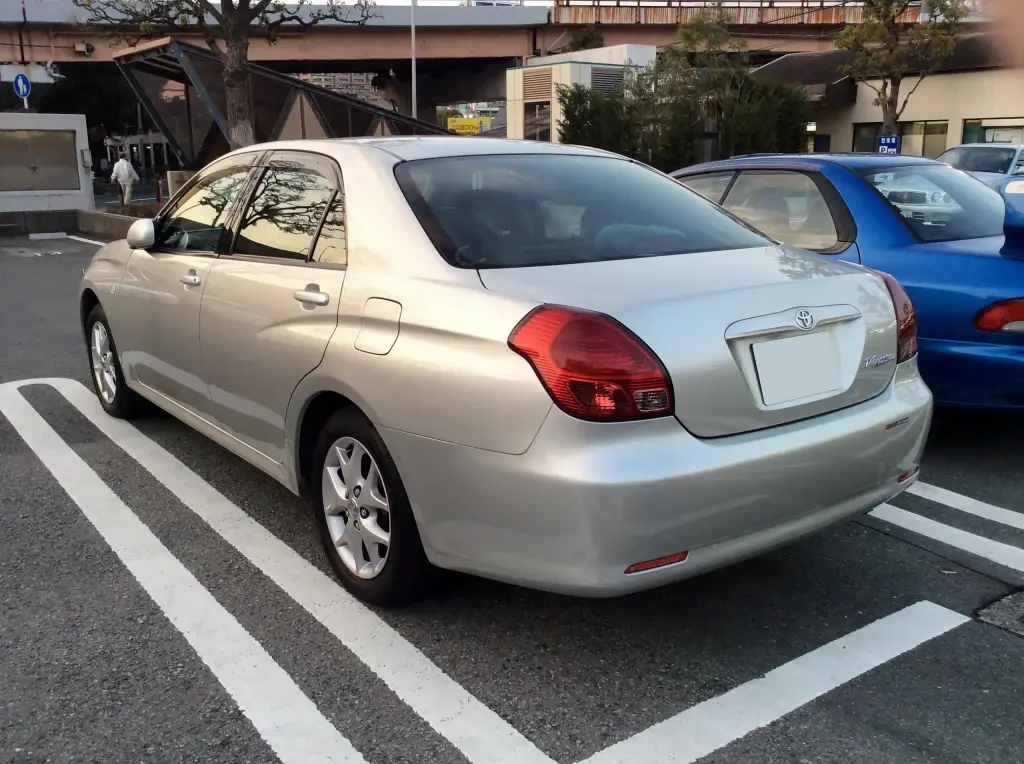
Trim levels
The Verossa came in six trims with three six-cylinder engines. The entry-level 20 used the 1G-FE of 160 hp and 200 N·m with a four-speed automatic, while the 20Four and 20Four G Package added full-time All-Trac four-wheel drive, the G package bringing alloy wheels and leather seats. The 25 and V25 used the direct-injection 1JZ-FSE of 197 hp and 250 N·m with a five-speed automatic; the more upmarket V25 added a rear stabiliser bar, 17-inch wheels and optional leather. The VR25 was a throwback to the Tourer V versions of its predecessors, with the single-turbo 1JZ-GTE of 276 hp and 377 N·m, a five-speed manual or the four-speed automatic, a standard limited-slip differential, front and rear strut-tower bars, 17-inch wheels and optional leather and spoilers. Buyers could choose between engine sizes to set their annual road tax, with larger engines bringing more standard equipment.
The end
The Verossa had a short life: production stopped in April 2004 because of poor sales. It was the last of its line, since the Mark II evolved into the Mark X while the Chaser and Cresta had already been merged into this car. Its combination of a rear-wheel-drive saloon platform with turbocharged straight-six power made it popular with enthusiasts in Japan, where it remains a favourite for drifting and tuning.
Design and features
- Chaser and Cresta successor: one car replacing two saloon lines.
- Rear-wheel drive: a platform shared with the Mark II family, with four-wheel drive available.
- Turbo VR25: a 280 PS 1JZ-GTE with a limited-slip differential.
- Engine choice for tax: 2.0, 2.5 and turbocharged 2.5-litre straight-sixes.
Toyota Verossa versions
- 20 (2001): 1G-FE engine of 160 hp with a four-speed automatic.
- 20Four and 20Four G Package: four-wheel drive versions.
- 25 (2001): 1JZ-FSE direct-injection engine with a five-speed automatic.
- V25: upmarket version with 17-inch wheels and a rear stabiliser bar.
- VR25: turbocharged 1JZ-GTE with manual or automatic and an LSD.
The Verossa replaced the Chaser and Cresta and sat below the Aristo. Its siblings were the Progrès and Brevis, and more cars are in the Toyota collection.
Sources
- Toyota Verossa, English Wikipedia: position, trim levels, engines