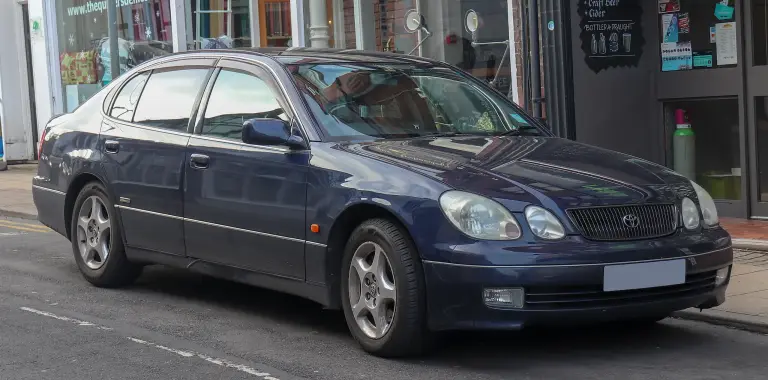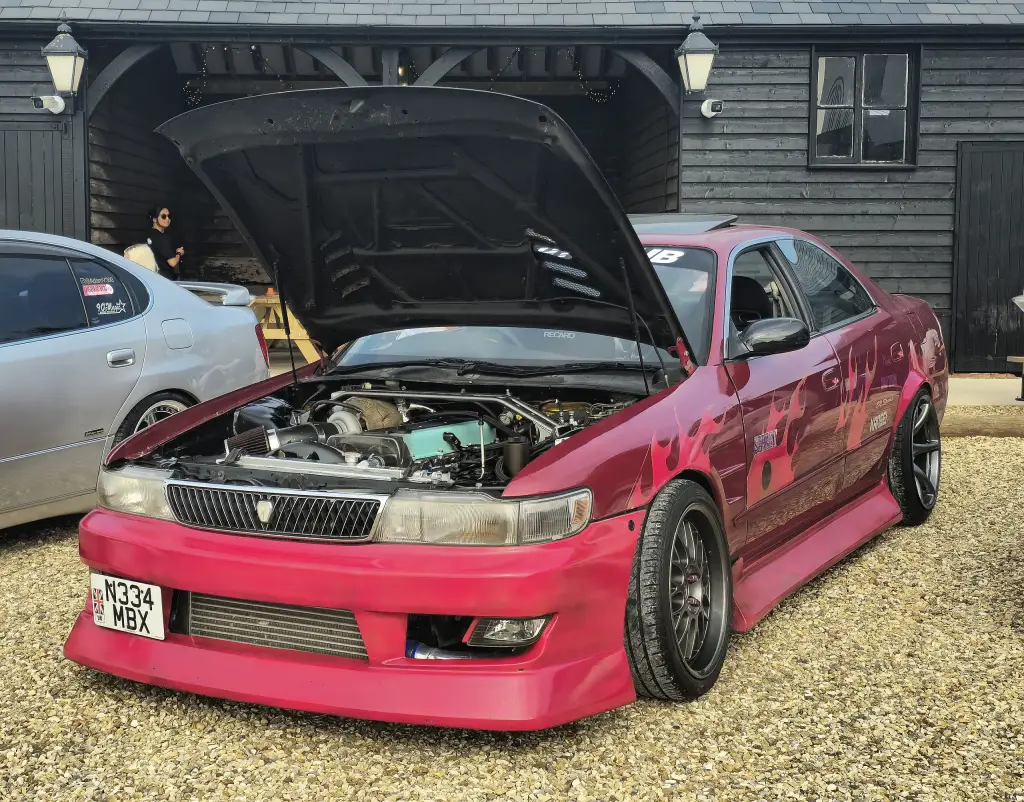
The Toyota Chaser was a mid-size saloon produced from 1977 to 2001 across six generations. It was one of Toyota’s “triplet sedans” — with the Mark II and the Cresta, the same basic car sold through different Japanese dealer channels — and it carried the sportiest image of the three.
Toyota Chaser at a glance
| Maker | Toyota |
|---|---|
| Production | July 1977 – 2001 |
| Generations | Six |
| Class | Mid-size saloon |
| Platform | Toyota Mark II |
| Sold through | Toyota Auto Store, Japan |
| First generation | X30/X40, 1977–1980 |
| Second generation | X60, 1980–1984 |
| Body styles | Four-door saloon and hardtop; two-door only in the first generation |
| Replaced by | Toyota Verossa |
| Top grade | Avante, from 1980 |
Based on one source: the English Wikipedia article on the Toyota Chaser.
History of the Toyota Chaser
First generation (X30/X40; 1977)
The Chaser was first produced in July 1977 and evolved from the X20 Mark II GSS hardtop coupe. It was a lightly redesigned Mark II with a wider grille, no parking lights, different taillights and rectangular rather than round instruments. There were no estates or commercial versions, and this was the only Chaser offered as a two-door; after it, the coupe role passed to the Soarer. To keep the tax bill low, the car stayed within 2,000 cc and under 4.7 m long and 1.7 m wide, with 1.8- and 2.0-litre fours and 2.0-litre six-cylinder M-U and M-EU engines. The M-EU was Toyota’s first engine able to meet the 1978 emissions standards. Front suspension was by MacPherson struts, the rear by a four-link arrangement or, in top versions, independent semi-trailing arms with disc brakes all round. The separate chassis was abandoned for unitary construction with crumple zones.
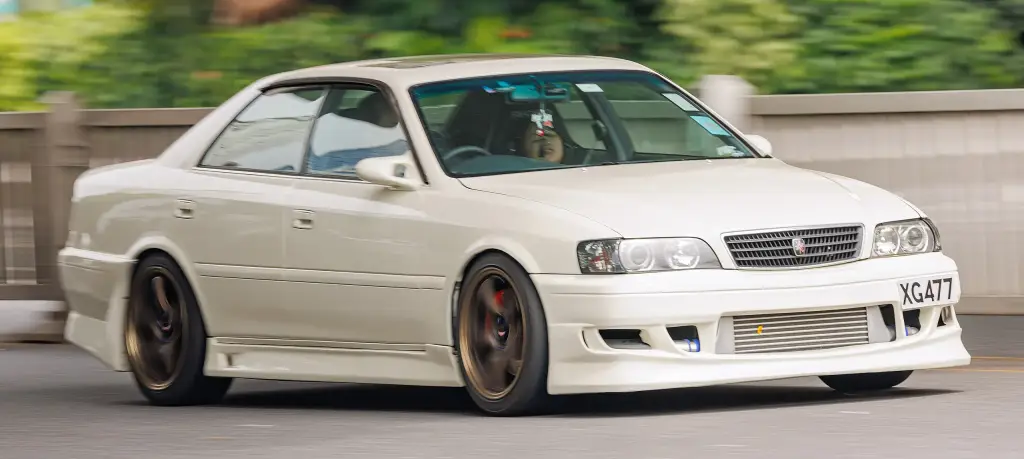
Second generation (X60; 1980)
The X60 Chaser went on sale in October 1980 with a new 2.0-litre six-cylinder 1G-EU engine and a 2.2-litre four-cylinder diesel. It was offered as a four-door saloon or a four-door pillared hardtop, the two-door having been replaced by the Soarer. The top trim, Avante, was introduced with this generation and lasted until the end of Chaser production in 2001; the name is Latin for going forward or leading. The interior was cloth only, with a power-adjustable driver’s seat with lumbar support, a fold-down rear armrest and a 60/40 split rear seatback. Each trim had seven exterior colours, one of them two-tone.
Place in the range
The Chaser sat a class below the Crown and shared its platform with the Mark II and Cresta, but it was the one tuned for drivers rather than passengers. Its reputation grew with each generation as engine sizes and turbocharging increased, although Toyota never installed a V6. Production ended in 2001, when the Chaser and Cresta were together replaced by the short-lived Verossa.
Design and features
- Triplet saloons: the same basic car as the Mark II and Cresta, sold through different dealer chains.
- Sporty image: the driver-focused member of the trio, a class below the Crown.
- Avante grade: the top trim from 1980 until the end of production.
- Six generations: growing engines and more equipment with each series.
Toyota Chaser versions
- X30/X40 (1977): first generation, the only one with a two-door coupe.
- X60 (1980): second generation with the 1G-EU six and a diesel option.
- Avante: the luxury-sport trim introduced in 1980.
- Later generations: four further series until 2001.
The Chaser shared its platform with the Mark II and Cresta, and its coupe role passed to the Soarer. More cars are in the Toyota collection.
Sources
- Toyota Chaser, English Wikipedia: generations, engines, trims