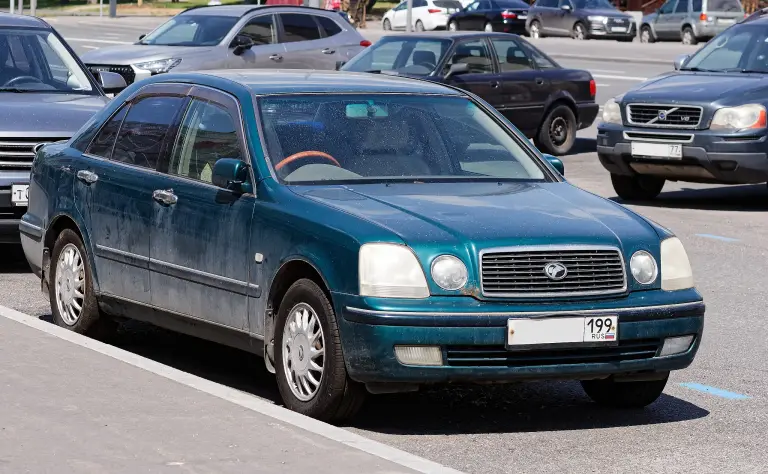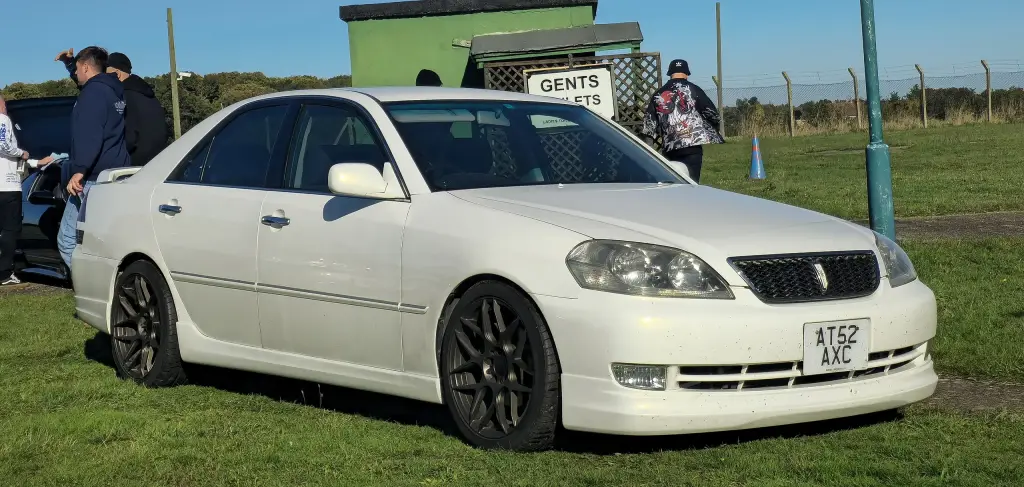
The Toyota Mark II was a compact, later mid-size saloon produced in Japan between 1968 and 2004. Until 1972 it was sold as the Toyota Corona Mark II, and in most export markets it was called the Toyota Cressida from 1976 to 1992.
Toyota Mark II at a glance
| Maker | Toyota |
|---|---|
| Production | September 1968 – 2004 |
| First name | Toyota Corona Mark II |
| Export name | Toyota Cressida, 1976–1992 |
| Class | Compact, later mid-size saloon |
| Layout | Front engine, rear-wheel drive |
| First generation | T60 saloon, T70 coupe |
| Sold through | Toyopet Store, Japan |
| Successor | Toyota Mark X |
| Built in | Motomachi, then Miyata, Aichi |
Based on one source: the English Wikipedia article on the Toyota Mark II.
History of the Toyota Mark II
First generation (T60/T70; 1968)
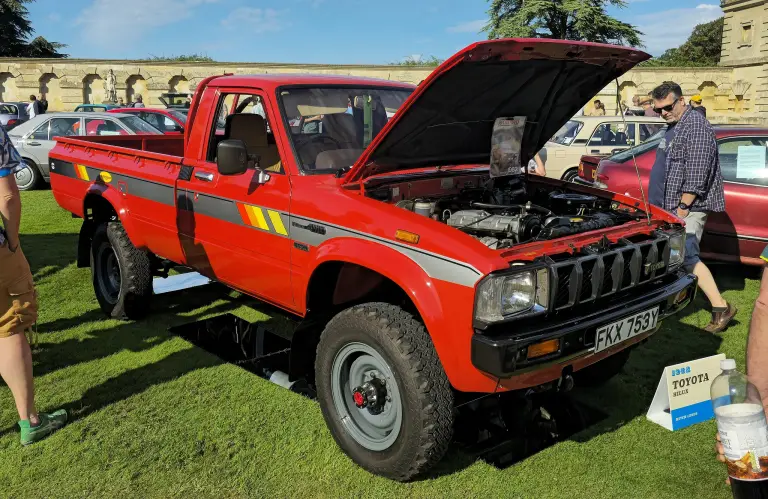
The Corona Mark II went on sale in Japan in September 1968 at Toyopet Store, as an alternative to the Crown and a larger, better-equipped companion to the Corona. It shared the Corona platform but was slightly larger and wider, and took the top position at Toyopet Store. At launch it was third in Toyota’s saloon hierarchy, below the Crown and the hand-built V8 Century, and its main rival was the Nissan Laurel. Trims ran from Mark II to Mark II Deluxe, 1900 Deluxe and the top SL. The four-door saloon was the T60 and the two-door coupe the T70. Engines included the 1.6-litre 7R and 12R, the 1.9-litre 8R and the 2.0-litre 18R, all four-cylinders, kept below the 2,000 cc tax bracket to limit annual road tax. It was the only series offered as a two-door pickup, including a double-cab version. Front suspension used double wishbones with coil springs and the rear leaf springs, and every body style shared a 2,510 mm wheelbase.
Growth and the Cressida
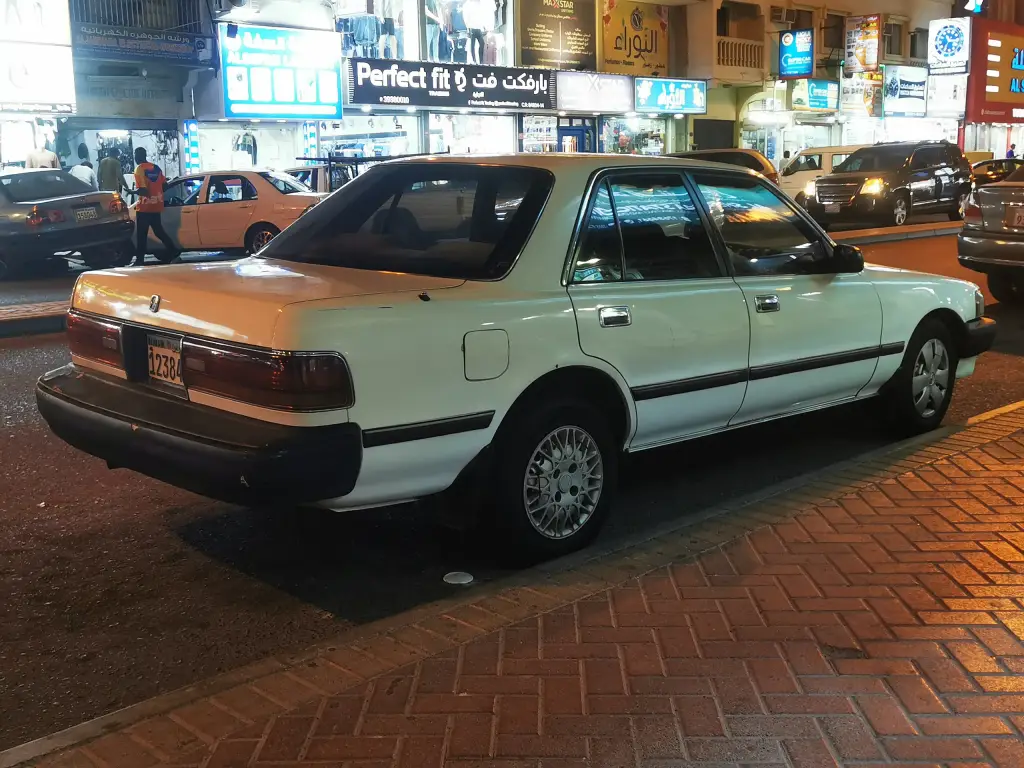
Every Mark II and Cressida was built at Toyota’s Motomachi plant from September 1968 to October 1993 and later at Miyata in Kyushu until October 2000, with some cars assembled in Jakarta and Parañaque as the Cressida. Its size, ride and interior ranged from affordable to luxurious, and in markets without the Crown it was Toyota’s most luxurious offering. Vans and fleet versions were gradually dropped, taxi production ending in 1995 and the Mark II Van in 1997. In Japan the sportier Chaser appeared in 1977 at Toyota Auto Store and the Cresta in 1980 at Vista Store, and the Mark II’s popularity peaked in the 1980s. The last three generations were four-door saloons for private buyers only.
The end
The Mark II evolved into the Mark X, named for the tenth generation. The Chaser and Cresta were discontinued because of declining sales after the Japanese recession of the early 1990s and were combined into the short-lived Verossa, while the Mark X continued in Japan and selected markets until 2019, when falling demand for saloons and the rise of SUVs and crossovers ended the line.
Design and features
- Corona Mark II: larger than the Corona, below the Crown, the top car at Toyopet Store.
- Cressida: the name used in most export markets from 1976 to 1992.
- Tax-aware engines: kept under two litres to limit Japanese road tax.
- Pickup: the only Mark II generation offered as a two-door commercial pickup.
Toyota Mark II versions
- T60 saloon (1968): first generation four-door.
- T70 coupe (1968): two-door hardtop.
- Mark II pickup: two-door commercial version, also as a double cab.
- Cressida (1976): the export name for the Mark II.
- Mark X (2004): the tenth-generation successor.
The Mark II was the sister of the Chaser and Cresta, and its export name was the Cressida, later replaced by the Avalon in America. More cars are in the Toyota collection.
Sources
- Toyota Mark II, English Wikipedia: history, generations, exports