The Toyota Celica was produced from 1970 to 2006 across seven generations, and its name comes from the Latin coelica, meaning heavenly or celestial. It was sold only through Toyota Corolla Store dealers in Japan, and its body styles ranged from notchback coupes to liftbacks and convertibles.
Toyota Celica at a glance
| Maker | Toyota |
|---|---|
| Production | 1970–2006 |
| Generations | Seven |
| First model | A20/A30, from December 1970 |
| Body styles | Coupe, liftback, convertible |
| Drive | Rear-wheel drive until 1985, front-wheel drive after |
| Four-wheel drive | Turbocharged GT-Four, 1986–1999 |
| Engine types | Four-cylinder, from 1.4 to 2.2 litres |
| Sold through | Toyota Corolla Store, Japan |
| Name | From the Latin coelica, “heavenly” |
Based on one source: the English Wikipedia article on the Toyota Celica.
History of the Toyota Celica
First generation (A20/A30; 1970)
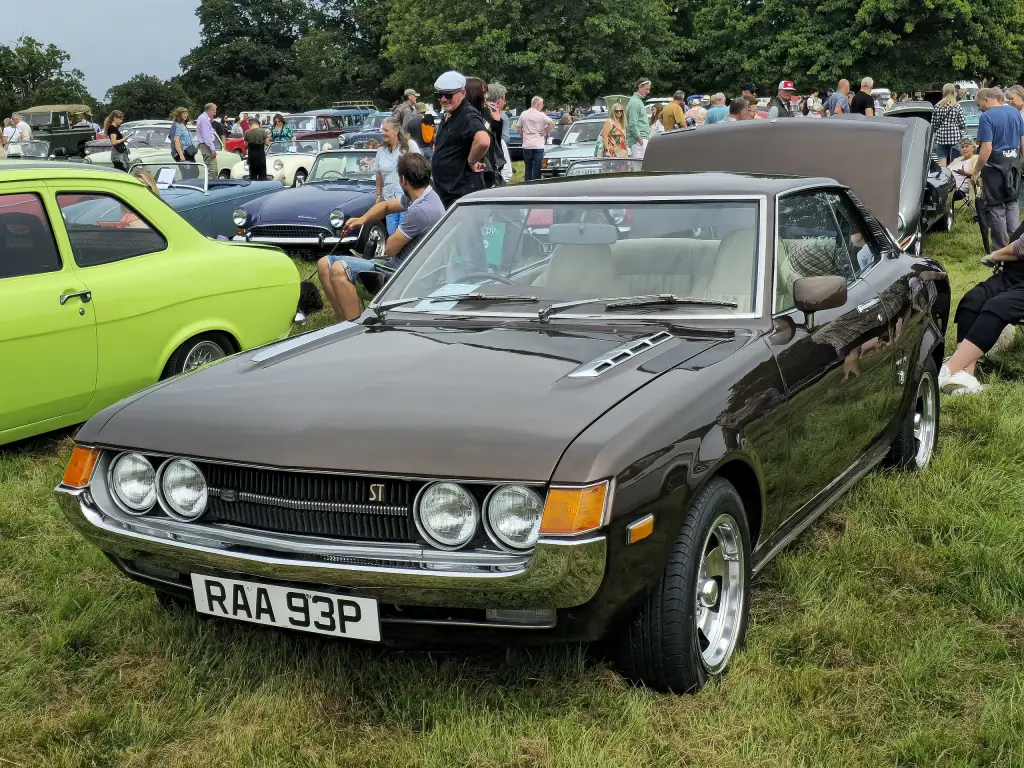
The Celica was shown at the Tokyo Motor Show in October 1970 and went on sale in December as a two-door hardtop coupe, based on a platform shared with the Carina saloon. It was Toyota’s answer to the Ford Mustang: a coupe body on the mechanicals of a high-volume saloon. Japanese trims were ET with a 1.4-litre engine, LT and ST with a 1.6, and GT with a 1.6-litre twin-cam and a five-speed gearbox; the GTV arrived in 1972 with a firmer set-up and less interior equipment. A prototype liftback, the SV-1, was shown in 1971 and the production Celica Liftback followed in April 1973 with 1.6- and 2.0-litre engines. Toyota coined the word “liftback” in 1973 to describe this fastback hatchback, and the GT Liftback reached North America for 1976. The 1974 facelift brought a flatter nose and a slightly longer wheelbase.
The Supra branches off
In 1978 Toyota added a restyled six-cylinder variant called the Celica Supra, known in Japan as the Celica XX. It became a separate model, simply the Supra, in 1986. Lightly altered Celicas were also sold as the Corona Coupe through Toyopet dealers from 1985 to 1989 and as the Toyota Curren through Vista dealers from 1994 to 1998.
Front-wheel drive and rallying
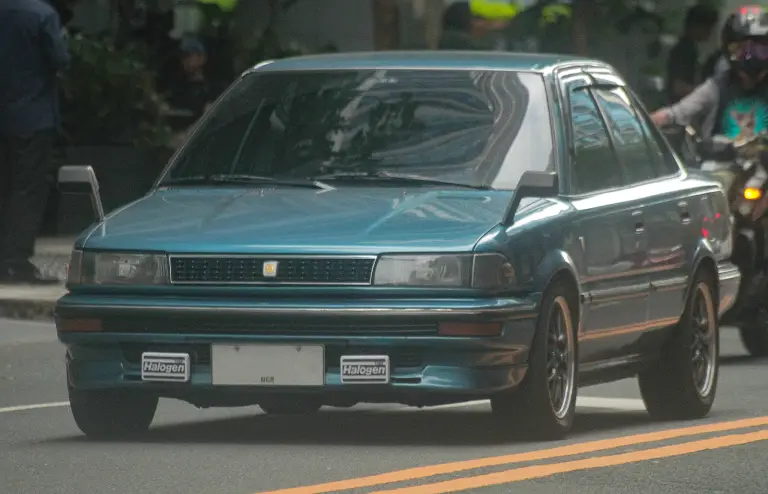
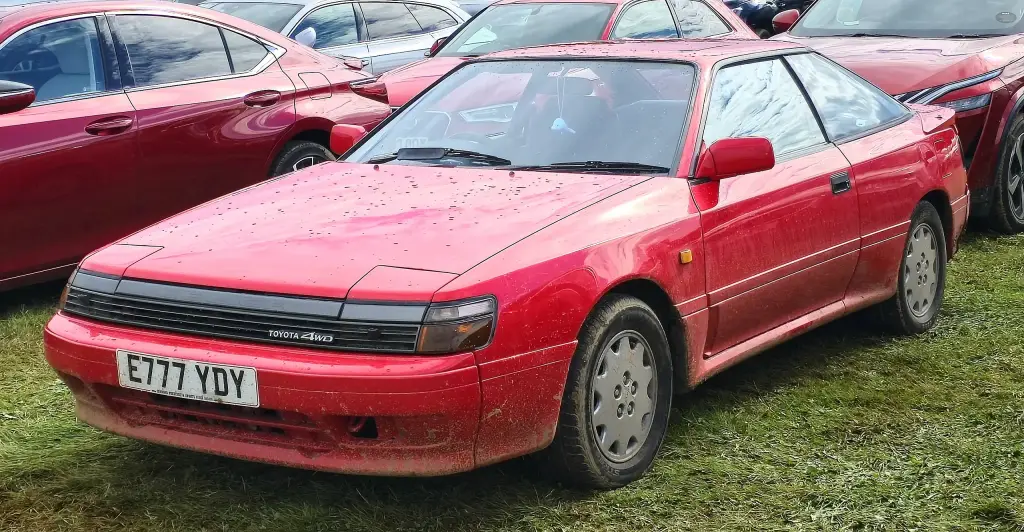
In August 1985 the Celica changed from rear-wheel drive to front-wheel drive. All-wheel-drive turbocharged models were built from October 1986 to June 1999, giving Toyota a rally contender in the GT-Four. Variable valve timing appeared on some Japanese models from December 1997 and became standard across the range for 2000. The Celica remained a four-cylinder car throughout its life, and production ended in 2006 after seven generations.
Design and features
- Pony-car origins: a coupe body on the Carina saloon’s platform, aimed at the Mustang.
- Liftback: Toyota coined the term for the 1973 fastback hatchback.
- GT-Four: all-wheel-drive turbocharged versions built from 1986 to 1999.
- Supra connection: the six-cylinder Celica Supra became the separate Supra in 1986.
Toyota Celica versions
- ET, LT, ST, GT (1970): the original coupe range, from 1.4 to 1.6 litres.
- GTV (1972): lighter, stiffer sports version.
- Liftback (1973): fastback body with 1.6- and 2.0-litre engines.
- Celica Supra (1978): six-cylinder variant, separate Supra from 1986.
- GT-Four (1986): all-wheel-drive turbocharged rally model.
- Corona Coupe and Curren: lightly altered Celicas sold through other dealer chains.
The Celica shared its early platform with the Carina, spawned the Supra and was sold alongside the Curren. More cars are in the Toyota collection.
Sources
- Toyota Celica, English Wikipedia: generations, engines, history