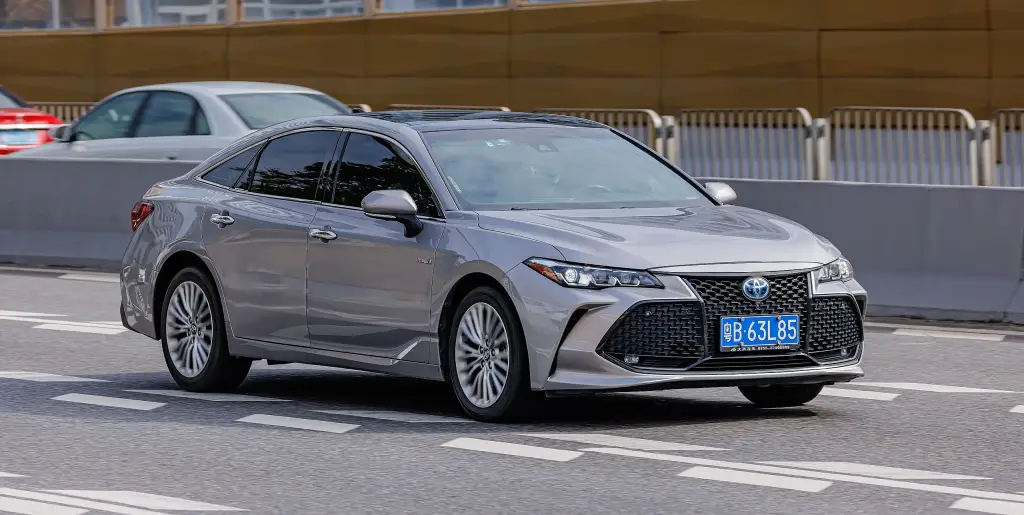
The Toyota Avalon is a full-size front-wheel-drive saloon that has served as Toyota’s flagship in the United States, Canada, China and the Middle East. The first car was built in September 1994 at Toyota’s Georgetown plant in Kentucky, and the model replaced the rear-wheel-drive Cressida in America.
Toyota Avalon at a glance
| Maker | Toyota |
|---|---|
| Production | 1994–2022 |
| First shown | Chicago Auto Show, February 1994 |
| Class | Full-size front-wheel-drive saloon |
| First generation | XX10, from late 1994 |
| Engine | 3.0-litre 1MZ-FE V6, 192 hp |
| Platform | Stretched XV10 Camry |
| Seats | Up to six, with a front bench |
| Built in | Georgetown, Kentucky; Altona, Australia |
| Replaced | Toyota Cressida |
| Name | The legendary island of Arthurian legend |
Based on one source: the English Wikipedia article on the Toyota Avalon.
History of the Toyota Avalon
First generation (XX10; 1994)
Development began in 1990 under project code 299T, and the Avalon was shown at the Chicago Auto Show in February 1994 before going on sale late that year as a 1995 model. It used a stretched XV10 Camry platform and the 3.0-litre 1MZ-FE V6 with 192 hp and 285 N·m, driving through an automatic gearbox. With almost 121 cubic feet of interior space it was the roomiest six-passenger car from a Japanese maker sold in America, although it was shorter than a Mazda 929 or a Dodge Intrepid. A front bench seat and a column shifter — the first in an American Toyota since the T130 Corona — allowed six people. For 1997 ABS became standard, power rose to 200 hp and a facelift arrived for 1998, when side airbags also became standard.
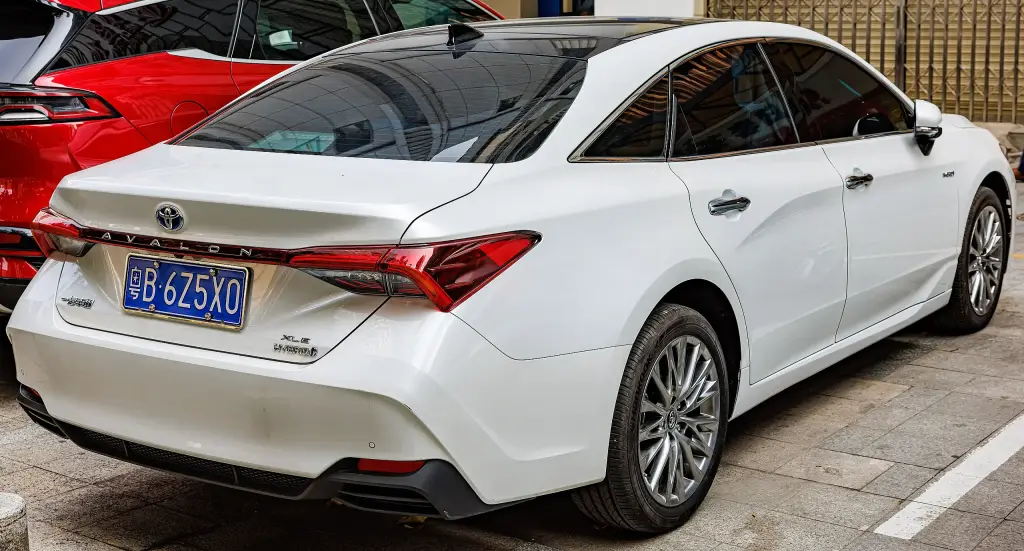
Japan and Australia
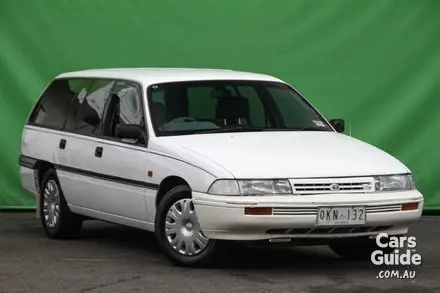
The first-generation Avalon was exported to Japan as a right-hand-drive car sold at Toyopet Store, in 3.0 and 3.0 G grades with a Coach Edition from late 1997; its size and engine put it in the expensive “large car” tax class there. In 1999 Toyota shipped the old tooling to Australia and launched the car there in June 2000 as an all-new model, with an identical body, built at Altona in right- and left-hand drive. It sold poorly against the rear-wheel-drive Ford Falcon and Holden Commodore: critics called it boring, and the 2003 facelift did not help. Toyota had planned to call it Centaur in Australia, but the name was dropped after the company realised it echoed the hospital ship AHS Centaur, sunk in the Second World War.
Later generations
The Avalon continued through further generations, and from the third generation it used an extended chassis that gave extra rear legroom; from 2013 the Lexus ES moved to the same extended platform. It was sold in the United States, Canada, China, South Korea and the Middle East, and was discontinued in the United States in 2022. In Australia the Aurion replaced it in November 2006.
Design and features
- Full-size front-drive layout: Toyota’s largest front-wheel-drive saloon.
- Six seats: a front bench and column shifter were available on the first generation.
- Roominess: almost 121 cubic feet of interior space in the original car.
- Extended platform: from the third generation, with extra rear legroom shared later with the Lexus ES.
Toyota Avalon versions
- XX10 (1994): first generation with the 3.0-litre 1MZ-FE V6.
- Japanese model: right-hand drive, 3.0 and 3.0 G grades, Coach Edition from 1997.
- Australian Avalon (2000–2005): built at Altona, with Mark II and Mark III updates.
- Later generations: larger bodies and the extended platform from the third generation.
The Avalon replaced the Cressida in America and was itself replaced in Australia by the Aurion. More cars are in the Toyota collection.
Sources
- Toyota Avalon, English Wikipedia: history, engines, markets