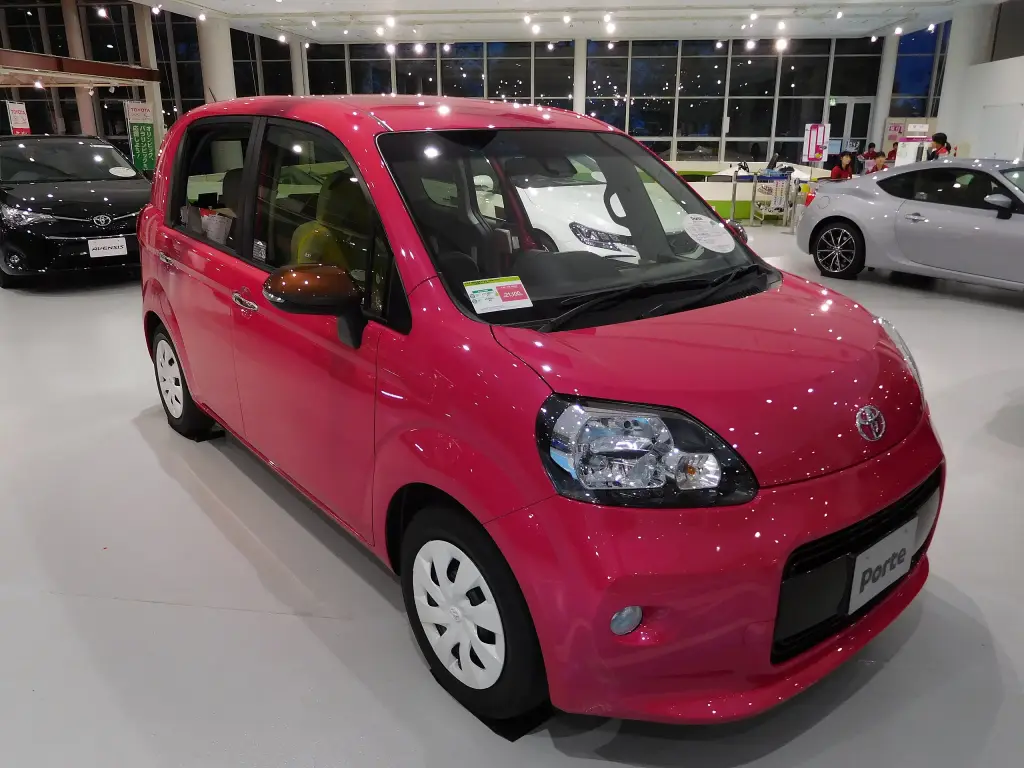
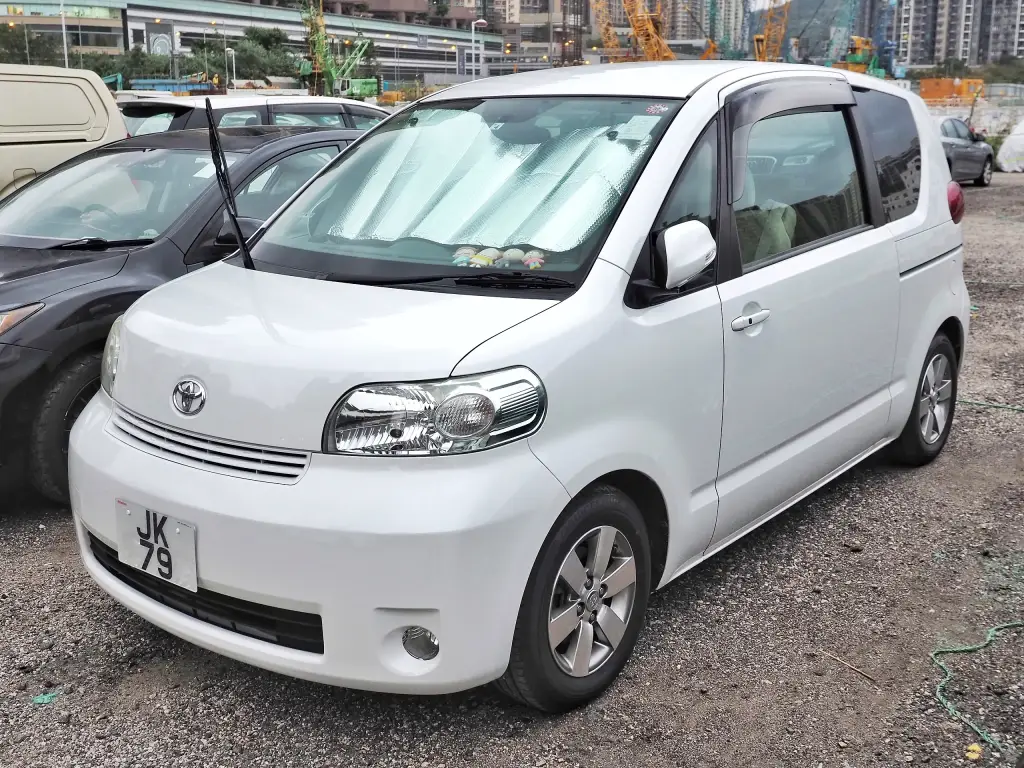
The Toyota Porte is a mini MPV produced from 2004 to 2020 with an electric sliding door on the passenger side, an idea similar to the Isis. The driver’s door is a conventional swing-open type, and the name comes from the plural Italian word for “door”.
Toyota Porte at a glance
| Maker | Toyota |
|---|---|
| Production | July 2004 – December 2020 |
| Market | Japan, later Hong Kong and Macau for the Spade |
| Class | Mini MPV |
| Base | First-generation Toyota Vitz |
| Seats | Four or five |
| First engines | 1.3- and 1.5-litre petrol |
| Gearbox | Automatic only |
| Drive | Front-wheel drive or four-wheel drive |
| Twin model | Toyota Spade from July 2012 |
| Name | Italian plural of “door” |
Based on one source: the English Wikipedia article on the Toyota Porte.
History of the Toyota Porte
First generation (AP10; 2004)
The Porte was introduced in July 2004, sold only in Japan and built only in right-hand drive. It was based on the first-generation Vitz and came in four- and five-seat versions, powered by a 1.3- or 1.5-litre petrol engine with an automatic gearbox and front- or four-wheel drive. The concept was close to the 2002 Peugeot Sésame show car and the smaller Peugeot 1007, which had electric sliding doors on both sides, but the Porte had a sliding door only on the left, passenger side, so that passengers could step in from the kerb in narrow Japanese streets.
Second generation (XP140; 2012)
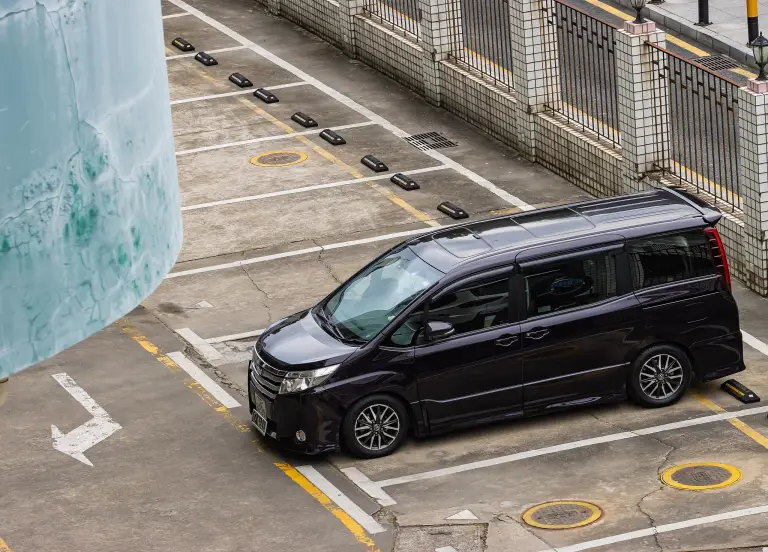
The Porte was redesigned in July 2012, and Toyota added a twin model called the Spade with different front and rear styling and a slightly different interior colour. The Porte was sold at Toyota Store and Toyopet Store while the Spade went to Corolla Store and Netz, and from August 2015 the Spade was also exported to Hong Kong and Macau. The Spade’s name, though it sounds like the card suit, is a portmanteau of “space” and “wide”, and its badge includes a spade symbol. Alongside the 1.3-litre 1NR-FE, Toyota added an improved 1.5-litre 1NZ-FE with the Super CVT-i gearbox and, on 1.5-litre cars, a Smart Stop system, giving 20.6 km/l on the JC08 cycle. Offering two engine sizes let Japanese buyers choose their road-tax band, and the larger engine came with a higher specification.
Later changes and the end
In July 2015 the 1.3-litre option was dropped and front-wheel-drive cars moved to the newer 1.5-litre 2NR-FKE engine, which reached 22.2 km/l on the JC08 cycle. Toyota stopped production of both the Porte and the Spade in December 2020, as the company consolidated its small-car range and Japan’s mini MPV market shrank.
Design and features
- One sliding door: electrically powered on the passenger side only, for kerbside access.
- Vitz base: the same platform and engines as the first-generation Yaris.
- Spade twin: a differently styled version sold through other dealer channels.
- Smart Stop: available on 1.5-litre versions from 2012.
Toyota Porte versions
- AP10 (2004): first generation, four or five seats.
- XP140 (2012): second generation with the 1.3-litre 1NR-FE.
- 1.5 with Smart Stop: 1NZ-FE engine and idle stop.
- Spade (2012): twin model, exported to Hong Kong and Macau.
- 2NR-FKE (2015): newer 1.5-litre engine for front-wheel-drive cars.
The Porte was built on the Yaris platform and shares its sliding-door idea with the Isis. Its small-MPV relatives include the Ractis, and more cars are in the Toyota collection.
Sources
- Toyota Porte, English Wikipedia: generations, engines, Spade