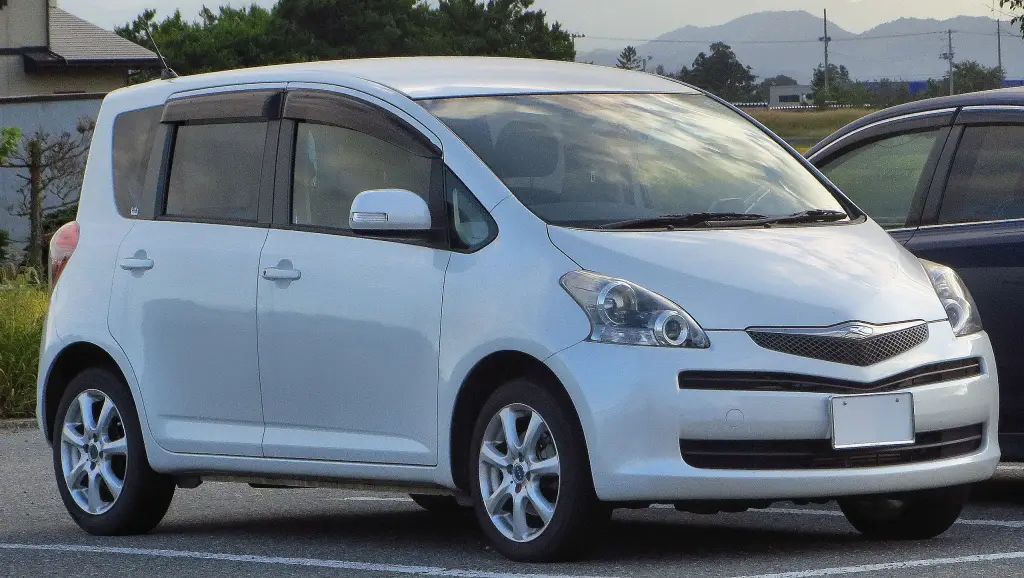
The Toyota Ractis is a five-seat mini MPV based on the Vitz, produced from 2005 to 2016. Its name comes from “run”, “activity” and “space”, and in New Zealand and parts of Europe it was sold as the Toyota Verso-S.
Toyota Ractis at a glance
| Maker | Toyota, built by Kanto Auto Works |
|---|---|
| Production | 2005–2016 |
| Class | Five-seat mini MPV |
| Base | Toyota Vitz |
| First generation | XP100, 2005 |
| Second generation | XP120, 2010 |
| Engines | 1.3- and 1.5-litre petrol, 1.4-litre D-4D diesel |
| Gearbox | CVT-i, or six-speed manual in Europe |
| European name | Verso-S |
| Rebadged version | Subaru Trezia |
| Name | Run, Activity, Space |
Based on one source: the English Wikipedia article on the Toyota Ractis.
History of the Toyota Ractis
First generation (XP100; 2005)
The first Ractis was sold only in Japan at first, through Toyopet Store dealers, with 1.3- and 1.5-litre engines and a CVT-i transmission that emphasised fuel economy and smoothness, electronic controls simulating fixed gear ratios under acceleration. A minor change on 20 December 2007 brought new headlights and tail lights, and sales in Hong Kong began in October 2009.
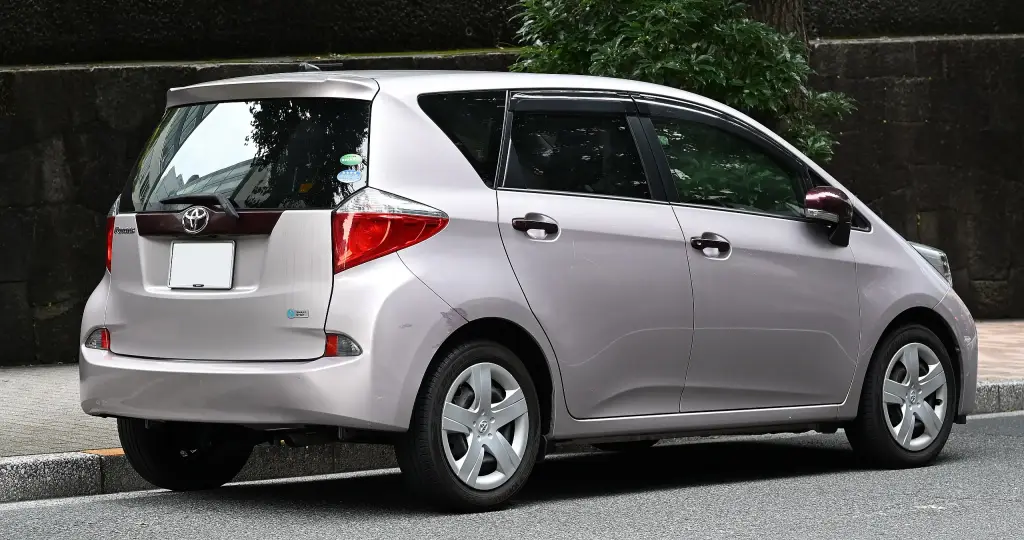
Second generation (XP120; 2010)
The second generation was unveiled at the 2010 Paris Motor Show as the Toyota Verso-S, and the Ractis itself was built at the Iwate plant by Kanto Auto Works. In Japan it came with 1.3- and 1.5-litre engines in G, X and S grades. The Verso-S marked Toyota’s return to the European B-MPV segment, and when it arrived it had the shortest overall length of any mini MPV in Europe. European buyers could choose a 1.3-litre petrol engine or a 1.4-litre D-4D turbo-diesel, both with a six-speed manual; the petrol could also be ordered with a Multidrive S CVT with a seven-speed sequential paddle-shift mode. The petrol returned 18.2 km/l and 127 g/km of CO2, the diesel 23.25 km/l and 113 g/km. A Welcab version was offered with a rotating front seat that reached outside the car, or with space for wheelchairs and an extended roof.
The Trezia and the end
On 29 November 2010 Subaru announced an OEM version for Japan called the Subaru Trezia, with unique bumpers, grille, bonnet, front wings, headlights, rear finisher and tail lamps; its name comes from the English word treasure. It used the 1.3-litre 1NR-FE and 1.5-litre 1NZ-FE engines with a CVT, front-wheel drive as standard and all-wheel drive on the 1.5, and in January 2011 Subaru showed an STI-tuned Trezia STI at the Tokyo Auto Salon. Toyota UK dropped the Verso-S in 2013, and on 30 June 2016 Toyota confirmed the end of Ractis production for Japan, Hong Kong and Macau, though the Verso-S continued for Europe until 2017. Japanese sales ended on 31 August 2016, and the Ractis was succeeded by the Tank and Roomy.
Design and features
- Vitz base: a five-seat mini MPV built on the Yaris platform.
- Shortest in class: the Verso-S was Europe’s shortest mini MPV at launch.
- Welcab: wheelchair-accessible versions with a rotating seat or extended roof.
- Trezia twin: a Subaru-badged version with its own front and rear styling.
Toyota Ractis versions
- XP100 (2005): first generation, Japan only at first.
- 2007 update: new headlights and tail lights.
- XP120 (2010): second generation, also sold as the Verso-S.
- Verso-S diesel: 1.4-litre D-4D with a six-speed manual.
- Trezia (2010): Subaru version with unique body panels.
The Ractis replaced the FunCargo in Toyota’s small-MPV range and was built on the Yaris platform, alongside the Porte. More cars are in the Toyota collection.
Sources
- Toyota Ractis, English Wikipedia: generations, engines, Verso-S