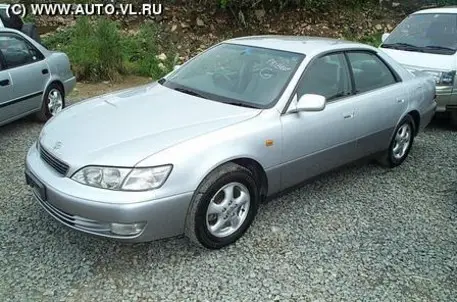
The Toyota Windom was the Japanese-market version of the Lexus ES, sold from 1991 until the fifth-generation ES arrived in 2006. It was a front-wheel-drive luxury saloon on the Camry platform, and its name combines “win” with a suffix expressing a state of perpetual victory.
Toyota Windom at a glance
| Maker | Toyota |
|---|---|
| Production | 1991–2005 |
| Market | Japan |
| Class | Luxury saloon |
| Layout | Front engine, front-wheel drive |
| Relationship | Lexus ES, built on the Camry platform |
| Engines | V6 petrol |
| Position | Entry-level luxury, below the Celsior |
| Replaced by | Lexus ES in Japan, from 2006 |
| Name | “Win” plus “dom”, for perpetual victory |
The Windom is the Japanese-market Lexus ES and is mentioned only briefly in the English Wikipedia article on the ES; this page therefore describes the shared car rather than Windom-specific changes. No free photograph of a Windom was available, so the record keeps its existing cover.
History of the Toyota Windom
The Lexus ES and its Japanese twin
Lexus launched in 1989 with two cars, the LS 400 flagship and the smaller ES 250, which was based on the Camry Prominent and Vista and powered by a 2.5-litre V6 of 156 hp, aimed directly at the Acura Legend. The ES was Lexus’s only front-wheel-drive model until the RX arrived in 1998, and it occupied the entry-level luxury segment until the IS appeared in 1999. The first five generations of the ES used the Camry platform, and from the second generation of 1991 a domestic-market equivalent was sold in Japan as the Toyota Windom, a name created for buyers who could not yet buy a Lexus at home.
What the Windom was
Each generation of the Windom followed the ES: the second-generation ES 300 of 1991, the third-generation ES 300 of 1996 and the fourth-generation ES 300 and ES 330 of 2001. It was a comfort-focused saloon with V6 power, front-wheel drive and an emphasis on interior equipment, quietness and ride quality rather than the firmer set-up of sport saloons such as the IS. Lexus positioned the ES in that comfort segment deliberately, leaving sharper driving to the IS and to rival makes.
The end of the name
The Windom was sold until the launch of the fifth-generation ES in 2006, when Lexus was introduced as a brand in Japan and the domestic equivalent was no longer needed. From then on Japanese buyers could order the ES directly. In the United States the ES has been the best-selling Lexus saloon for more than fifteen years, and later generations have grown closer to the Avalon as well as the Camry, adding hybrid and all-wheel-drive versions.
Design and features
- Japanese ES: the domestic version of the Lexus ES from 1991 to 2005.
- Camry platform: the first five ES generations used it.
- Comfort focus: quietness and ride quality rather than sporty handling.
- Front-wheel drive: Lexus’s only front-drive model until the RX.
Toyota Windom versions
- First Windom (1991): based on the second-generation ES 300.
- Second Windom (1996): following the third-generation ES 300.
- Third Windom (2001): based on the ES 300 and ES 330.
- Lexus ES (2006): the name that replaced it in Japan.
The Windom was the Japanese form of the Lexus ES, a relative of the Camry and an entry point below the Celsior. Its sportier stablemate was the Altezza, and more cars are in the Toyota collection.
Sources
- Lexus ES, English Wikipedia: ES generations and the Windom equivalent