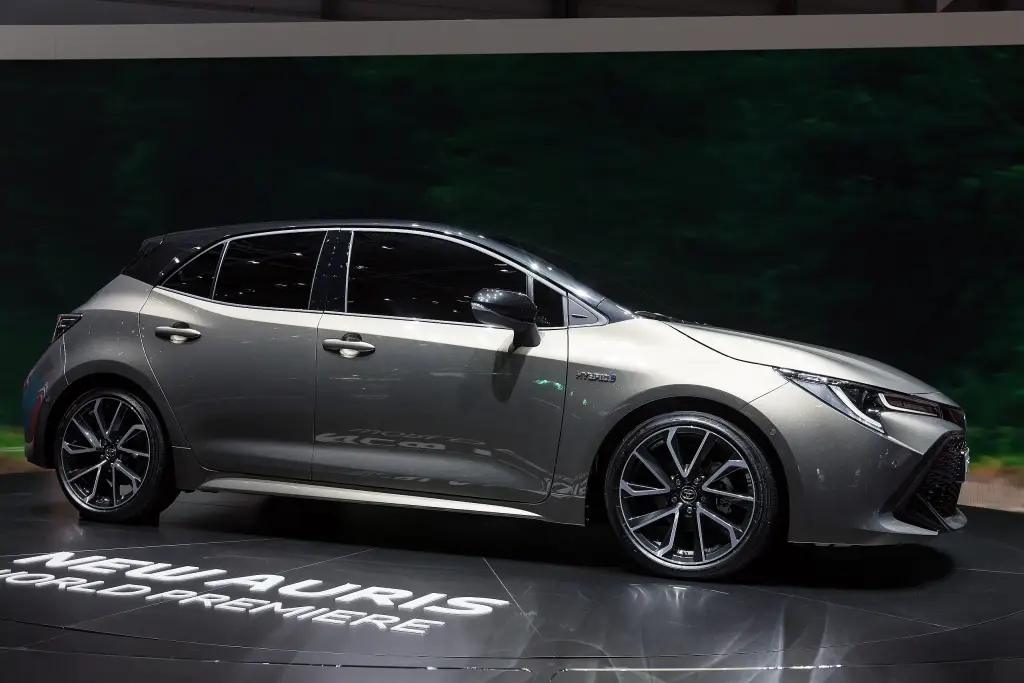
The Toyota Auris was a compact car derived from the Corolla and sold in Europe from 2006. In Europe it replaced the Corolla hatchback while the saloon kept the Corolla name; in Japan the first-generation car was also offered as the more luxurious Toyota Blade. The name was based on the Latin word for gold, aurum.
Toyota Auris at a glance
| Maker | Toyota |
|---|---|
| Production | 2006–2018 |
| Class | Compact car (C-segment) |
| Based on | Toyota Corolla |
| First generation | E150 platform, 2006 |
| Second generation | E180 platform, 2012 |
| Body styles | Three- and five-door hatchback, Touring Sports estate |
| Japanese version | Toyota Blade (first generation only) |
| Replaced | Corolla RunX and Allex in Japan |
| Successor | Corolla (E210) |
| Design | ED², Toyota’s European studio in southern France |
Based on one source: the English Wikipedia article on the Toyota Auris.
History of the Toyota Auris
First generation (E150; 2006)
The Auris was unveiled at the Paris Motor Show in October 2006 and went on sale in Japan at Netz dealers on 23 October, with European sales following in early 2007. It shared the E150 platform with the Corolla and replaced the Corolla hatchback in Europe and the Corolla RunX and Allex in Japan. Styling was done by ED², Toyota’s European design base in southern France, and the car was built by Kanto Auto Works from October 2006 to November 2011. Euro NCAP gave it five stars for adult occupant protection and four for children. Japanese trims were 150X, 180G and RS, with limited editions such as the TUMI-designed S package of 2007 and the grey-interior Grayge selection of 2008.
Markets and the Blade
In Japan the plusher first-generation Auris was sold as the Toyota Blade, with a larger engine and more equipment. In Australia and New Zealand the car was sold as the Corolla hatchback: Australia used the “Seca” emblem and grades Ascent, Conquest, Levin SX and Levin ZR with a 1.8-litre 2ZR-FE engine, while New Zealand offered GX and GLX plus 1.4- and 2.0-litre diesels. A facelift in late 2009 brought a sportier front and rear, new wheels and interior trim, and removed the Seca badge in Australia.
Second generation (E180; 2012)
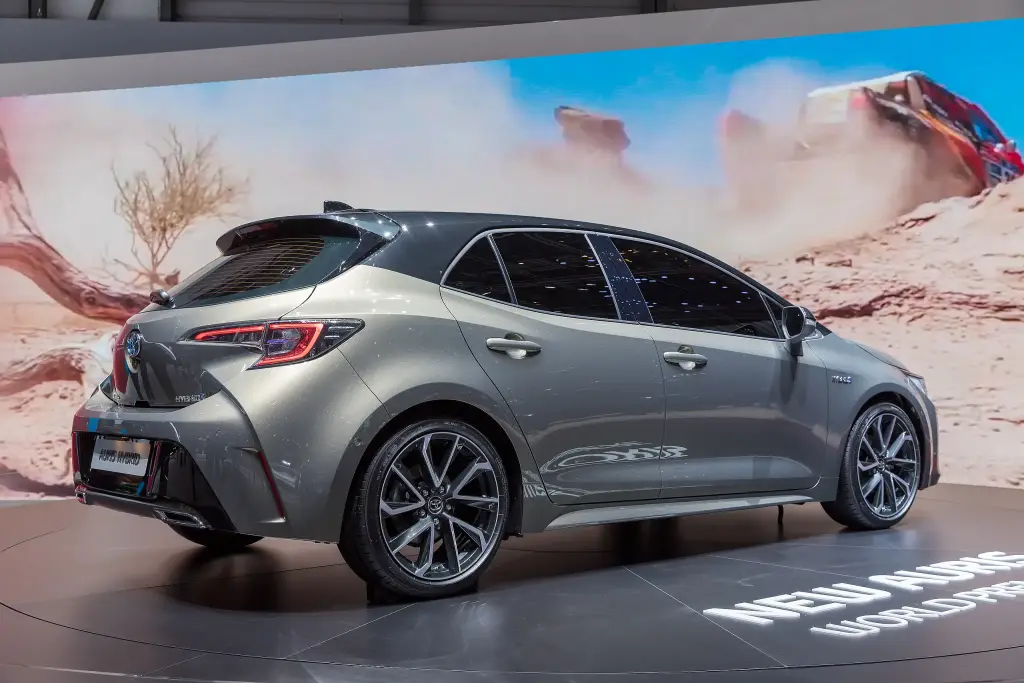
The second-generation Auris moved to the E180 platform and was sold as a five-door hatchback and as an estate called the Touring Sports; it was available at Toyopet Store dealers in Japan from 18 April 2016. The Auris name was discontinued with the E210 generation, which reverted to the Corolla nameplate everywhere except Taiwan, where the Auris badge survived until July 2020. Toyota Australia and New Zealand had resisted Toyota Japan’s suggestion to adopt the Auris name for their Corolla hatchback.
Design and features
- Corolla base: the Auris was the hatchback body of the Corolla range.
- European design: exterior styling by Toyota’s ED² studio in southern France.
- Blade: a more luxurious Japanese version of the first generation.
- Safety: five Euro NCAP stars for adult occupants, four for children.
- Touring Sports: an estate body added with the second generation.
Toyota Auris versions
- Auris (E150; 2006): three- and five-door hatchback, Japanese trims 150X, 180G and RS.
- Toyota Blade (2006): the plusher Japanese version of the first generation.
- S package TUMI (2007): 1,000 cars with a TUMI-designed interior.
- Grayge selection (2008): grey interior and extra equipment.
- Auris (E180; 2012): five-door hatchback and Touring Sports estate.
The Auris was the hatchback member of the Corolla family and replaced the Corolla E120 hatchbacks in Japan. More cars are in the Toyota collection.
Sources
- Toyota Auris, English Wikipedia: generations, markets, Blade