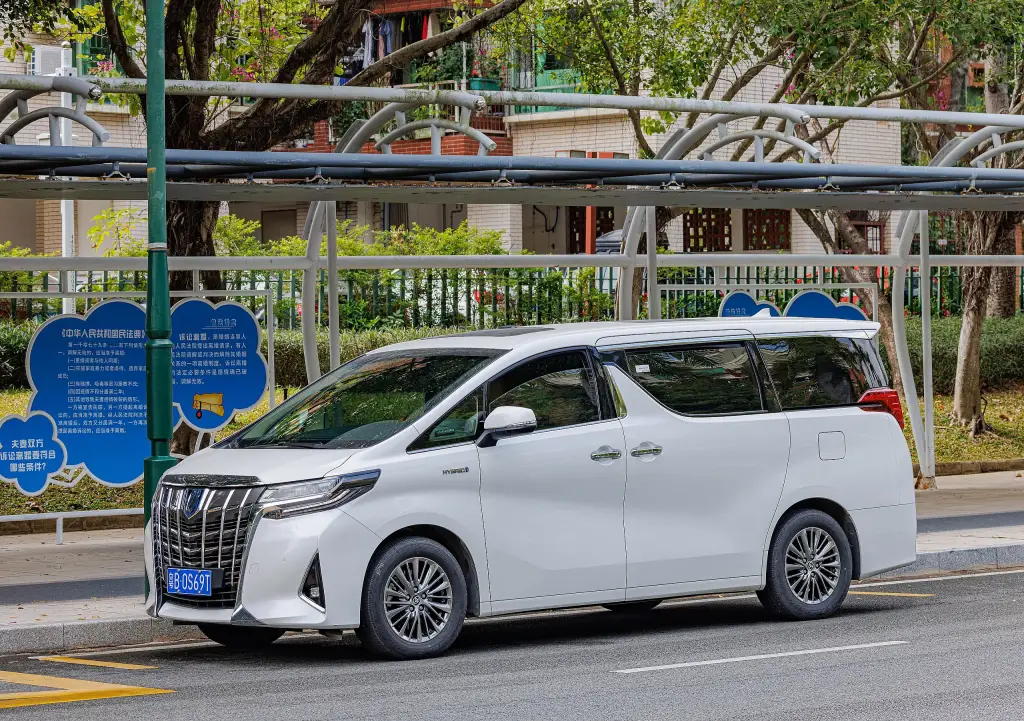
The Toyota Alphard is a large MPV produced since 2002 and positioned as Toyota’s flagship people carrier. It is offered as a seven- or eight-seater with petrol and hybrid engines, and from the second generation it has been sold alongside a sportier twin model, the Toyota Vellfire.
Toyota Alphard at a glance
| Maker | Toyota |
|---|---|
| Production | Since 22 May 2002 |
| Class | Large luxury MPV |
| Seats | Seven or eight |
| Engines | Petrol and hybrid |
| Hybrid since | May 2003 |
| First generation | AH10, based on the second-generation Previa/Estima |
| Drive | Front-wheel drive, E-Four all-wheel drive for the hybrid |
| Twin model | Toyota Vellfire from the second generation |
| Luxury derivative | Lexus LM from 2019 |
| Name | Alphard, the brightest star in Hydra |
Based on one source: the English Wikipedia article on the Toyota Alphard.
History of the Toyota Alphard
First generation (AH10; 2002)
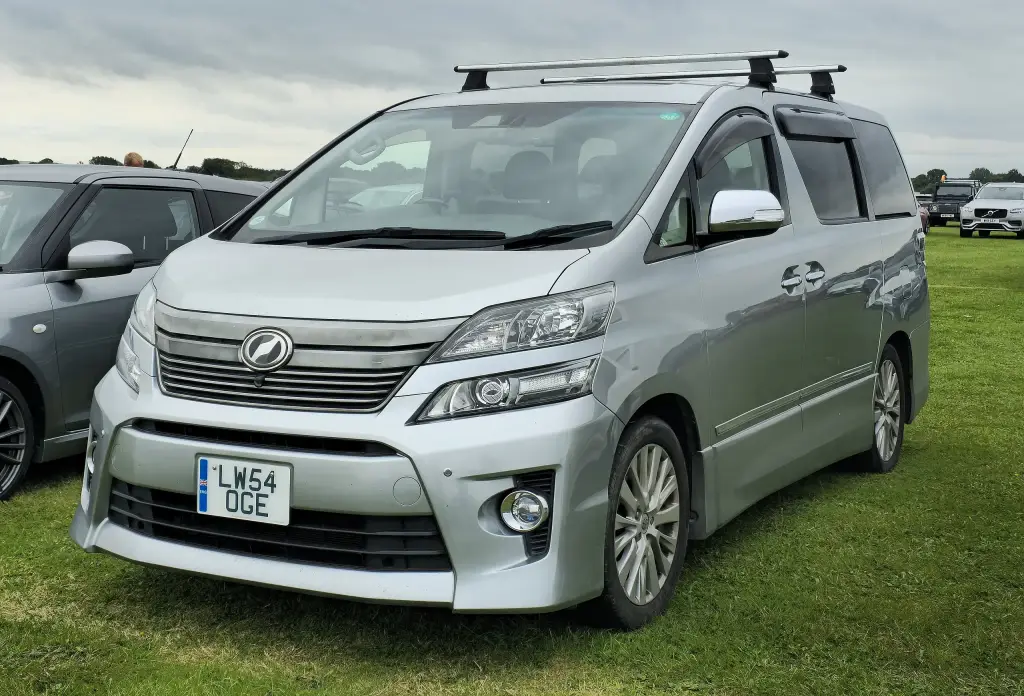
The Alphard was launched on 22 May 2002 under chief engineer Hideyuki Iwata. It was based on the second-generation Previa/Estima, which in turn shared much with the Camry, and adopted front-wheel drive to free space that a propshaft had taken in its predecessor, the Granvia. Curvaceous styling was meant to make the van look smaller and attract buyers in their thirties and forties. Two Japanese dealer channels each got their own version: the Alphard V at Netz Store and the Alphard G, with a different grille, at Toyopet Store. Toyota set a combined monthly target of 6,500 cars. A Welcab version was offered for wheelchair users.
Hybrid and Royal Lounge
A hybrid joined the range in May 2003, using a 2.4-litre 2AZ-FXE Atkinson-cycle engine of 133 PS with Toyota’s Hybrid Synergy Drive and the E-Four all-wheel-drive system. It could supply up to 1,500 watts through 100-volt sockets and qualified in Japan as an Ultra-Low Emissions Vehicle. A facelift in April 2005 revised the grille, bumpers, lamps and interior, and gave the 3.0-litre model a five-speed automatic. In 2006 Toyota added the Royal Lounge, a four-seat luxury version of the Alphard G designed by Modellista, with a fridge, folding tables, electric curtains and fully reclining rear seats.
Second generation and after
The second-generation Alphard (AH20) went on sale in 2008 after being previewed as the FT-MV concept in 2007. From then on the Vellfire, whose name combines “velvet” and “fire”, was sold as the sportier alternative, initially through Netz Store. The shield-like grille that defines the car arrived with the AH30 generation in 2015, and since 2019 a more upmarket version has been sold as the Lexus LM. The Alphard is built primarily for Japan but is also sold in many Asian countries, Belarus, Russia and the Middle East, where it is regarded as a luxury car.
Design and features
- Flagship MPV: Toyota’s most luxurious people carrier, with seven or eight seats.
- Hybrid from 2003: a 2.4-litre Atkinson-cycle engine with Hybrid Synergy Drive and E-Four all-wheel drive.
- Two dealer versions: the sportier V and the chrome-grilled G in the first generation.
- Royal Lounge: a four-seat luxury edition with a fridge, tables and electric curtains.
- Shield grille: the distinctive front end introduced with the AH30 generation in 2015.
Toyota Alphard versions
- Alphard V (2002): body-coloured grille, sold at Netz Store and later replaced by the Vellfire.
- Alphard G (2002): chrome grille with three horizontal rows, sold at Toyopet Store.
- Alphard Hybrid (2003): 2.4-litre Atkinson-cycle petrol engine with electric assistance.
- Royal Lounge (2006): four-seat luxury version by Modellista.
- Vellfire (2008): sportier twin model of the second generation.
- Lexus LM (2019): more upmarket derivative of the third generation.
The Alphard was developed from the Previa and later shared its role with the Granvia. More cars are in the Toyota collection.
Sources
- Toyota Alphard, English Wikipedia: generations, hybrid, variants