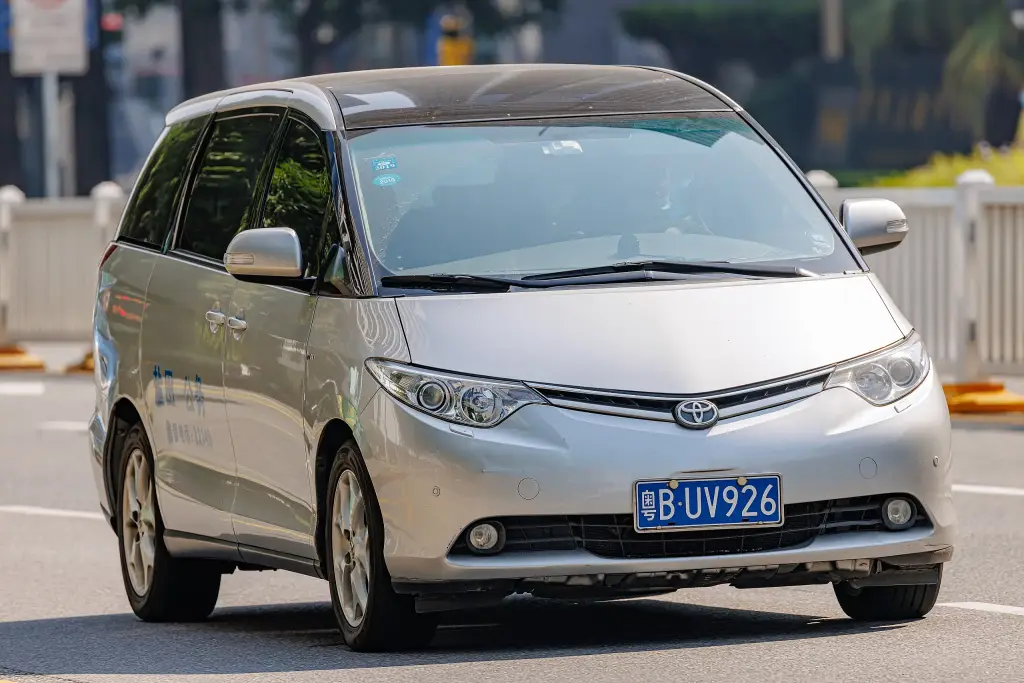
The Toyota Previa, sold as the Estima in Japan and the Tarago in Australia, is a minivan produced from 1990 to October 2019 over three generations. Its first generation was unusual for a van: the engine was mounted almost flat beneath the front seats, with an accessory driveshaft running forward to the alternator, air conditioning and other equipment.
Toyota Previa at a glance
| Maker | Toyota |
|---|---|
| Production | 27 January 1990 – October 2019 |
| Also called | Toyota Estima, Toyota Tarago |
| Class | Minivan |
| First generation | XR10/XR20 |
| Engine | 2.4-litre 2TZ-FE four, 135 PS |
| Supercharged | 2TZ-FZE from 1994, 163 PS |
| Drive | Rear-wheel drive or All-Trac four-wheel drive |
| Seats | Seven or eight |
| Length | 4,750 mm, wheelbase 2,870 mm |
| Name | Previa from the Italian previdenza, foresight |
Based on one source: the English Wikipedia article on the Toyota Previa, which covers the first generation in most detail.
History of the Toyota Previa
First generation (XR10/XR20; 1990)
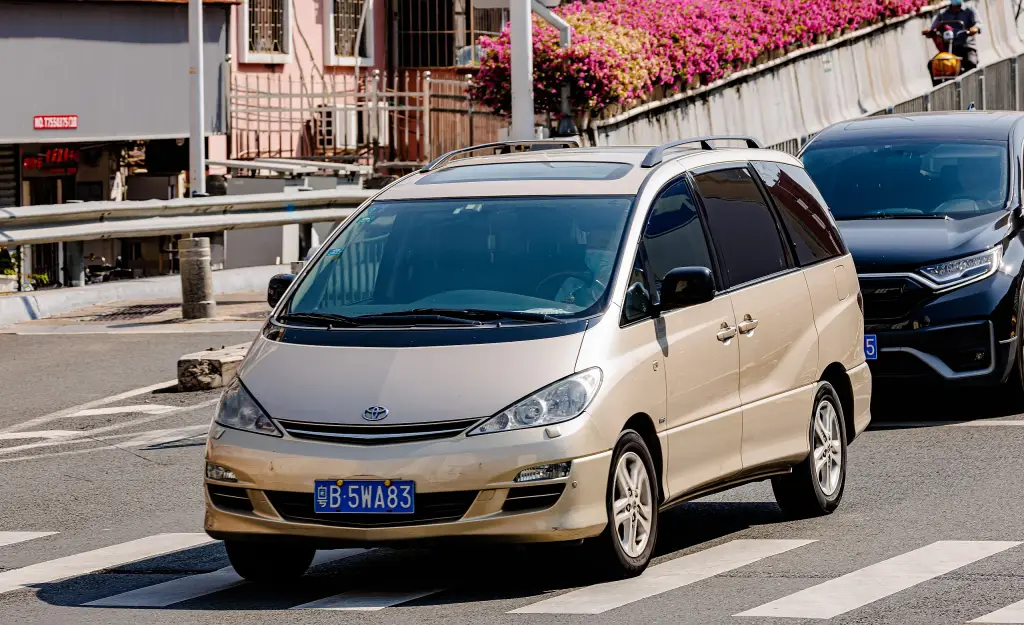
The first Previa was designed by Toyota’s Tokuo Fukuichi and Calty’s David Doyle in 1987, with a patent filed on 24 December 1987, and introduced on 27 January 1990. It had a single sliding side door and a mid-engined layout in which the 2.4-litre 2TZ-FE four-cylinder lay almost flat under the front seats, canted 75 degrees from vertical. That arrangement maximised interior space for the car’s size, and the SADS accessory driveshaft drove the alternator, power steering pump, air conditioning compressor and radiator fan from the front, which also helped equalise weight distribution. The car was 4,750 mm long, 1,800 mm wide and 1,780 mm high with the twin moonroof, on a 2,870 mm wheelbase. It came with rear- or All-Trac all-wheel drive, the latter using a viscous centre differential splitting torque 50/50, and with a four-speed automatic or five-speed manual.
Supercharged and special versions
For 1994 Toyota added the supercharged 2TZ-FZE, with an Aisin blower mounted at the front and driven by a belt from the accessory driveshaft, engaged by an electromagnetic clutch. Power rose to 163 PS and 273 N·m, and the five-speed manual was dropped in the United States. In Japan the Estima Lucida and Estima Emina could be ordered with a 3C-T intercooled turbo-diesel. Seating was for seven or eight: all versions had two front seats and a split, folding third-row bench, while the eight-seat car had a 2/1 split swivelling middle bench and the seven-seat versions either two swivelling captain’s chairs or an offset two-seat bench. Access to the spark plugs required removing the front right seat, the carpet and an access panel.
Later generations and the end
The second and third generations abandoned the mid-engine layout for a conventional front-engine arrangement, and the Previa remained Toyota’s second-largest minivan in Japan, below the Alphard and Vellfire. Production ended in October 2019 after nearly thirty years. The Previa name was used in the United States and the United Kingdom, while Japan kept Estima and Australia Tarago; the Estima name comes from the word estimable.
Design and features
- Mid-mounted engine: the engine lay almost flat under the front seats.
- SADS: an accessory driveshaft at the front drove the ancillaries.
- All-Trac: four-wheel drive with a viscous centre differential.
- Supercharged option: the 2TZ-FZE with a clutch-driven blower from 1994.
Toyota Previa versions
- XR10/XR20 (1990): first generation with the 2TZ-FE engine.
- All-Trac: four-wheel-drive version.
- Supercharged (1994): 2TZ-FZE with 163 PS.
- Estima Lucida and Emina: Japanese versions with a 2.2-litre turbo-diesel.
- Seven- and eight-seat layouts: different middle-row arrangements.
The Previa’s space and price placed it below the Alphard, and it sat above the smaller Ipsum and Gaia. More cars are in the Toyota collection.
Sources
- Toyota Previa, English Wikipedia: layout, engines, versions