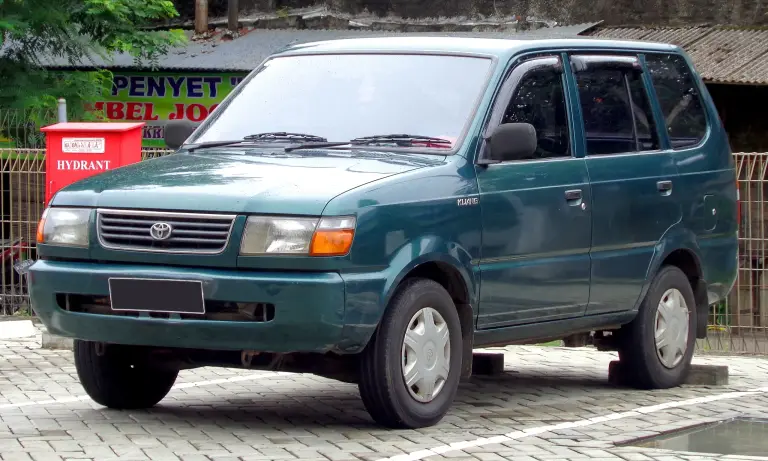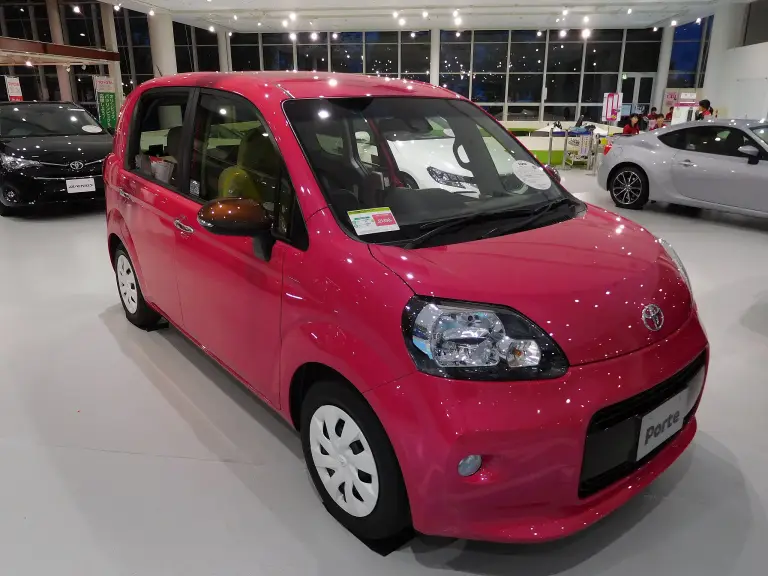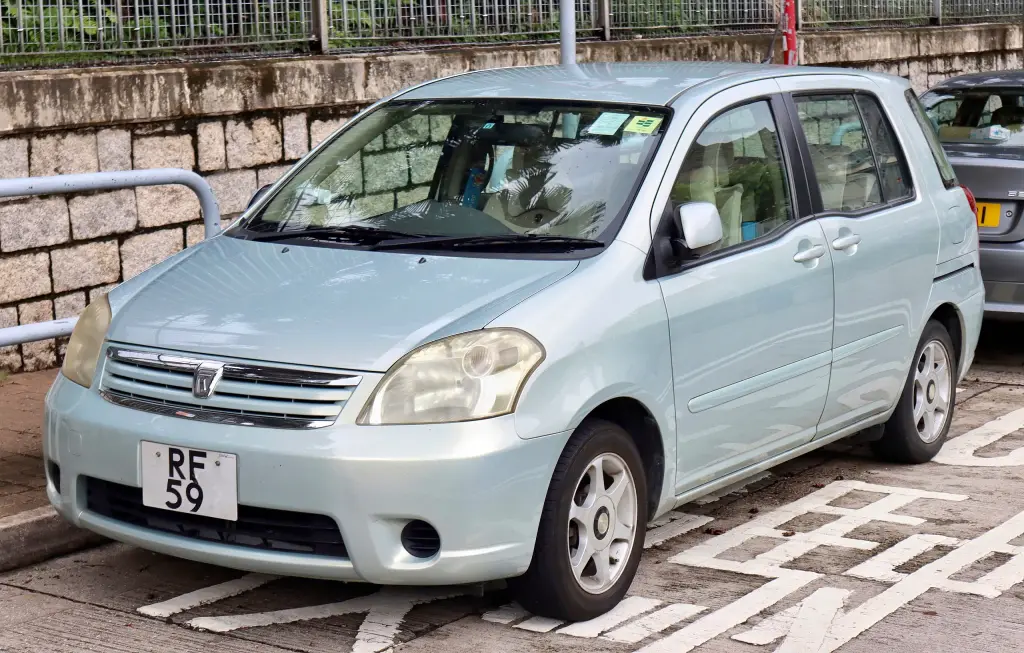
The Toyota Raum is a five-seat mini MPV that first appeared in May 1997 and was sold only in Japan through Toyota Netz dealers. Its name is German for room or space, and it was chosen because the car offers a lot of interior room for its size.
Toyota Raum at a glance
| Maker | Toyota |
|---|---|
| Production | May 1997 – March 2011 |
| Market | Japan, Netz dealers |
| Class | Five-seat mini MPV |
| First generation | XZ10, 1997–2003 |
| Second generation | XZ20, 2003–2011 |
| Doors | Conventional front doors, rear sliding doors, no centre pillar |
| Gearbox | Dashboard-mounted automatic selector |
| Second-generation engine | Shared with the Toyota Prius |
| Award | Universal Design Prize, 2003 |
| Name | German for room or space |
Based on one source: the English Wikipedia article on the Toyota Raum.
History of the Toyota Raum
First generation (XZ10; 1997)
Development was led by Toyota chief engineer Tetsuya Tada. The Raum had five grades, base, C, E, G and S, and EBD brakes came on the top G and E packages, later extended to the C. It had a distinctive tall, boxy body with large windows, a high roofline and a rear-mounted spare wheel, and fuel-efficient four-cylinder engines suited to city driving. A minor facelift arrived in August 1999. The passenger-side rear door slides backwards and attaches to the top and bottom of the door opening, interlocking with the front door, so there is no centre pillar on that side; the idea resembles the first-generation Mitsubishi RVR. The front passenger seat folds flat on itself and forward while staying attached to the floor, and the rear seats fold flat in a 60:40 split or individually.
Second generation (XZ20; 2003)
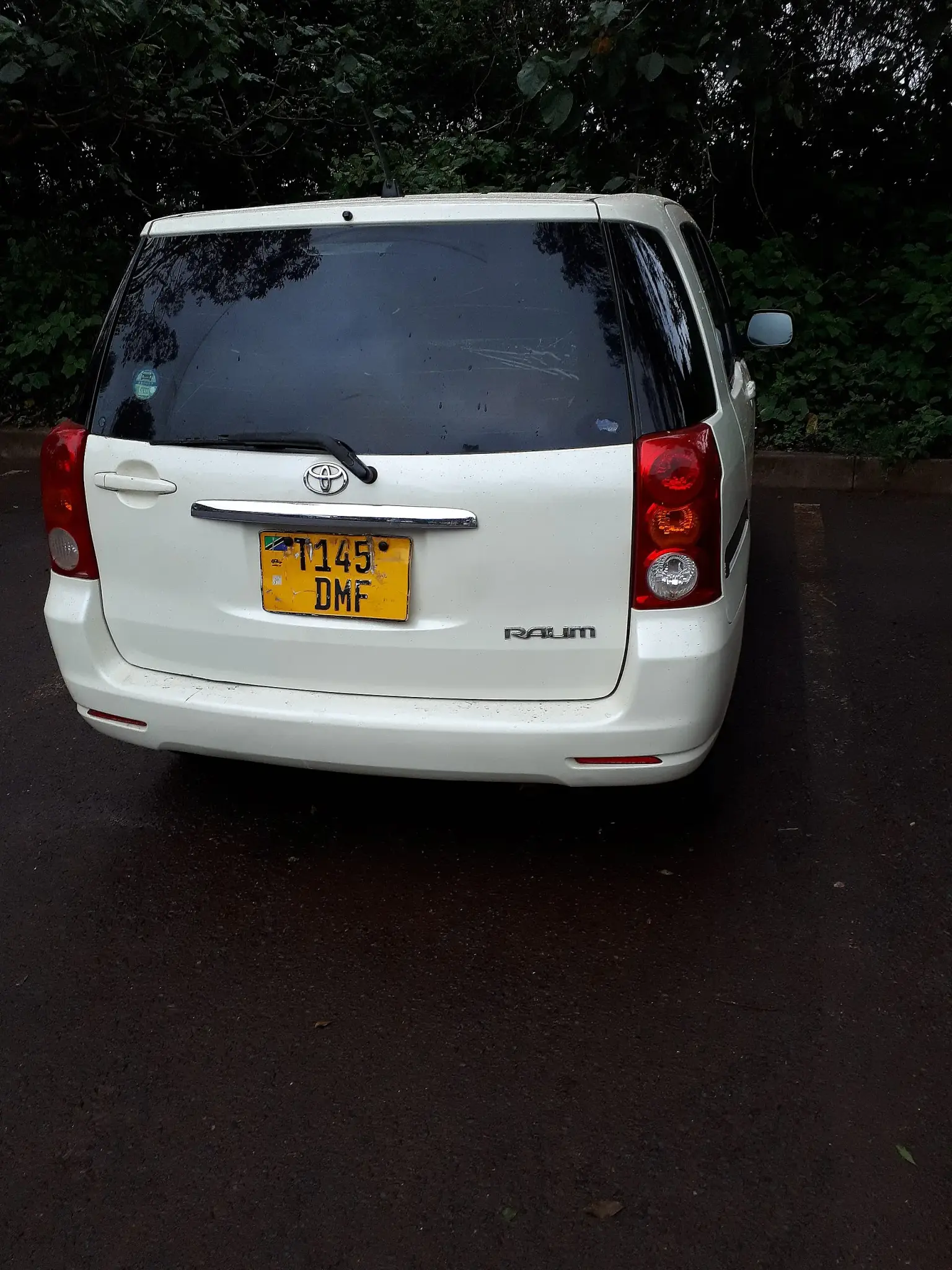
The second generation was previewed as the ALSV concept at the 2002 Tokyo Motor Show and released on 12 May 2003 on the Vitz platform, with stronger side impact protection. The passenger-side rear door could now be opened electronically, including by remote key fob, and the engine was shared with the Toyota Prius. On 20 October 2003 the Raum won the Universal Design Prize, a special award under the Japan Good Design Award, with a mention for people with physical disabilities. A C Package NEO Edition of 2004 added discharge headlamps and an all-grey fabric interior, while other cars of this generation had beige interiors. The dashboard-mounted automatic selector freed the floor between the front seats so passengers could walk to the back.
Facelift and the end
A light facelift on 5 December 2006 brought an HDD navigation system, a new front emblem, from the letter R to a stylised N for Netz, new rear lamp shapes and wheel covers shared with the E120 Corolla. Two colours were dropped and three added, and front fog lamps and LED brake lights became standard, making the C Package redundant. On 7 January 2009 a cabin air filter and HID headlamps were added. G-BOOK was optional on Japanese cars from 2007, and production ended in March 2011 without a direct successor.
Design and features
- Interlocking doors: the rear sliding door attaches to the front door, so there is no centre pillar.
- Flat floor: a dashboard gear selector leaves a clear walk-through space.
- Flexible seating: the front passenger seat folds forward and the rear seats fold flat.
- Universal Design Prize: recognised in 2003 for its accessibility.
Toyota Raum versions
- XZ10 (1997): first generation in base, C, E, G and S grades.
- 1999 facelift: minor changes to the first generation.
- XZ20 (2003): second generation on the Vitz platform.
- C Package NEO Edition (2004): grey interior and discharge lamps.
- 2006 facelift: new emblem, lamps and standard fog lamps.
- 2009 update: cabin air filter and HID headlamps.
The Raum shares its door idea with the later Isis and its platform with the Yaris. More cars are in the Toyota collection.
Sources
- Toyota Raum, English Wikipedia: generations, doors, updates