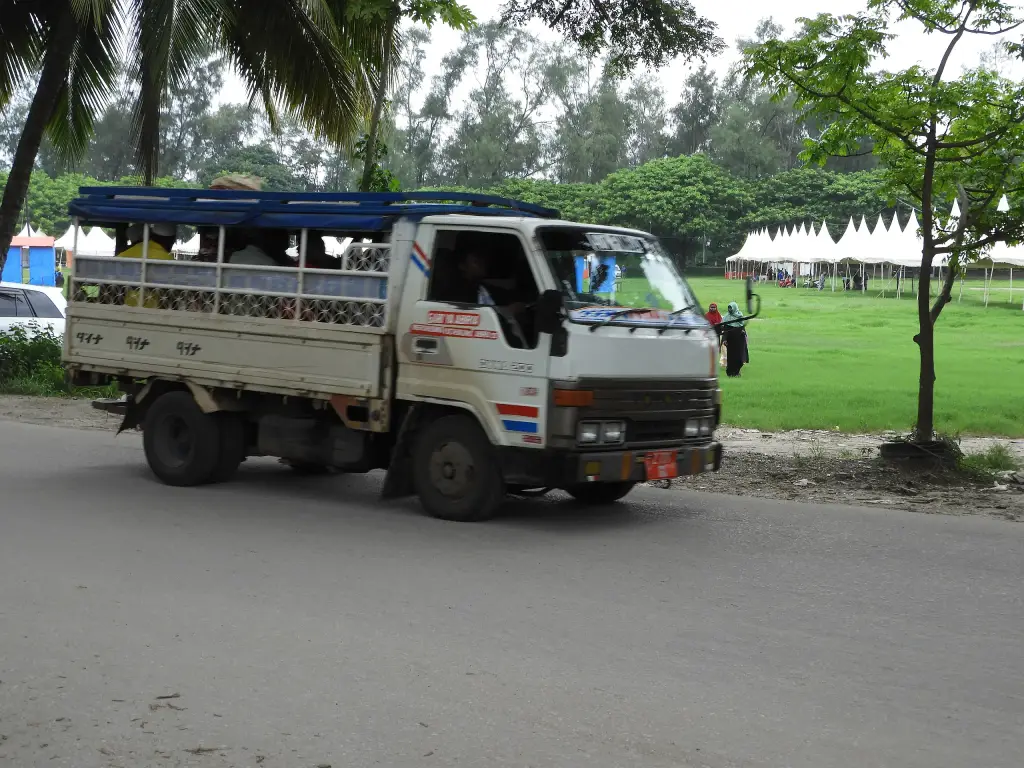
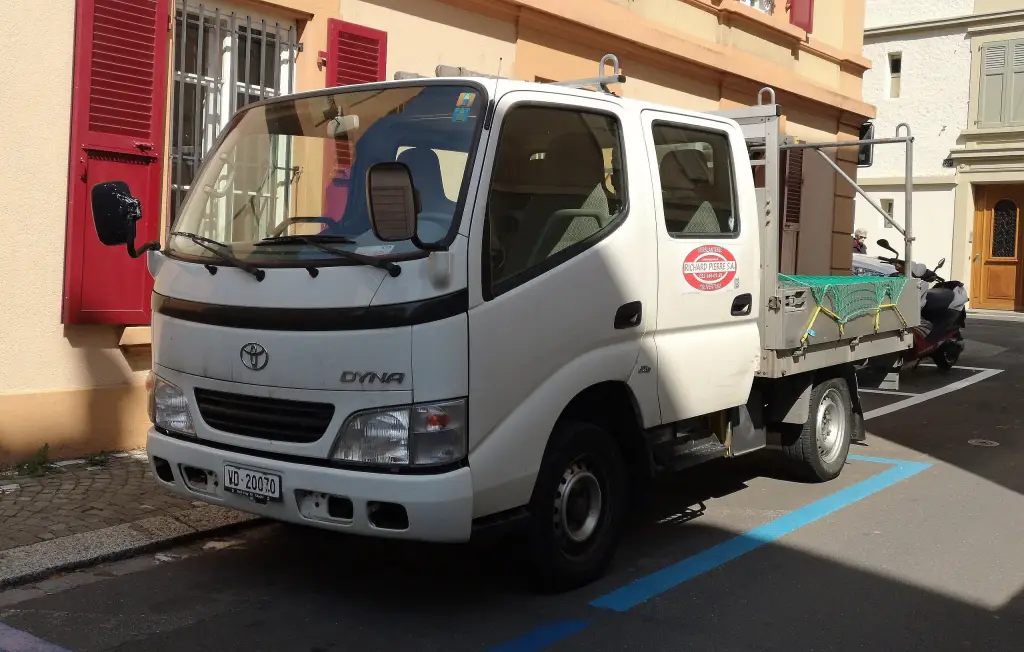
The Toyota Dyna is a light to medium-duty cab-over truck for commercial use, sold in Japan alongside its twin, the Toyota ToyoAce. The name is short for “dynamic”, and the truck has also been sold as the Hino Dutro and, earlier, as the Daihatsu Delta.
Toyota Dyna at a glance
| Maker | Toyota |
|---|---|
| Class | Light to medium-duty cab-over truck |
| Dyna name since | April 1959 |
| Predecessor | Toyopet Route Truck |
| Twin model | Toyota ToyoAce |
| Rebadged as | Hino Dutro, Daihatsu Delta |
| Early engines | 1.9-litre 3R-B petrol, 2.3-litre J diesel |
| Later engines | 2.0-litre 5R petrol, 3.0-litre B diesel, 3.6-litre H diesel |
| Sold through | Toyota Diesel Store, later Toyota Store |
| Rivals | Isuzu Elf, Mitsubishi Fuso Canter, Nissan Atlas |
Based on one source: the English Wikipedia article on the Toyota Dyna.
History of the Toyota Dyna
From Route Truck to Dyna
The Dyna grew out of the Toyopet Route Truck. The RK52 was its contributing platform, and the Toyopet Store dealer network was created to sell the ToyoAce series, whose SKB chassis also produced the Toyopet Master saloon. The second-generation Route Truck, the RK60 to RK80, was designed by Kanto Auto Works on a frame shared with the Toyopet Masterline RK23 pickup and the Toyota Stout. In April 1959 the Route Truck was renamed the Toyota Dyna, and in export markets it was also sold as the Toyota PK25.
K170 and U10
The semi-cab-over design was replaced in September 1963 by the K170 series, which had a leaner body with four headlamps and was built on the Stout’s chassis with its 1.9-litre 3R-B engine of 80 PS. Isuzu had introduced a diesel Elf in 1960 and pushed the Dyna into second place; Toyota responded in March 1964 with the 2,336 cc J-engined JK170 diesel. A long-wheelbase 2.5-tonne version with twin rear wheels, the RK175, and a glazed route van were also offered. In 1969 the Dyna moved to the U platform after Toyota’s 1967 partnership with Daihatsu, with 2.0-litre 5R petrol, 3.0-litre B diesel and 3.6-litre H diesel engines; the heavier three-tonner reached 100 km/h. The Coaster bus used the same chassis and U10 codes.
Later generations and twins
The U20/U30/U40/U50 series of 1977 to 1984 came with twin rear wheels and mostly the 3.0-litre B diesel, and was also sold as the Daihatsu Delta and, with Hino badges, as the Ranger 2 or Ranger 3. A version with standard or crew cabs was built in China from 1983 as the Fuzhou FZ131. From 1979 the smaller ToyoAce used the Y20 platform, and in some export markets that truck was sold as a Dyna with single or double cabs. The Dyna Rino, built in Indonesia from 1984 to 2002, used the Y30 and Y40 platforms with 3.4- and 3.7-litre diesel engines.
Design and features
- Cab-over layout: a compact footprint with a short bonnet for urban deliveries.
- Twin with the ToyoAce: the same truck sold through a different Japanese dealer chain.
- Many badges: also sold as the Hino Dutro and Daihatsu Delta.
- Shared chassis: the first Coaster bus and several vans used Dyna underpinnings.
Toyota Dyna versions
- Route Truck (1950s): the Dyna’s predecessor, sold as the PK25 for export.
- K170 (1963): four-headlamp cab-over with the Stout’s 3R-B engine.
- JK170 (1964): the first Dyna diesel, with the 2.3-litre J engine.
- U10 (1969): new U platform with 5R, B and H engines.
- U20 series (1977): twin rear wheels and wider cabs.
- Dyna Rino (1984): Indonesian model on the Y30/Y40 platform.
The Dyna shares its cab with the ToyoAce and its chassis with the Coaster; its pickup relative is the Stout. More cars are in the Toyota collection.
Sources
- Toyota Dyna, English Wikipedia: history, generations, engines