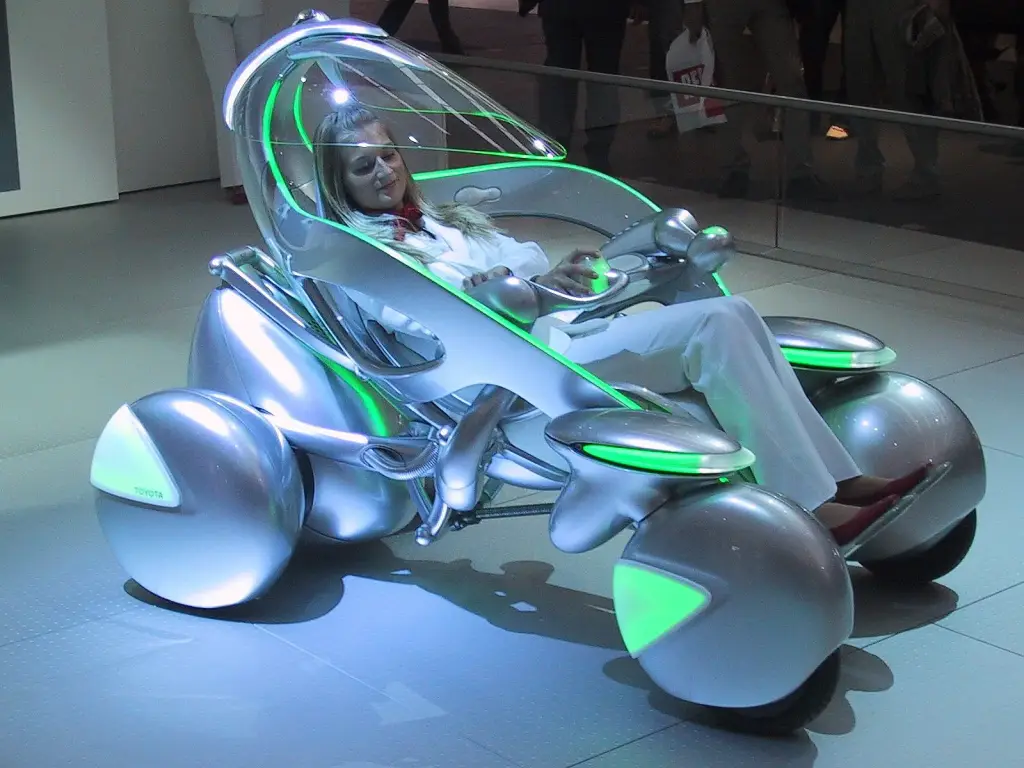
The Toyota i-unit is an ultra-compact single-seater four-wheeled concept vehicle that debuted at the 2005 World Expo in Aichi, Japan. It is a cross between a microcar, a motorcycle and a wearable exoskeleton, and Toyota built it to explore personal mobility that can share space with pedestrians.
Toyota i-unit at a glance
| Maker | Toyota |
|---|---|
| Shown | World Expo 2005, Aichi |
| Class | Single-seat personal mobility concept |
| Weight | 180 kg |
| Battery | Lithium-ion |
| Drive | Electric motors on the rear wheels |
| Steering | Front wheels, with a 0.9 m turning radius upright |
| Controls | Two joysticks, drive-by-wire |
| Height modes | Upright for low speed, reclined for high speed |
| Design | Leaf-shaped body with kenaf-based materials |
Based on one source: the English Wikipedia article on the Toyota i-unit.
History of the Toyota i-unit
The idea
Toyota described the i-unit as personal mobility that balances an individual’s wish for freedom of movement with harmony with society and with the environment, calling these vehicles wearable personal mobility. The aim was a device that could be used on roads without hindering interaction with pedestrians, which is why the machine has two setups. In the upright low-speed mode the rider sits high and can talk face to face with people and move among them; the rider can transform the i-unit while moving into a low, reclined position with a much lower centre of gravity for higher speeds.
Engineering
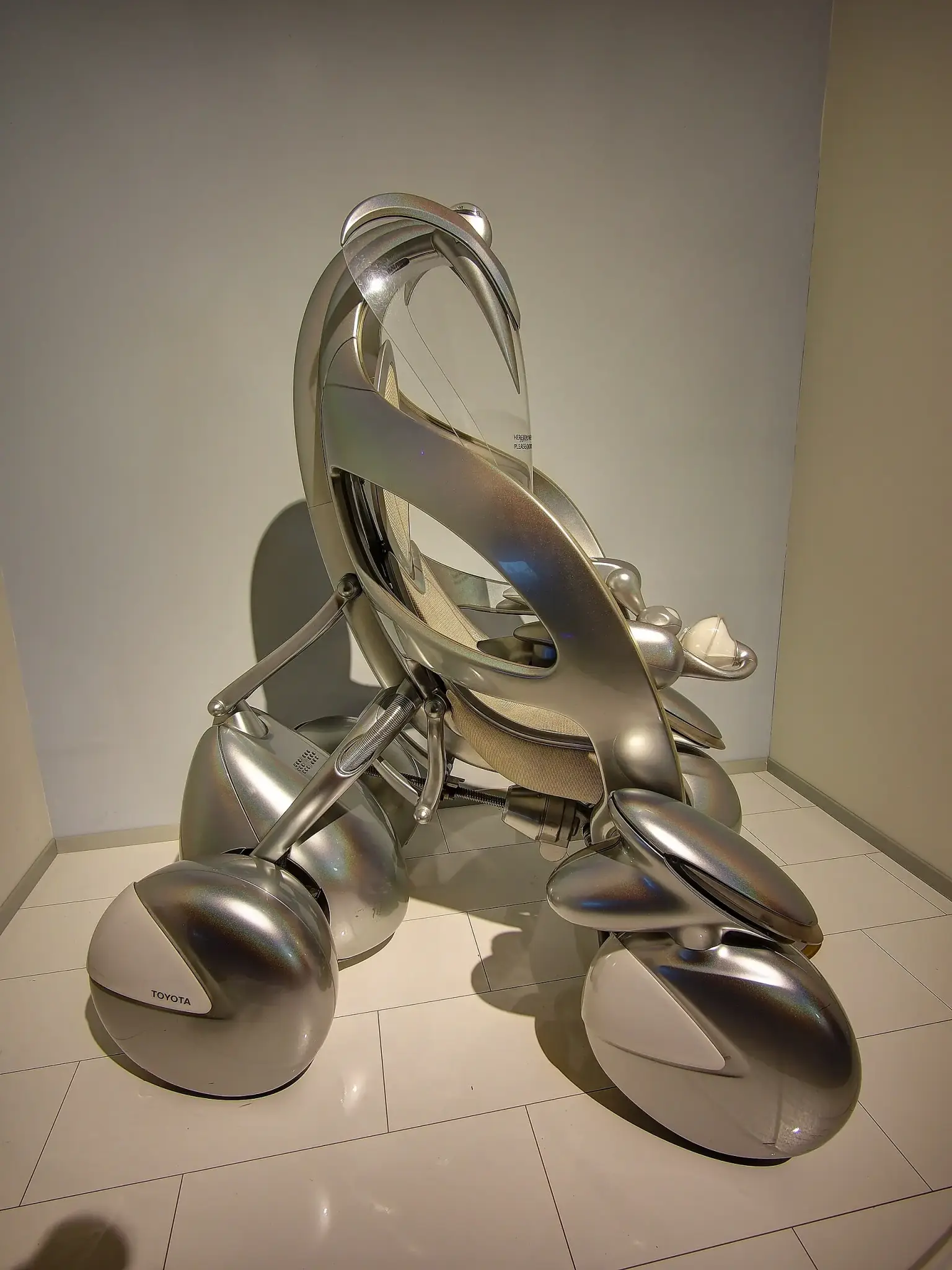
The i-unit weighs 180 kg and carries a lithium-ion battery. Its rear wheels are driven by electric motors and it is steered by the front wheels, with a turning radius of 0.9 metres in the upright position, so it can turn on the spot. It is controlled by two joystick-like devices at the front of the armrests through drive-by-wire technology, and uses Intelligent Transport System technology intended to reduce the likelihood of accidents. The colour of its lights can change according to the preferences or emotions of the operator, and the body is shaped to symbolise a leaf, using environmentally friendly materials such as kenaf.
Public life
Twelve i-units, together with two Toyota i-foots, two-legged walking seats for one passenger with a maximum capacity of 60 kg, performed at the Toyota Pavilion at the 2005 World Expo. A Toyota representative at the 2005 Frankfurt show said the company might offer such vehicles for sale but gave no date, noting that the i-unit lacked storage space and adequate weather protection. The concept was superseded by the i-swing, a three-wheeler that leans in curves, and one i-unit is on display at the London Science Museum, where its bio-plastic panels are featured.
Design and features
- Two positions: upright for mingling with pedestrians, reclined for speed.
- Electric drive: rear-wheel motors and a lithium-ion battery.
- Tiny turning circle: 0.9 metres in the upright position.
- Drive-by-wire: two joysticks instead of a steering wheel.
Toyota i-unit versions
- i-unit (2005): the four-wheeled single-seater described here.
- i-foot: a two-legged walking seat for one passenger, shown alongside it.
- i-swing: the later three-wheeled successor that leans in curves.
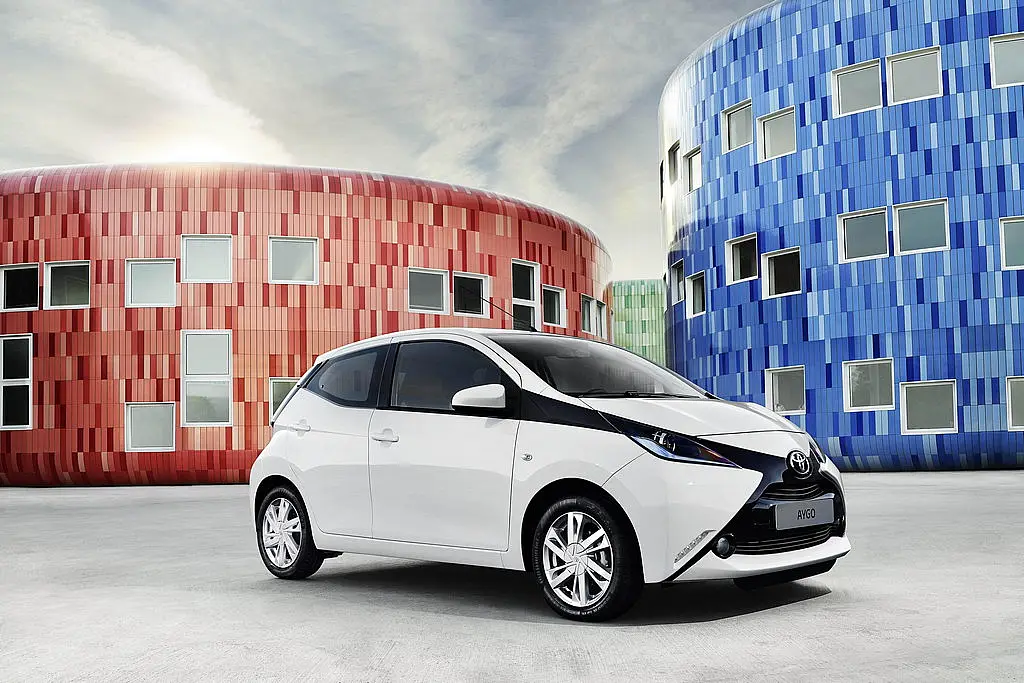
The i-unit explored personal mobility alongside Toyota’s production city cars such as the iQ and the Aygo. More cars are in the Toyota collection.
Sources
- Toyota i-unit, English Wikipedia: concept, engineering, public display