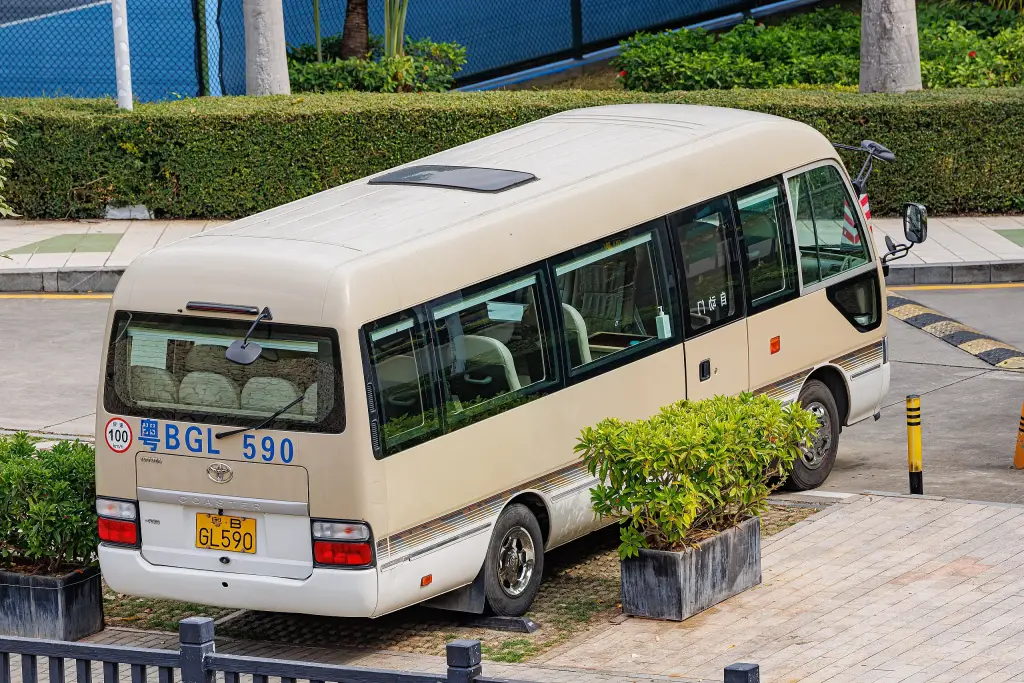
The Toyota Coaster is a single-decker minibus produced since 1969. Four generations have followed, with the second arriving in 1982, the third in 1992 and the fourth at the end of 2016, and since 1996 the same bus has also been sold by Hino as the Liesse II.
Toyota Coaster at a glance
| Maker | Toyota |
|---|---|
| Production | Since February 1969 |
| Class | Single-decker minibus |
| Generations | Four |
| First engine | 2.0-litre 5R petrol, 98 PS |
| First gearbox | Four-speed manual with column shift |
| Hybrid version | 1997–2007, Toyota’s first production hybrid |
| Sold through | Toyota Store, Japan |
| Twin model | Hino Liesse II from 1996 |
| Built by | Toyota Auto Body, then Gifu Auto Body |
Based on one source: the English Wikipedia article on the Toyota Coaster.
History of the Toyota Coaster
First generation (U10/B10; 1969)
The Coaster was introduced in February 1969 in 22- and 26-seat forms, using the platform of the Dyna truck. It came with the 1,994 cc 5R petrol engine or the 2,481 cc 2J diesel, all with a four-speed column-shift gearbox, and air conditioning was optional on deluxe models. In February 1972 the 2J diesel gave way to the 3.0-litre B engine with a five-speed column-shift gearbox. A 1977 update moved the range to the B-series codes, added a 2.2-litre 20R petrol, replaced the diesel with the 3.2-litre 2B and introduced a high-roof body. Column shifting was dropped in November 1979, and a 2.4-litre 22R petrol arrived in August 1980.
Second and third generations
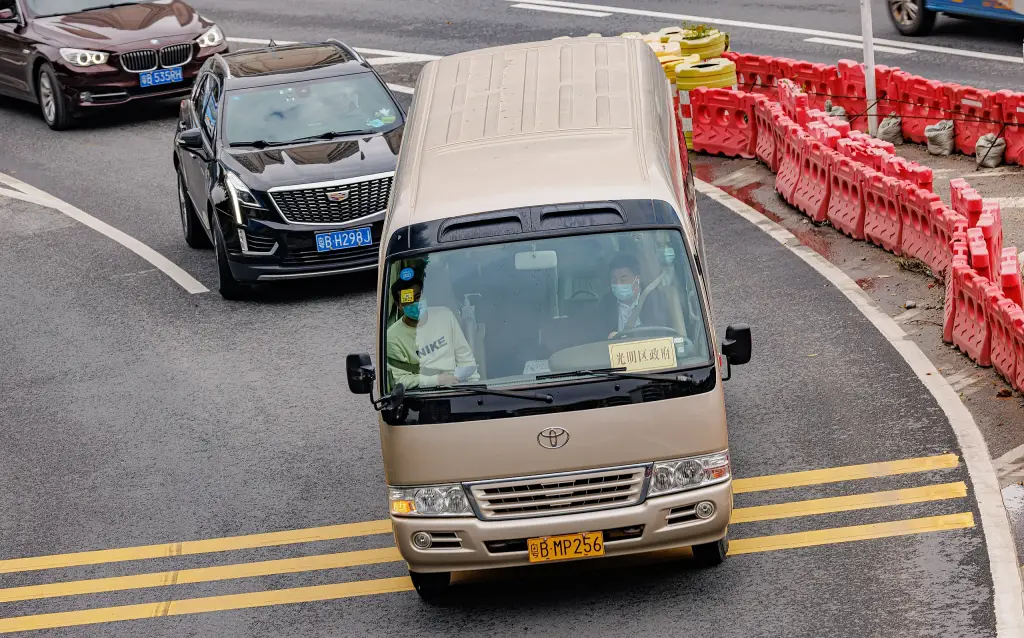
The second generation of May 1982 brought a new body with a wraparound windscreen, thicker rear pillars and a single-piece passenger door for high-roof models; the 2B diesel was replaced by the 3.4-litre 3B. The third generation, introduced in January 1993, had a more aerodynamic body and engines including the 4.2-litre 1HD-T turbo-diesel, the 4.2-litre 1HZ and the 3.4-litre 3B. Four-wheel drive arrived in November 1995 with the BB55/BB58, and the 4.1-litre 15B-F diesel joined the range.
The hybrid and the fourth generation
In August 1997 Toyota launched the Coaster Hybrid EV, a series hybrid using a 1.5-litre 5E engine to generate electricity for the motor. The engine ran at a fixed speed, which cut noise, vibration and emissions and improved fuel economy, and it produced 95 PS; the bus was intended for urban use. According to Toyota it was the company’s first production hybrid vehicle, arriving before the Prius, and it stayed on sale until 2007. The fourth generation was unveiled on 22 December 2016, the first vehicle fully redesigned by Toyota’s new Commercial Vehicle company, with airbags, stability control, a ring-frame body and seat-belt pretensioners as standard.
Design and features
- Long-running minibus: in production since 1969 with four generations.
- Hybrid pioneer: the 1997 Coaster Hybrid EV was Toyota’s first production hybrid.
- Dyna running gear: the original bus used the Dyna truck’s platform.
- Worldwide use: common as public transport in Asia, Africa, the Middle East and Latin America.
Toyota Coaster versions
- RU18/JU18 (1969): first generation with 5R petrol or 2J diesel.
- B10 (1977): B-series codes, 2.2-litre petrol, 3.2-litre diesel, high roof.
- B20/B30 (1982): second generation with a new body and 3B diesel.
- B40/B50 (1993): third generation with 1HD-T and 1HZ diesels.
- Coaster Hybrid EV (1997): series hybrid with a 1.5-litre engine.
- Fourth generation (2016): new body and a package of safety equipment.
The Coaster shares its mechanical family with the Dyna and sits above the HiAce in Toyota’s bus range. More cars are in the Toyota collection.
Sources
- Toyota Coaster, English Wikipedia: generations, engines, hybrid