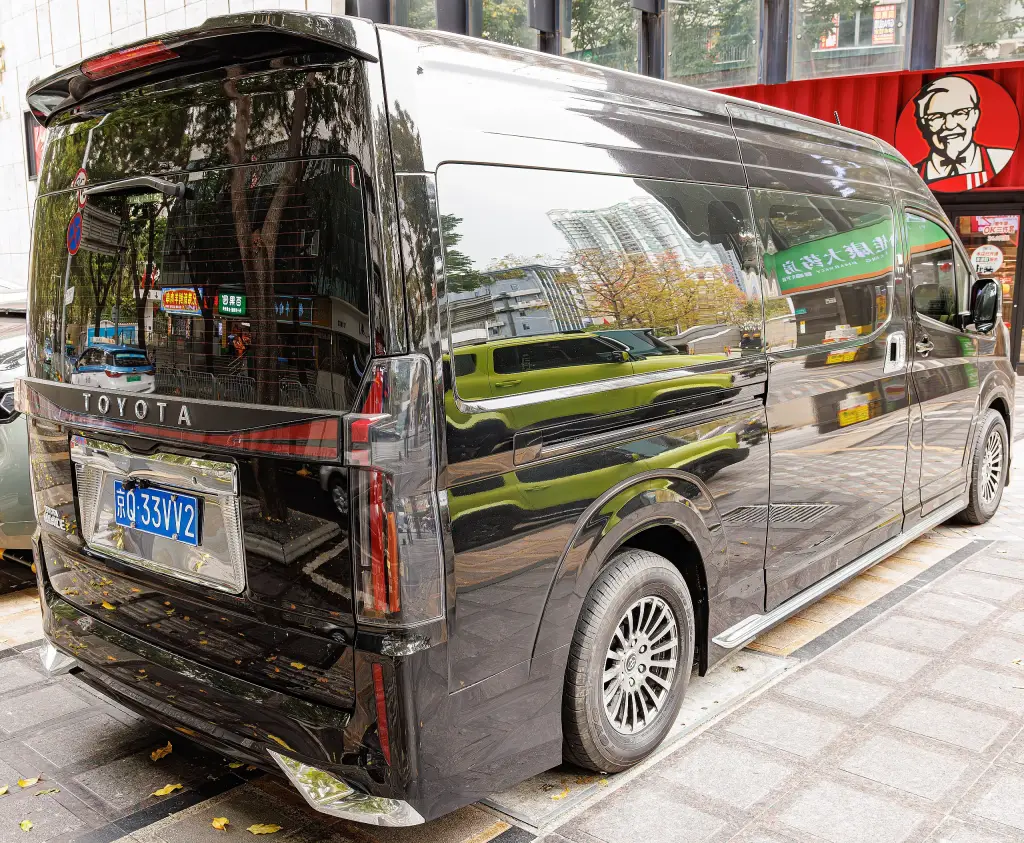
The Toyota HiAce is a light commercial vehicle first launched in October 1967 and produced ever since in many body styles: minivan, minibus, panel van, crew van, pickup, taxi and ambulance. Toyota Auto Body led its development as a one-box van, a layout then unusual in Japan.
Toyota HiAce at a glance
| Maker | Toyota |
|---|---|
| Production | Since October 1967 |
| Class | Light commercial vehicle |
| Layout | Cab-over, engine under and between the front seats |
| First generation | H10, 1967 |
| First engines | 1.35-litre of 70 PS to 1.6-litre of 83 PS |
| Body styles | Van, minibus, pickup, ambulance, taxi |
| Commuter seating | Up to 15 passengers |
| South African name | Toyota Quantum, from 2005 |
| Current generation | H300 |
Based on one source: the English Wikipedia article on the Toyota HiAce.
History of the Toyota HiAce
First generation (H10; 1967)
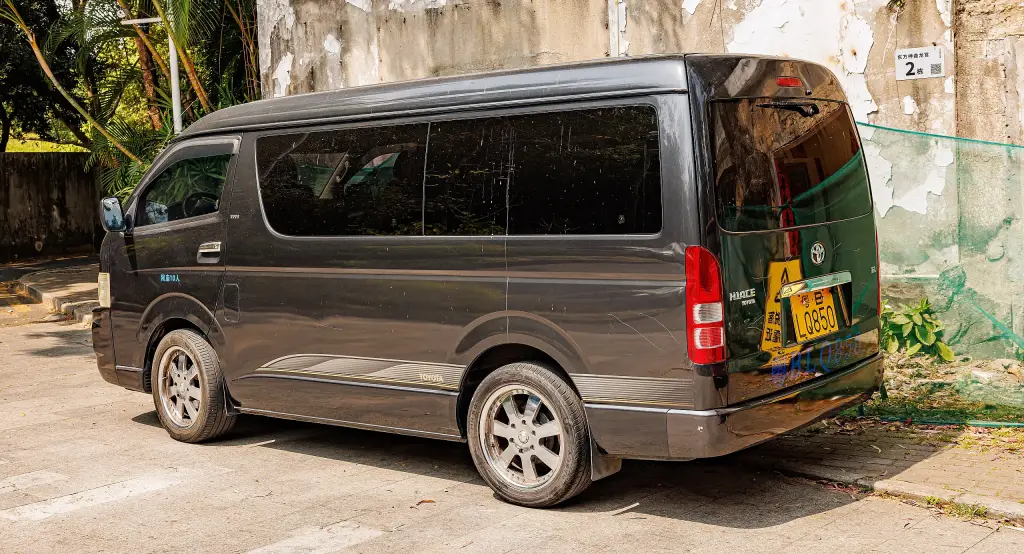
In the late 1960s Toyota Auto Body developed the HiAce as a small one-box van, similar to European designs but, according to former Toyota engineer Akira Kawahara, unlike anything then built in Japan. It was offered as a cab-over pickup, a delivery van and a stretched commuter vehicle, and in camper form as the HiAce Commercial. It arrived two years after the Nissan Homy. Engines ranged from a 1.35-litre of 70 PS to a 1.6-litre of 83 PS, with a 1.8-litre 16R added in 1975. Designed to carry up to eight people, the van kept within Japanese dimension and engine rules, and its cab-over layout put the engine under and between the front seats. It was a smaller alternative to the Coaster and shared its launch year with the tiny MiniAce.
Second and third generations
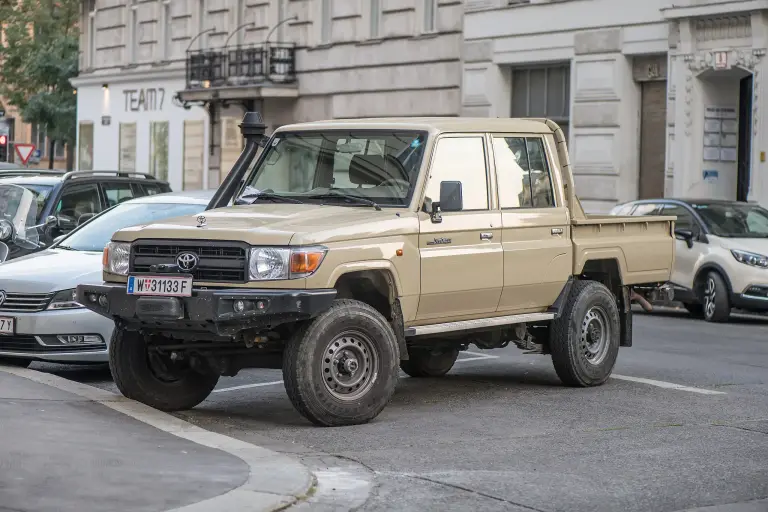
The 1977 HiAce had a longer, more streamlined cab with single headlamps. As it grew, Toyota added the smaller LiteAce to keep offering the original car’s dimensions, and a 2.2-litre diesel became available in some markets. New body styles included a double-cab pickup, a super-long-wheelbase van and a super-long high-roof Commuter seating up to 15. The third generation arrived in 1982 with a new van, and the pickup followed in August 1985 using the ToyoAce’s cab design; that pickup lasted until 1995 and was the last HiAce-based truck. Air conditioning became standard on some versions from this generation.
Fourth generation and beyond
The H100 of August 1989 came in standard and long wheelbases, as a Grand Cabin, van and high-roof van, with a 15-seat Commuter sharing the high-roof body. Engines ran from 2.0-litre petrol to 3.0-litre turbo-diesel, the 2.4-litre 2L-T becoming the electronically controlled 2L-TE in October 1990. Most versions were rear-wheel drive, but part-time and full-time four-wheel drive were offered; in Japan the four-wheel-drive model started with the 2.8-litre 3L diesel, while export markets also got petrol versions. Trims ran from the base DX to GL, Super GL, Super Custom and Super Custom Limited. An August 1993 facelift brought the 3.0-litre 1KZ-TE turbo-diesel, and further facelifts followed in 1997 and 2002. In South Africa the H100 continued alongside the H200 Quantum from 2005 until the end of 2007.
Design and features
- One-box design: a cab-over body with the engine under the front seats.
- Many roles: van, minibus, pickup, ambulance and taxi from the same base.
- Commuter: the long high-roof version seats up to fifteen.
- Four-wheel drive: available in part-time and full-time forms.
Toyota HiAce versions
- H10 (1967): first generation van, pickup and commuter.
- H11/H20 (1977): second generation with new body styles.
- H50/H60/H70 (1982): third generation, pickup until 1995.
- H100 (1989): fourth generation with 2.0 to 3.0-litre engines.
- Quantum: South African name for the H200 from 2005.
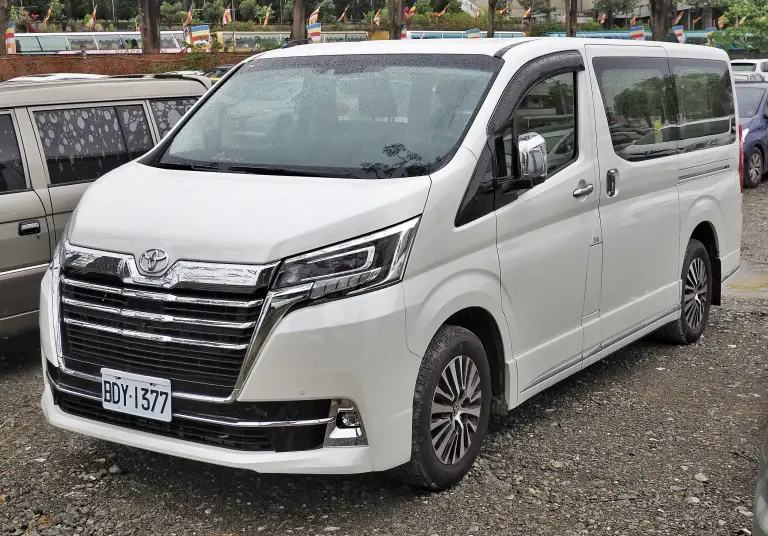
- H300: the current generation, also sold as the Granvia.
The HiAce sits below the Coaster and above the LiteAce, and its current generation is also sold as the Granvia. More cars are in the Toyota collection.
Sources
- Toyota HiAce, English Wikipedia: generations, engines, body styles