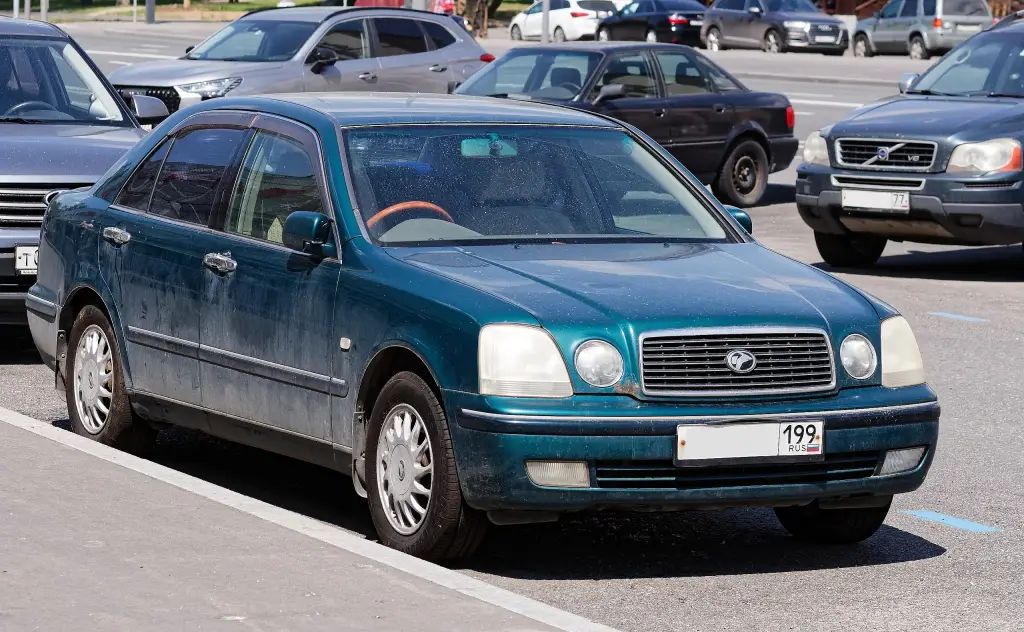
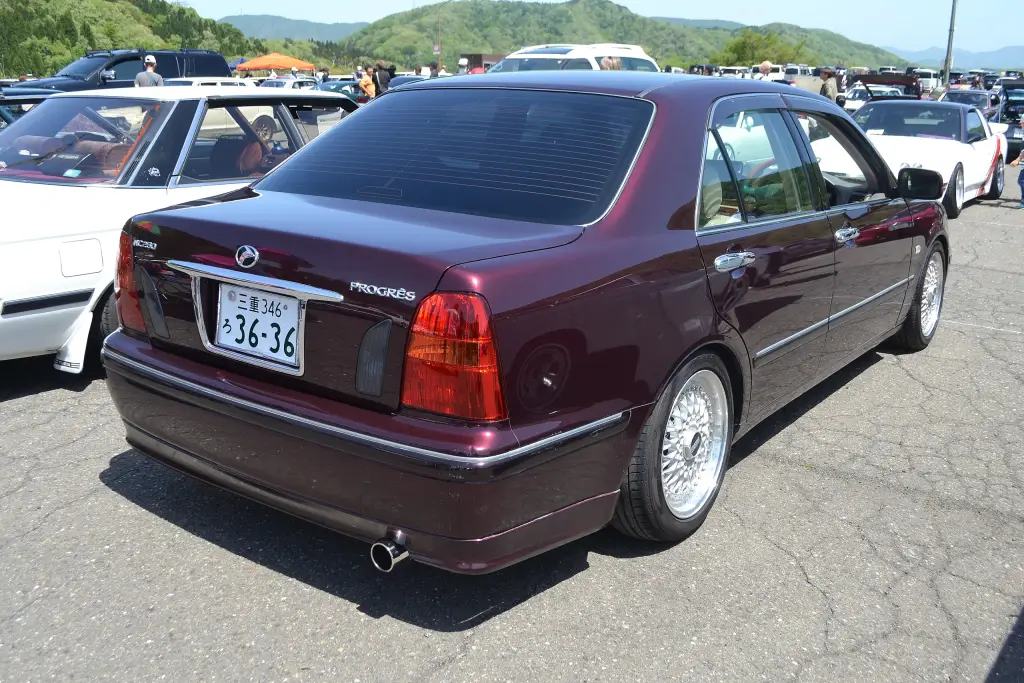
The Toyota Progrès was a mid-size luxury saloon sold in Japan from May 1998 to June 2007, replacing the Corona EXiV. Its name is French for “progress”, and like the Century it did not carry Toyota’s emblem: instead it wore a badge with the letter “P” on the grille, boot lid, wheel centres, steering wheel and key.
Toyota Progrès at a glance
| Maker | Toyota |
|---|---|
| Production | May 1998 – June 2007 |
| Market | Japan only |
| Class | Mid-size luxury saloon |
| Platform | Lexus IS / Toyota Altezza |
| Layout | Front engine, rear-wheel drive |
| Engines | 2.5 and 3.0-litre straight-six with VVT-i |
| Direct injection | 1JZ-FSE and 2JZ-FSE from April 2001 |
| Grades | NC250 and NC300 |
| Sold through | Toyopet Store |
| Twin model | Toyota Brevis |
Based on one source: the English Wikipedia article on the Toyota Progrès.
History of the Toyota Progrès
Position and equipment
The Progrès replaced the Corona EXiV and was sold only at Toyopet Store, while its twin, the Brevis, went to Toyota Store and was marketed like the Verossa at Vista Store. Because its width and engine size exceeded Japanese regulations, it fell into the larger “passenger car” tax class, and two engine sizes let buyers choose their annual road tax; the larger engine came with more equipment. The car offered six airbags, voice-operated G-BOOK navigation, wood and leather trim, an analog clock with gold or silver trim, two-zone climate control and automatically operated headlights and wipers. It also had NAVI AI-SHIFT, one of the first navigation-controlled automatic transmission systems.
Chassis and engines
Although it used the same platform as the Lexus IS, the Progrès was built for more passenger room and a more flexible suspension, with double wishbones at both ends. It came with 2.5- or 3.0-litre JZ straight-six engines with VVT-i; from April 2001 these were replaced by the direct-injection 1JZ-FSE and 2JZ-FSE, the same units used in the Crown and Aristo. Cars with the 1JZ were badged NC250 and those with the 2JZ NC300, with NC standing for NEO CATEGORY.
Versions
The range included the standard car, a Walnut Package with walnut interior, a Noble Interior Package with bird’s-eye maple, an iR Version with stiffer suspension and a woodgrain interior, and an iR Version Walnut Package. In May 1999 Toyota added the first sport model, the iR, with a dark-toned grille, headlights and rear lamps, plated aluminium wheels, new soft privacy glass, black leather seats as the only interior colour and special equipment. Production ended in June 2007, leaving the smaller Premio to carry on as Toyota’s affordable luxury saloon.
Design and features
- Own emblem: a “P” badge instead of the Toyota logo, as on the Century.
- Six airbags and G-BOOK: advanced equipment for its time.
- NAVI AI-SHIFT: an early navigation-linked automatic transmission.
- Double wishbones: a more comfort-focused set-up than the Lexus IS.
Toyota Progrès versions
- NC250: 2.5-litre 1JZ engine.
- NC300: 3.0-litre 2JZ engine with more standard equipment.
- Walnut Package: walnut interior trim.
- Noble Interior Package: bird’s-eye maple panels.
- iR (1999): sport version with stiffer suspension and black leather.
- D-4 engines (2001): direct-injection 1JZ-FSE and 2JZ-FSE.
The Progrès was the twin of the Brevis and shared its platform with the Altezza, while its engine family also served the Crown. More cars are in the Toyota collection.
Sources
- Toyota Progrès, English Wikipedia: equipment, engines, versions