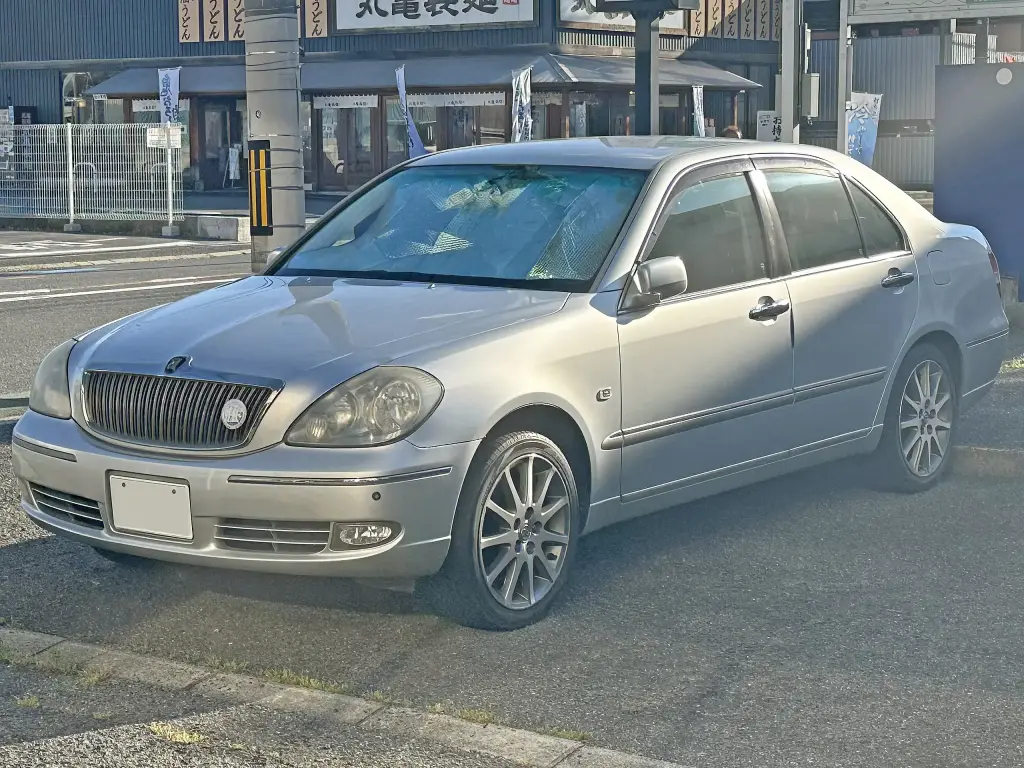
The Toyota Brevis was a mid-size luxury saloon sold only in Japan from May 2001 to June 2007. It shared its rear-wheel-drive platform with the Lexus IS and its styling cues with the Lexus LS 430, and it was the twin of the Toyota Progrès, which was sold through Toyopet Store while the Brevis went to Toyota Store.
Toyota Brevis at a glance
| Maker | Toyota |
|---|---|
| Production | May 2001 – June 2007 |
| Market | Japan only |
| Class | Mid-size luxury saloon |
| Layout | Front engine, rear- or four-wheel drive |
| Engines | 2.5- and 3.0-litre straight-six, 200 and 220 hp |
| Gearbox | Five-speed automatic (rear-drive), four-speed (4WD) |
| Suspension | Double wishbones at all four wheels |
| Wheelbase | 2,780 mm |
| Weight | 1,550 kg |
| Twin model | Toyota Progrès |
| Name | Latin brevis, “brief” |
Based on one source: the English Wikipedia article on the Toyota Brevis.
History of the Toyota Brevis
Concept and position
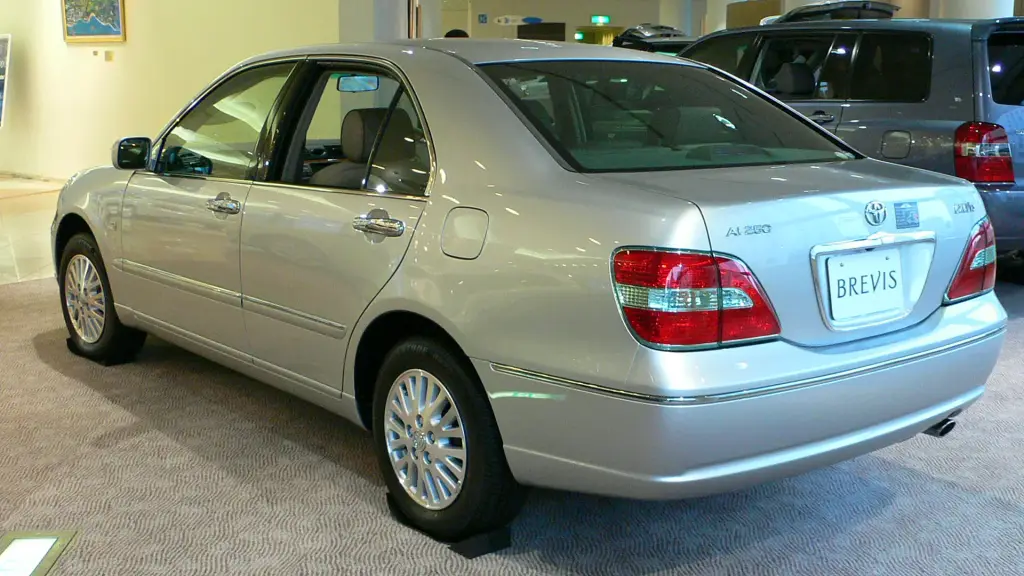
The Brevis was developed as a “mini LS430”, with many styling cues from the Lexus LS 430, and it replaced the market segment of the Toyota Carina ED. Unlike its twin, the Progrès, it was aimed at younger buyers and was intended to compete with imported models such as the BMW 3 Series and Mercedes-Benz C-Class. It was introduced at the same time as the Toyota Allion, and had it been sold outside Japan it would probably have carried a Lexus badge, priced between the IS and the GS. The Brevis was exclusive to Toyota Store dealers, while the Progrès went to Toyopet Store.
Chassis and engines
The car used the same rear-drive platform as the Lexus IS, with double-wishbone suspension at all four corners and the wheelbase stretched to 2,780 mm. Two straight-six engines were offered, both with VVT-i and D-4 direct injection: a 2.5-litre of 200 hp and a 3.0-litre of 220 hp. Rear-drive cars had a five-speed automatic, and the 2.5-litre could also be ordered with four-wheel drive and a four-speed automatic. At 1,550 kg it weighed about the same as its European rivals, but the softer suspension and less direct steering made it less agile; Toyota left the dynamic role to Lexus.
Equipment and changes
The Brevis was well equipped even in base form, with a power-adjustable pedal, memory for the pedals, steering wheel and driver’s seat, an electric rear sunshade, radar cruise control, vehicle stability control, ABS and HID headlamps. The centre console housed an LCD monitor and an alloy-look sound system with an in-dash CD changer, DVD and MiniDisc playback and up to seven speakers. It was facelifted in April 2004 with a mesh grille, and cars built after December 2005 gained an EMV system with reversing camera and a DVD navigation system with G-BOOK. Production ended in June 2007 after six years.
Design and features
- Lexus IS platform: rear-wheel drive with double-wishbone suspension, wheelbase 2,780 mm.
- Straight-six engines: 2.5- and 3.0-litre units of 200 and 220 hp with VVT-i and D-4 injection.
- Luxury equipment: radar cruise control, electric rear sunshade, memory for pedals and seat.
- Mini LS430 styling: three round headlamps and LS-inspired lines.
Toyota Brevis versions
- 2.5-litre (2001): rear-wheel drive with a five-speed automatic, or four-wheel drive with a four-speed.
- 3.0-litre (2001): the larger straight-six with 220 hp.
- 2004 facelift: mesh front grille.
- Late cars (2005): EMV with reversing camera and DVD navigation.
- Progrès: the twin model sold at Toyopet Store.
The Brevis was the twin of the Progrès and shared its platform with the Altezza. More cars are in the Toyota collection.
Sources
- Toyota Brevis, English Wikipedia: engineering, engines, equipment