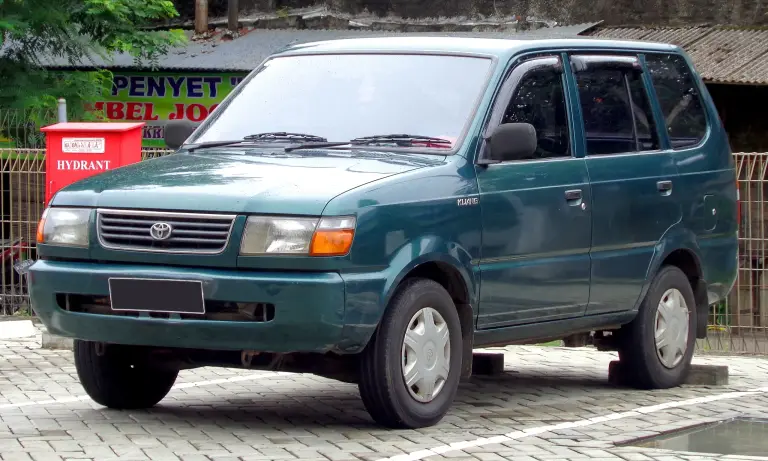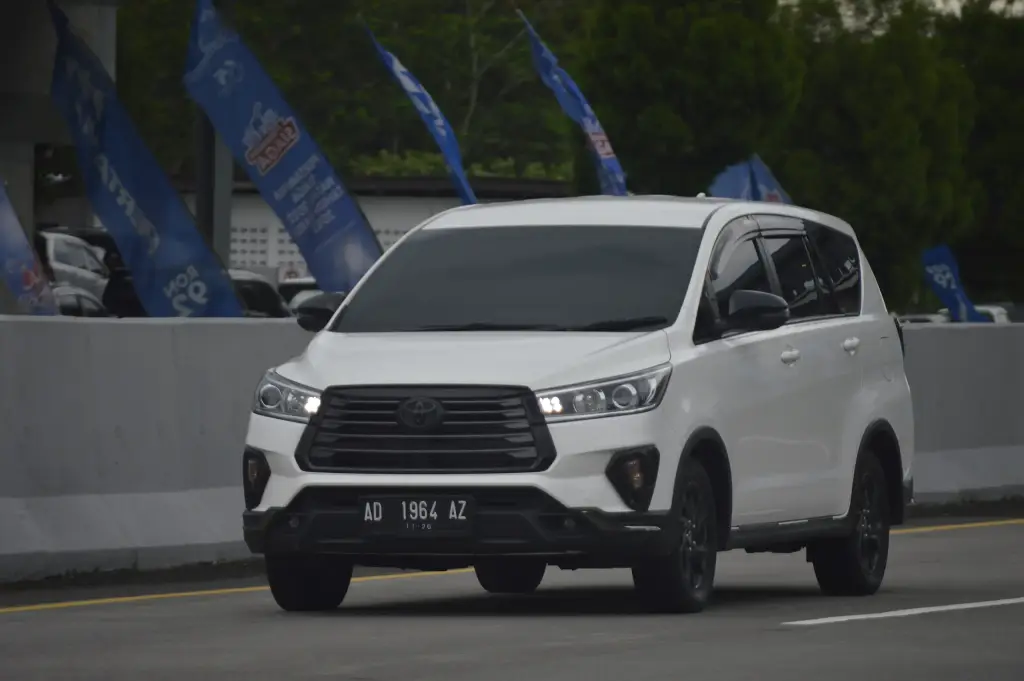
The Toyota Innova is a three-row MPV produced since 2004 and the replacement for the station-wagon versions of the Kijang, sold as the Tamaraw, Unser, Zace and Condor in various markets. The first two generations used the body-on-frame IMV platform shared with the Hilux and Fortuner; the third switched to front-wheel drive.
Toyota Innova at a glance
| Maker | Toyota |
|---|---|
| Production | Since September 2004 |
| Also called | Kijang Innova, Innova Crysta, Innova Zenix, Innova HyCross |
| Class | Three-row MPV |
| First generation | AN40, from 2004 |
| Platform | IMV body-on-frame, shared with Hilux and Fortuner |
| Third generation | Front-wheel drive on the GA-C platform, 2022 |
| Seats | Five, seven or eight depending on market |
| Chief engineer | Kaoru Hosokawa |
| Name | From the English word “innovate” |
Based on one source: the English Wikipedia article on the Toyota Innova.
History of the Toyota Innova
First generation (AN40; 2004)
The first Innova debuted in Indonesia in September 2004, following the 2003 Avanza, which had replaced the low-spec versions of the Kijang. In Indonesia it was badged as the Kijang Innova and sold as the fifth-generation Kijang to keep the lineage, but with a more upmarket position. Development started in 1999 under Kaoru Hosokawa, and the target was 80,000 cars a year in Indonesia, including 10,000 for export. Compared with the long-wheelbase fourth-generation Kijang wagon, the Innova was 30 mm longer and 100 mm wider, with a 100 mm longer wheelbase and more rounded MPV proportions. It could finally be ordered with ABS and airbags, and used throttle-by-wire, variable valve timing, independent double-wishbone front suspension and a four-link coil-sprung rear axle. Bodies ranged from a five-seat version in Taiwan to eight- and seven-seat layouts with captain chairs in the second row.
Facelifts and the Indian market
A facelift arrived on 26 August 2008 in Indonesia, then in the Philippines in November 2008 and India on 28 January 2009, followed by further updates in July 2011 and August 2013. In India the Innova launched on 24 February 2005 as the replacement for the Qualis, with twelve variants, a 2.0-litre 1TR-FE petrol engine and a 2.5-litre 2KD-FTV diesel; grades were E, G, GX and VX, and a flagship Z trim came in 2012. Toyota set an initial target of 45,000 cars a year. The Innova became a mainstay of Indian tourist taxis and large companies’ fleets. The 2009 update added an intercooler for the diesel, 2012 brought new bumpers, lamps and wheels, and a 2015 update made twin airbags standard and added rear air-conditioning vents.
The third generation
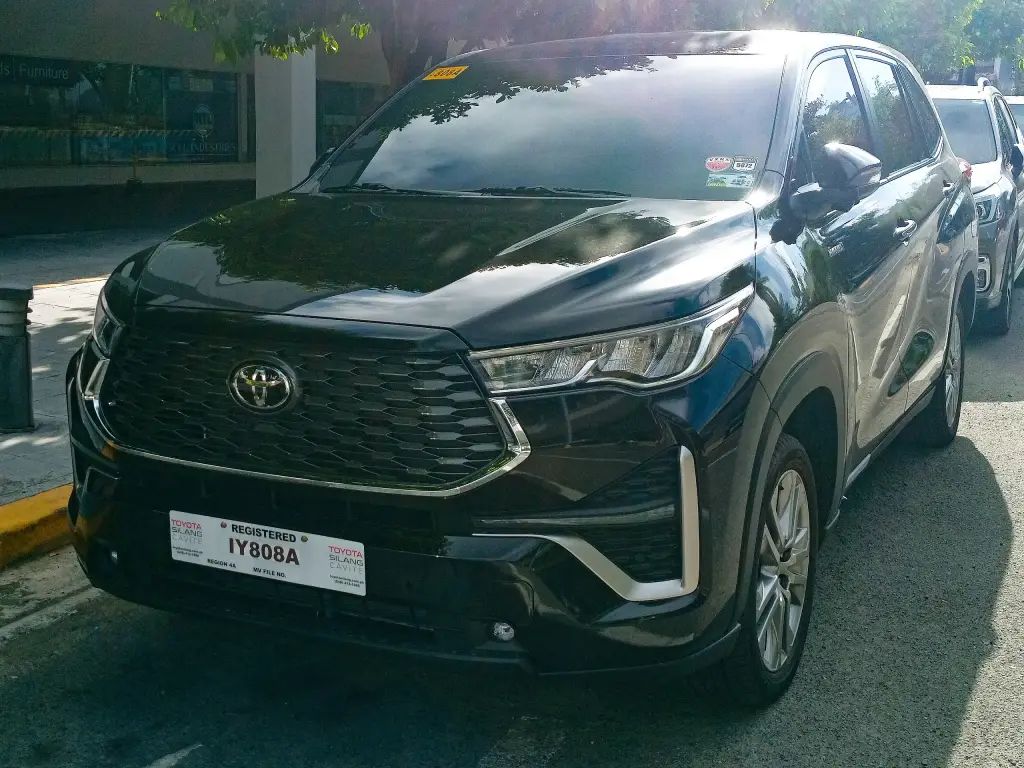
The Innova introduced in 2022 switched to front-wheel drive on the GA-C platform with a unitary body. Toyota said the change was needed to use a hybrid powertrain, which the IMV platform could not take, and brought comfort and efficiency benefits. The new model is sold as the Kijang Innova Zenix in Indonesia, the Innova Zenix abroad, the Zenix in the Philippines and the Innova HyCross in India, where Maruti Suzuki also sells it as the Invicto. The Innova is built in Indonesia, India, Malaysia, the Philippines, Taiwan and Vietnam and sold across Southeast Asia, the Gulf, Egypt, Ecuador, Jamaica and Argentina.
Design and features
- Ladder frame: the first two generations used the IMV chassis for durability.
- Kijang lineage: the Indonesian car is badged Kijang Innova as the fifth-generation Kijang.
- Indian mainstay: widely used as a tourist taxi and corporate shuttle.
- Hybrid switch: the 2022 generation moved to front-wheel drive to accommodate hybrid power.
Toyota Innova versions
- AN40 (2004): first generation, five to eight seats depending on market.
- 2008 facelift: new bumpers, grille and rear lamps.
- 2011 and 2013 updates: revised front end, interior and equipment.
- Indian Z trim (2012): flagship grade above the VX.
- Innova Crysta: the second generation in India and Thailand.
- Innova Zenix / HyCross (2022): front-wheel-drive third generation with a hybrid option.
The Innova replaced the Kijang wagon and shares its platform with the Hilux and Fortuner. More cars are in the Toyota collection.
Sources
- Toyota Innova, English Wikipedia: generations, markets, updates