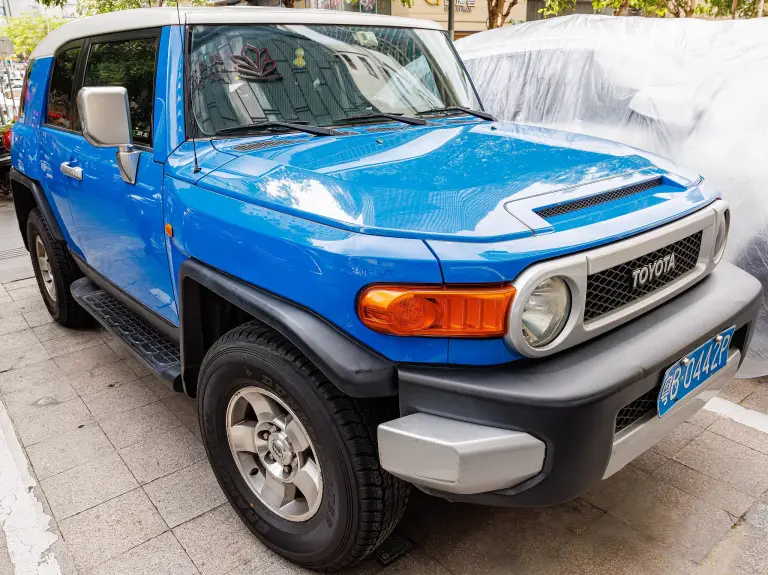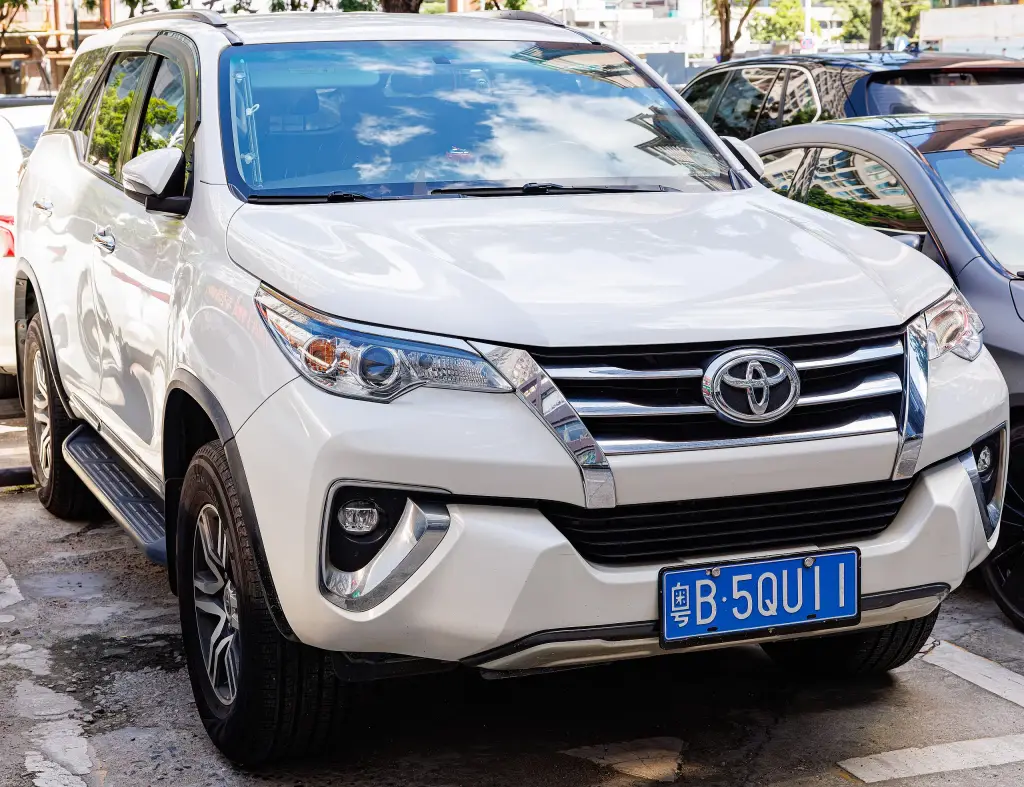
The Toyota Fortuner, also sold as the Toyota SW4, is a mid-size SUV built on the Hilux pickup truck platform since 2004. It is part of Toyota’s IMV project for emerging markets, alongside the Hilux and the Innova, and is offered with two or three rows of seats in rear- or four-wheel drive.
Toyota Fortuner at a glance
| Maker | Toyota |
|---|---|
| Production | Since 2004 |
| Also called | Toyota SW4 in South America |
| Class | Mid-size SUV |
| Platform | Toyota Hilux, IMV project |
| Position | Below the Land Cruiser Prado, above the RAV4 |
| Engines | 2.5 and 3.0-litre diesels, 2.7-litre four and 4.0-litre V6 petrol |
| Gearboxes | Five-speed manual, four- or five-speed automatic |
| Developed in | Thailand, later Australia |
| Name | From the English word fortune |
Based on one source: the English Wikipedia article on the Toyota Fortuner.
History of the Toyota Fortuner
First generation (AN50/AN60; 2004)
The Fortuner was unveiled in December 2004 at the Thailand International Motor Expo and went on sale in early 2005, developed in Thailand by Thai and Japanese engineers. It was positioned below the Land Cruiser Prado and above the RAV4, and available with 2.7-litre 2TR-FE and 4.0-litre 1GR-FE petrol engines or 2.5-litre 2KD-FTV and 3.0-litre 1KD-FTV common-rail diesels. All versions came with rear- or four-wheel drive, a five-speed manual and a four- or five-speed automatic. Grades were G and G Luxury for rear-wheel drive and V for four-wheel drive, and the turbo-diesel had a functional bonnet scoop. In 2007 Toyota Thailand replaced the four-wheel-drive petrol model with a two-wheel-drive version.
Engine updates
In August 2012 the 2.5-litre 2KD-FTV diesel was upgraded to a variable-nozzle turbocharger, already used on the 3.0-litre 1KD-FTV since 2005, raising power and torque by about 60 per cent and cutting fuel consumption by up to 30 per cent. With that change the Fortuner reached 100 km/h in about 11 seconds, or under 10 seconds with the 3.0-litre engine. The update was launched to mark a Pertamina expedition from Jakarta to Rome, about 20,000 km, made with a group of Fortuners.
Around the world
The facelifted first-generation car, like the Hilux and Innova, was designed in Australia by Toyota Australia, which also developed the second generation. In Argentina the Fortuner is assembled in Zárate and sold as the SW4, the only D-segment SUV built in the country, with more than 40 per cent local and 60 per cent regional parts by 2020. Brazil has sold it as the SW4 since 2006 with 3.0-litre diesel, 4.0-litre V6 and 2.7-litre flex-fuel engines. It is also assembled or sold in Brunei, Colombia, Ecuador, Egypt and India, and specialised versions with the naturally aspirated 5L-E diesel are supplied to governments, organisations and the United Nations alongside the Prado, Hilux, HiAce and Land Cruiser.
Design and features
- Hilux platform: body-on-frame construction from Toyota’s IMV programme.
- Three rows: two or three rows of seats, with rear- or four-wheel drive.
- Diesel choice: 2.5- and 3.0-litre common-rail units, the smaller gaining VNT in 2012.
- SW4: the name used for the same SUV in Argentina and Brazil.
Toyota Fortuner versions
- AN50/AN60 (2004): first generation, developed in Thailand.
- G and G Luxury: rear-wheel-drive grades.
- V: four-wheel-drive grade with the 3.0-litre diesel or 4.0-litre V6.
- 2012 update: variable-nozzle turbo for the 2.5-litre diesel.
- SW4: South American name, assembled in Argentina.
The Fortuner shares its platform with the Hilux and Innova, and sits below the Land Cruiser Prado. More cars are in the Toyota collection.
Sources
- Toyota Fortuner, English Wikipedia: generations, engines, markets