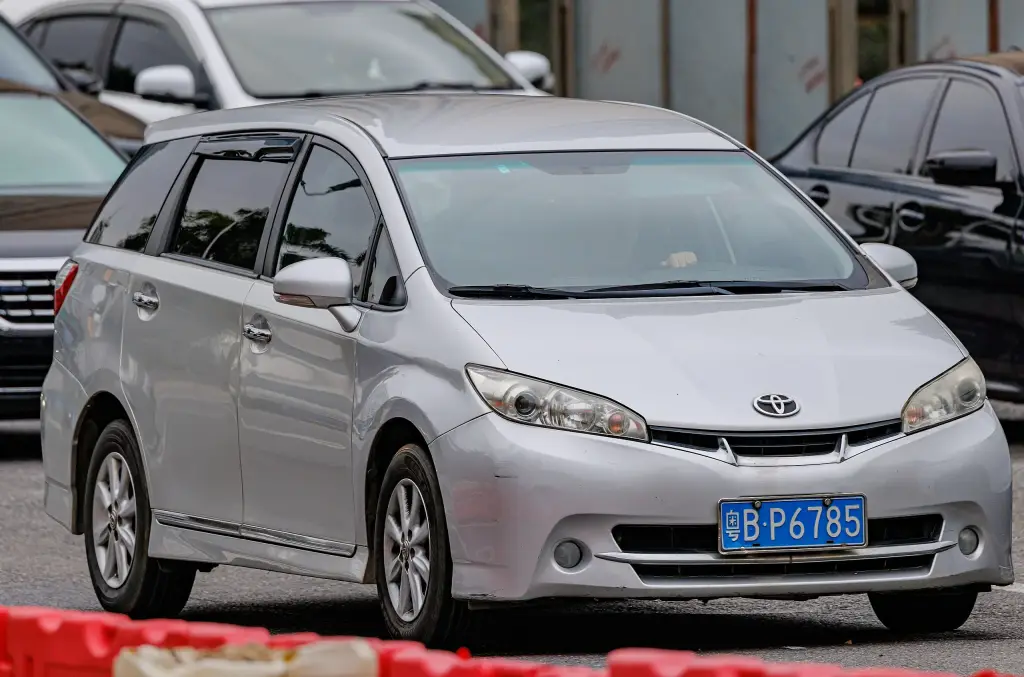
The Toyota Wish was a compact MPV with three rows of seats produced from 2003 to 2017. It sat between the Corolla Spacio and the Ipsum in Toyota’s minivan range, was sold at Toyota Netz dealers in Japan, and was also assembled in Thailand for Malaysia and Singapore and in Taiwan.
Toyota Wish at a glance
| Maker | Toyota |
|---|---|
| Production | January 2003 – 2017 |
| Markets | Japan, Thailand, Taiwan, Singapore, Malaysia, Hong Kong |
| Class | Compact three-row MPV |
| First generation | AE10, 2003–2009 |
| First engines | 1.8-litre 1ZZ-FE and 2.0-litre 1AZ-FSE |
| Power | 132 PS (1.8) and 155 PS (2.0) |
| Second generation | AE20, from March 2009 |
| Sold through | Toyota Netz Store, Japan |
| Name | From the slogan “Wish Comes True” |
Based on one source: the English Wikipedia article on the Toyota Wish.
History of the Toyota Wish
First generation (AE10; 2003)
The Wish was developed under code 760N by a team led by chief engineer Takeshi Yoshida and shown at the Tokyo Motor Show in October 2002. The production car launched on 20 January 2003 with a large advertising campaign featuring the singer Hikaru Utada, whose song Colors appeared in the television commercial, under the slogan “Wish Comes True”. The base car, coded ZNE10G for front-wheel drive and ZNE14G for four-wheel drive, used a 1.8-litre 1ZZ-FE of 132 PS with a four-speed automatic. A 2.0-litre version with the direct-injection 1AZ-FSE of 155 PS followed in April 2003 in six- and seven-seat forms, using a CVT. The Wish was an immediate success in Japan, regularly in the top five of the monthly bestseller list, and it pushed rivals such as the Honda Stream and Mazda Premacy to change their positioning.
Thailand and Taiwan
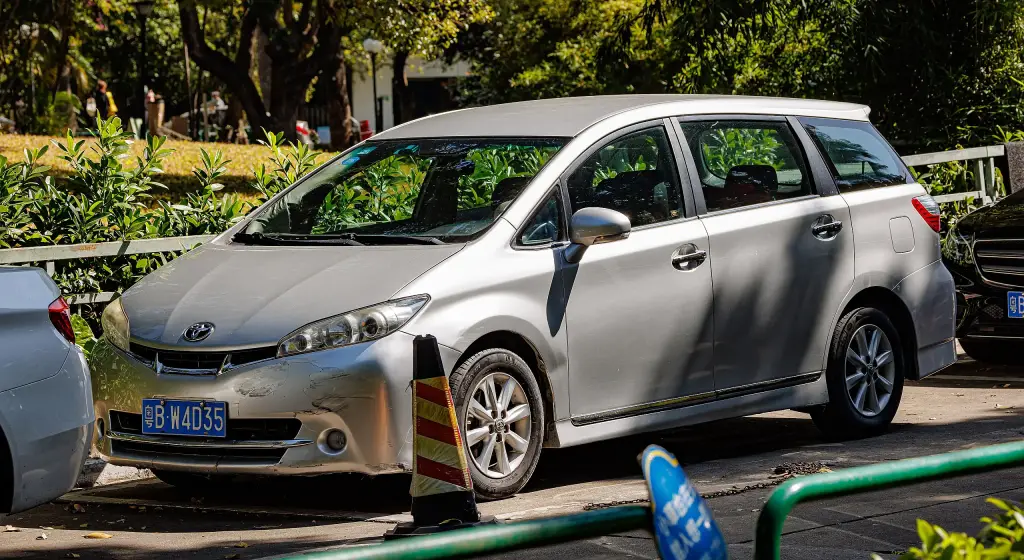
The Wish was assembled in Thailand from December 2003 in 2.0 S, 2.0 Q and 2.0 Q Limited trims, with 17-inch wheels, the ASEAN Camry’s 1AZ-FE engine instead of the direct-injection unit, and the four-wheel-drive models’ rear double-wishbone suspension fitted to two-wheel-drive cars. Taiwan began local assembly of a left-hand-drive Wish in November 2004, with a new front end, LED tail lights, different side rub strips and the option of a beige interior. In Singapore the official distributor added the Wish in 2008 as the Aero Tourer, with a body kit, touch-screen DVD, reversing camera and mirror indicators, replacing the Netz oval with a Toyota badge.
Facelift and second generation
A facelift in September 2005 changed the headlights, bumpers, LED tail lights and dashboard, revised the climate and transmission controls, and gave the 2.0 Z a seven-speed transmission; the W emblem was replaced by the Netz oval. The second-generation Wish arrived in March 2009 with Dual VVT-i 2ZR-FAE and 3ZR-FAE engines and a seven-speed Super CVT-i, slightly longer than before, with all versions seven-seaters except the top Z, which had two folding captain’s chairs and six seats. Wider fenders on the 2.0 Z and aero kits on the 1.8S and 1.8A pushed those cars into a higher Japanese tax class. Production ended in 2017.
Design and features
- Three rows: a compact MPV seating six or seven.
- Japanese best-seller: regularly in the top five of the monthly sales charts.
- Thai and Taiwanese assembly: local versions with their own engines and trim.
- Two generations: the AE10 and the AE20 with CVT and Dual VVT-i.
Toyota Wish versions
- 1.8 (2003): 1ZZ-FE engine with a four-speed automatic.
- 2.0 (2003): 1AZ-FSE direct injection with a CVT.
- 2.0 Z: six-seat version with captain’s chairs.
- Thai 2.0 Q Limited: with a sunroof and leather.
- AE20 (2009): second generation with a seven-speed CVT.
The Wish sat between the Corolla Spacio and the Ipsum in Toyota’s MPV range, near the Noah. More cars are in the Toyota collection.
Sources
- Toyota Wish, English Wikipedia: generations, engines, markets