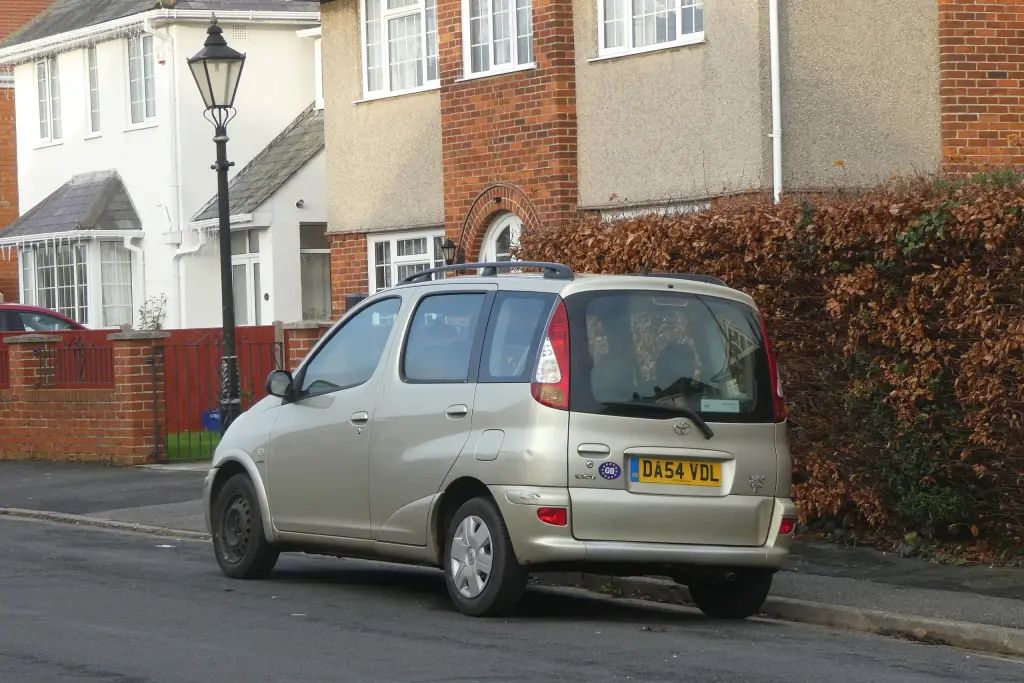
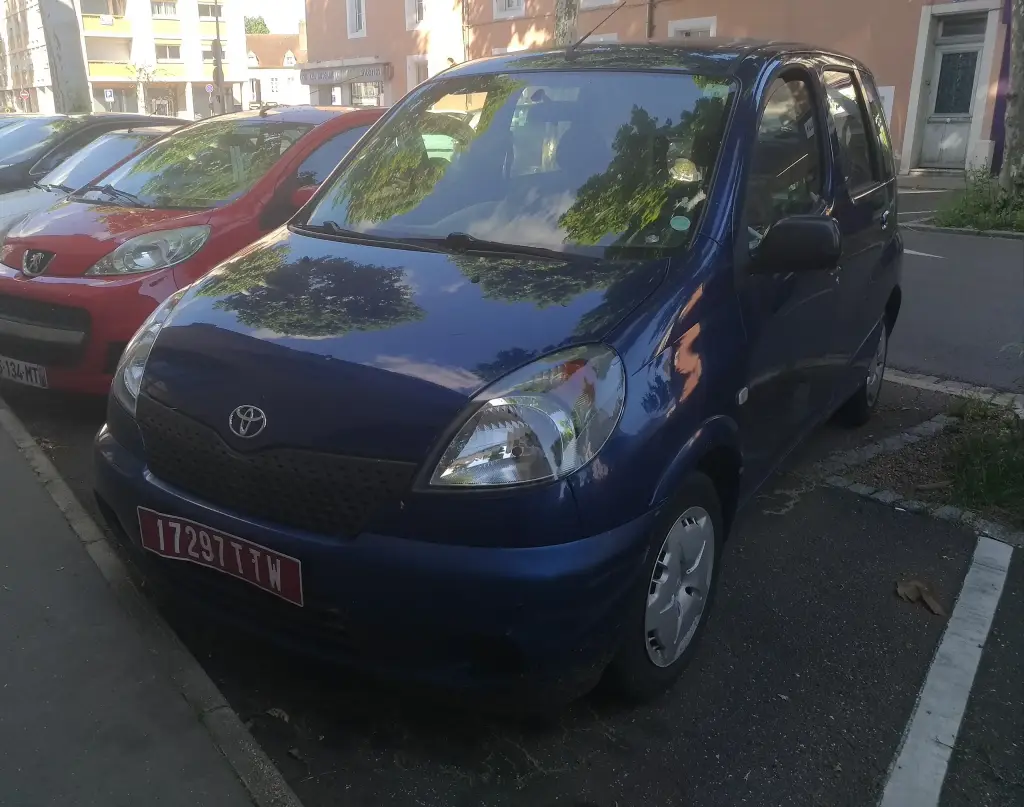
The Toyota FunCargo was a mini MPV built on the Yaris platform and sold in Japan from August 1999 to October 2005. In Europe the same car was called the Toyota Yaris Verso, and its boxy body packed more cabin volume and storage space than any other compact car of its time.
Toyota FunCargo at a glance
| Maker | Toyota |
|---|---|
| Production | August 1999 – October 2005 |
| Japanese name | Toyota FunCargo |
| European name | Toyota Yaris Verso |
| Platform | NBC, shared with the XP10 Yaris, Vitz and Echo |
| Wheelbase | 130 mm longer than the Yaris |
| Engines | 1.3 and 1.5-litre petrol, 1.4-litre D-4D diesel |
| Gearbox | Four-speed automatic in Japan |
| Award | Japan Car of the Year 1999–2000, with the Vitz and Platz |
| Successors | Ractis in Japan, Verso-S in Europe |
The FunCargo is described in the English Wikipedia article on the Yaris Verso; this page uses its Japanese-market sections.
History of the Toyota FunCargo
Concept and launch
The concept was shown at the 32nd Tokyo Motor Show in 1997, and the production FunCargo was announced in Japan on 30 August 1999. It used the same NBC platform as the XP10 Yaris, Vitz and Echo, but with a wheelbase 130 mm longer. The design had a stronger European flavour than the Yaris-based bB, and the car adopted a centre gauge layout and, like the Platz launched at the same time, ISOFIX-compatible rear seats as standard on all models from the start.
Space and practicality
The rear seat could fold into the floor and move forward, creating a large luggage compartment; with the standard hooks, the car could carry bicycles and large cross bikes. Toyota claimed the largest cabin volume and storage space of any compact car of the time. That space made it popular for camping and as a nursing and welfare vehicle with easy access for wheelchair users. Engines were 1.3- and 1.5-litre petrol units, joined in 2001 by a 1.4-litre D-4D diesel; Japan also had a four-wheel-drive 1.5-litre version, and all Japanese cars used a four-speed automatic, with Steer Shiftmatic standard on the G grade. The car won the 20th Japan Car of the Year award for 1999–2000 together with the Vitz and Platz.
Changes and reputation
Inside, the pre-facelift model came only in Shadow Gray or French Turquoise, with black after the facelift, and Toyota Modellista sold a limited edition of 350 VF130 cars. A two-seater van with stripped equipment was offered in some markets. In Japan, rear headrests became standard in January 2000, ABS with EBD followed four months later, and the polarising Maziora paint was offered on G and X models in 2001. An August 2002 facelift brought a new grille, lamps and bumpers, a redesigned instrument panel and the more comfortable Pair Bench and Rear Living rear seats, followed by an HID Selection in 2003. Production ended in September 2005, with stocks sold until October; the Ractis replaced it in Japan and the Verso-S in Europe. British reviewers praised the space and driving manners but not the looks, nicknaming it the “ice cream van”.
Design and features
- Long wheelbase: 130 mm more than the Yaris for a much larger cabin.
- Flexible rear seat: folds into the floor and slides forward.
- Centre instruments: a central gauge layout shared with other small Toyotas.
- Welfare use: easy access made it popular as a vehicle for wheelchair users.
Toyota FunCargo versions
- 1.3 and 1.5 petrol: the launch engines, with a four-speed automatic.
- 1.4 D-4D (2001): diesel version for Europe.
- Four-wheel drive (1.5): Japanese model coded NCP25.
- Maziora (2001): special edition with colour-shifting paint.
- Facelift (2002): new front end, interior and rear seat options.
- VF130: 350 cars sold through Toyota Modellista.
The FunCargo was built on the Yaris platform, and its role passed to the Ractis. The closely related bB used the same base, and more cars are in the Toyota collection.
Sources
- Toyota Yaris Verso, English Wikipedia: overview, timeline, reception