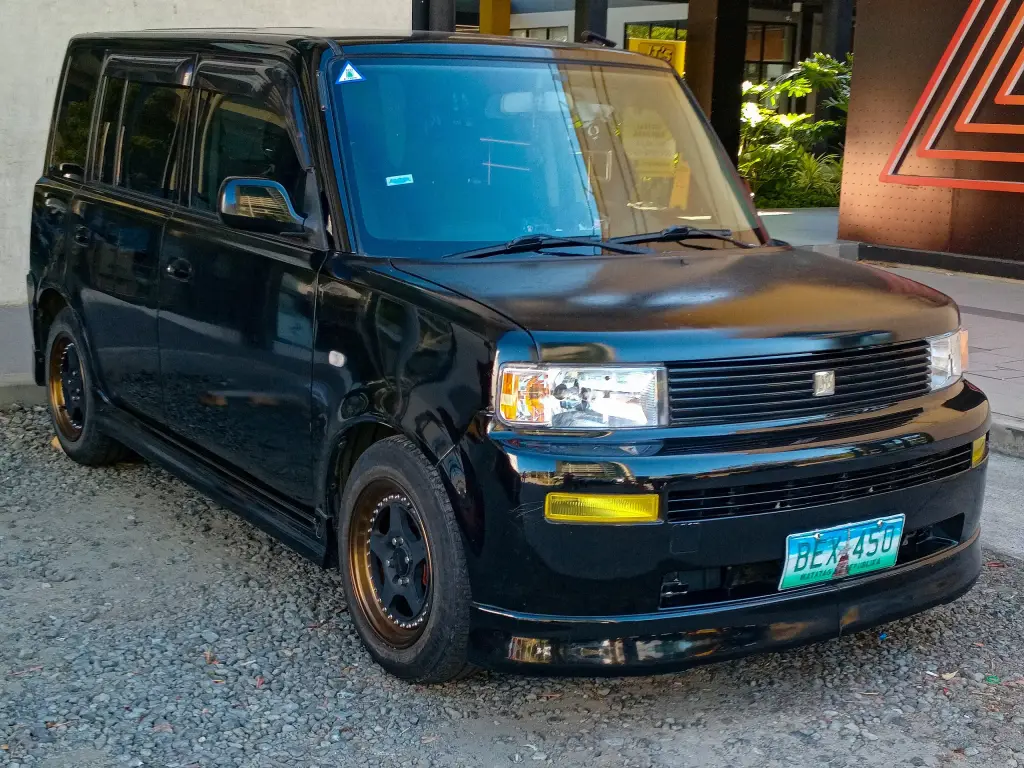
The Toyota bB is a box-shaped mini MPV launched in 2000. The first generation was based on the Vitz under chief engineer Tetsuya Tada, and the second was developed jointly with Daihatsu from 2005. It has been badge engineered as the Daihatsu Materia, the Scion xB and the Subaru Dex.
Toyota bB at a glance
| Maker | Toyota, later with Daihatsu |
|---|---|
| Production | January 2000 – May 2016 |
| Class | Mini MPV |
| First generation | XP30, based on the Vitz |
| Second generation | QNC20, from 2005 |
| Engines | 1.3 and 1.5-litre four-cylinder |
| Gearbox | Four-speed automatic, Super ECT |
| Other names | Scion xB, Daihatsu Materia, Daihatsu Coo, Subaru Dex |
| US sales | Scion xB from June 2003 |
| Replaced by | Toyota Tank and Roomy |
Based on one source: the English Wikipedia article on the Toyota bB.
History of the Toyota bB
First generation (XP30; 2000)
The first bB was based on the Toyota Vitz and developed under chief engineer Tetsuya Tada. The box-shaped mini MPV was initially aimed at Japanese men in their twenties but also proved popular with women. Production ran from January 2000 to April 2005 at the Takaoka plant, with the former Central Motors building some cars between August 2004 and December 2005 and the export Scion xB continuing until December 2006. Engines were 1.3- and 1.5-litre fours, and a TRD-tuned version with the 1NZ-FE turbo was offered as a dealer-installed option rather than a separate trim. In the United States the car was sold as the Scion xB from June 2003 to 2007, with the front bench replaced by bucket seats and the column shifter moved to the floor. A coupe utility version, the bB Open Deck, was sold from 2001 to 2003.
Second generation (QNC20; 2005)
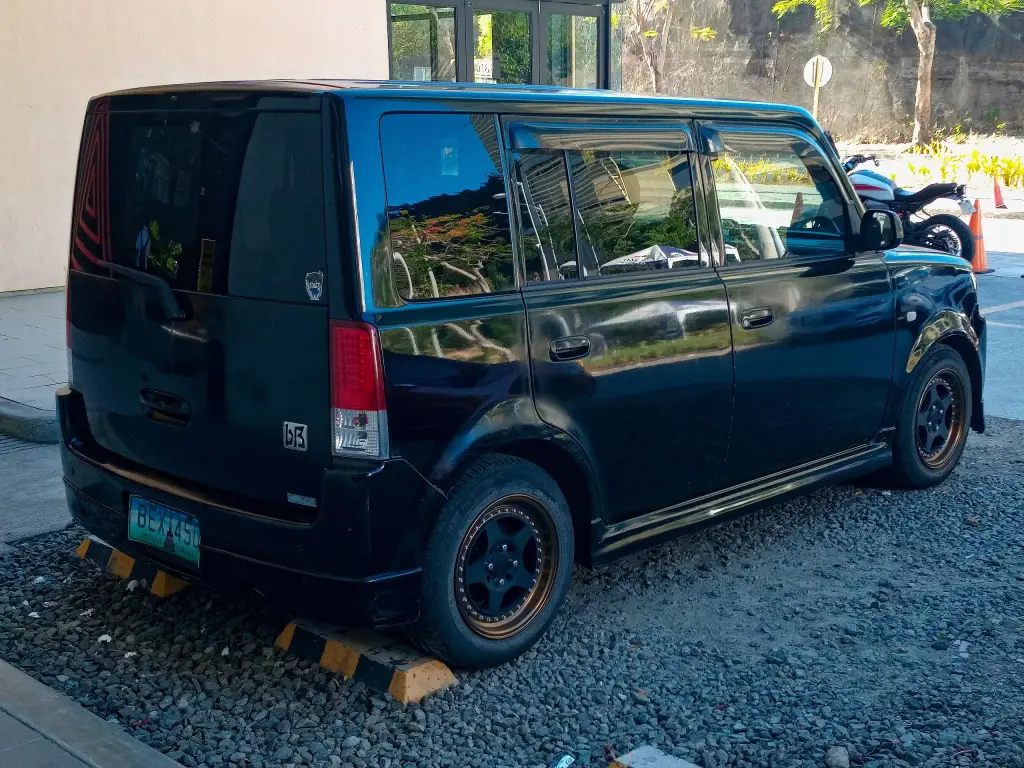
The second-generation bB was shown at the Tokyo Motor Show in 2005 and went on sale through Netz dealers. It was designed as “a car-shaped music player” to appeal to younger buyers. The Scion xB of this period was not based on it but was designed separately for American buyers and sold in Japan as the Corolla Rumion. The Daihatsu Materia, called Coo in Japan, was largely identical to the second-generation bB, with 1.3- and 1.5-litre engines, a four-wheel-drive option in Japan and some European markets, and manual or automatic gearboxes; the Materia reached 60 mph in 10.8 seconds with the manual. A limited Materia Turbo of 40 cars was built for South Africa with 150 PS. The Subaru Dex was another rebadged version with the 1.3-litre K3-VE engine and front- or four-wheel drive.
Changes and the end
In 2008 the S and Z grades received a minor facelift with a redesigned front fascia, and an Aero Package replaced the V and Q grades. Daihatsu and Subaru versions ended in 2012, leaving only the Toyota, whose production stopped in May 2016 and whose Japanese sales ended in July. It was replaced by the Toyota Tank and its twin, the Roomy, a rebadged Daihatsu Thor. Second-generation cars are often privately imported to the United Kingdom, Ireland, Australia and New Zealand.
Design and features
- Boxy shape: maximum interior space in a small footprint.
- Many badges: Scion xB, Daihatsu Materia, Subaru Dex.
- Vitz base: the first generation used the Yaris platform.
- TRD turbo: a dealer-installed turbo conversion was available.
Toyota bB versions
- XP30 (2000): first generation with 1.3 and 1.5-litre engines.
- bB Open Deck (2001): coupe utility version.
- Scion xB (2003): American version with bucket seats.
- QNC20 (2005): second generation shared with Daihatsu.
- Daihatsu Materia: twin with manual and four-wheel-drive options.
- Subaru Dex: 1.3-litre rebadged version.
The bB was built on the Yaris platform and shares its Daihatsu relationship with the Passo; its successor came from the Ractis-sized class. More cars are in the Toyota collection.
Sources
- Toyota bB, English Wikipedia: generations, engines, badge-engineered versions