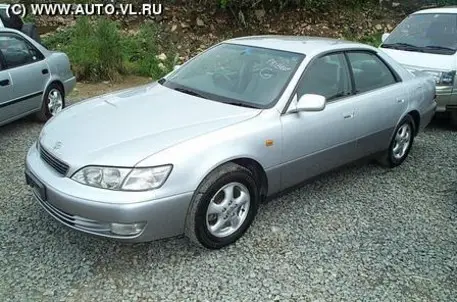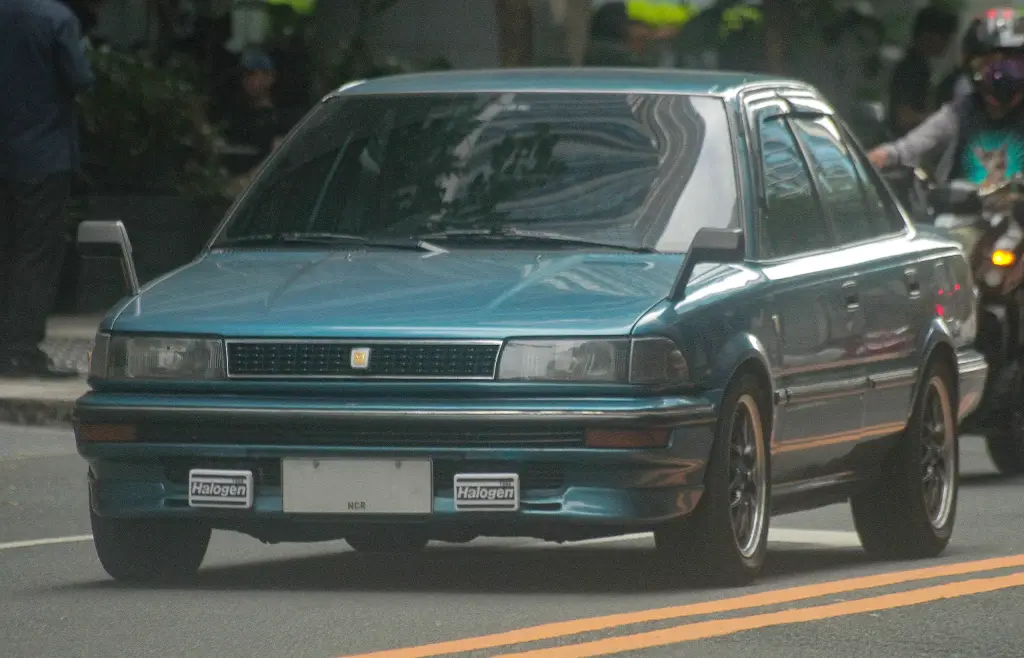
The Toyota Corolla E90 was the sixth generation of Toyota’s compact car, introduced in 1987 for the 1988 model year. It was the last Corolla to be classified as a subcompact and the first sold only with front- or all-wheel drive, the rear-wheel-drive performance option having been dropped.
Toyota Corolla (E90) at a glance
| Maker | Toyota |
|---|---|
| Production | 1987–1992, export until 1992 |
| Generation | Sixth |
| Class | Subcompact |
| Drive | Front-wheel drive or all-wheel drive |
| Engines | 1.3 to 1.8 petrol, 1.8 and 2.0 diesel |
| Sports engines | 4A-GE, and the supercharged 4A-GZE |
| Export trims | Base, XL, GL, SE, SE Limited |
| South African names | Carri, Conquest, Tazz |
| Related | Geo Prizm and Holden Nova |
Based on one source: the English Wikipedia article on the Corolla E90.
History of the Toyota Corolla (E90)
A change of layout
The E90 made its debut in 1987 as the 1988 model and was the first Corolla line sold exclusively with front-wheel drive or all-wheel drive, ending the rear-drive option. The range included the FX-GT, sold only in Japan, and its export equivalent, the GT-i, known in Australia as the SX Seca or Hatch; both used the 4A-GE engine. In North America the GT-S coupe shared that engine. Most of the range used MacPherson struts all round, while the all-wheel-drive Sprinter Carib estate used a beam rear axle with coil springs.
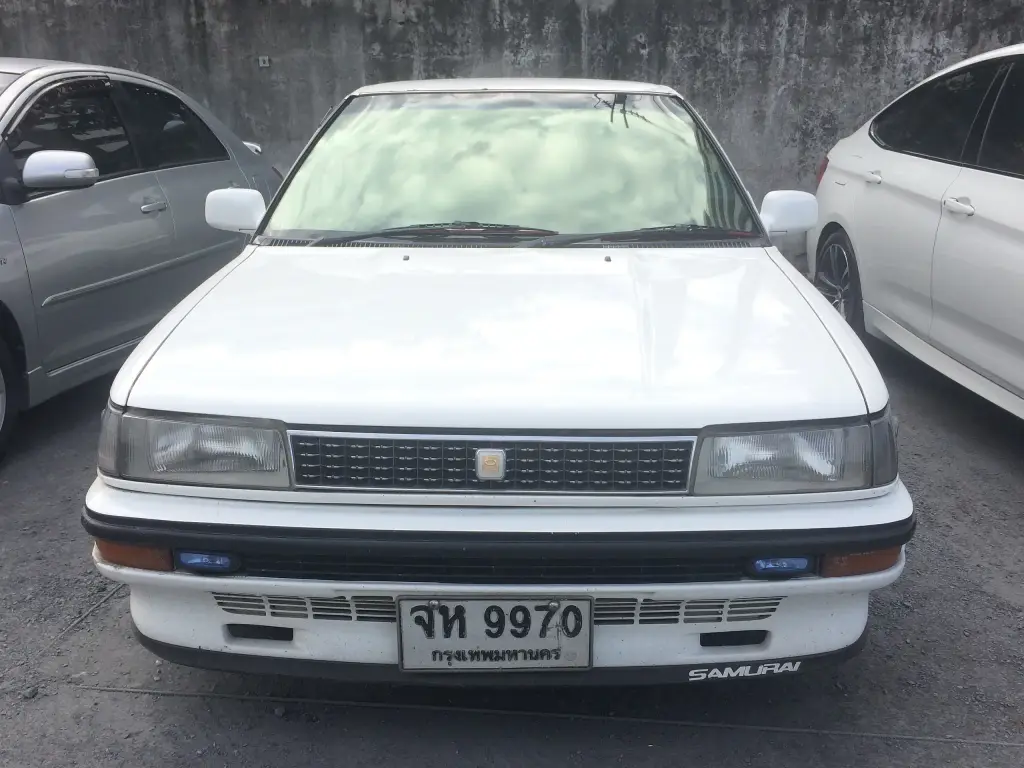
Japan
Japanese sedans with the 1.3-litre engine came with a four-speed manual or three-speed automatic, later five-speed. A full-time All-Trac four-wheel-drive sedan with the 1.6-litre 4A-F went on sale in October 1987, with a manually locking centre differential on manuals and a hydraulically operated limited-slip unit on automatics. The FX hatchback was the sporty Japanese version, offered with the 1.5-litre 5A or the 4A-GE. The AE92 Levin and Trueno could be ordered with a supercharged 4A-GZE engine using a Roots-type SC12 blower and a top-mounted intercooler fed by a bonnet scoop; it produced 206 N·m against 136 N·m for the naturally aspirated 4A-GE. A May 1989 facelift brought larger bumpers, fuel injection across the range except the 1.3, and a four-wheel-drive 2.0-litre diesel sedan.
Around the world
Export cars used the same body with different engines: 1.3- and 1.6-litre petrol units in Asia, the 1.6-litre 4A-GE in GT versions with four-wheel disc brakes, and a range of trims from Base and XL to SE Limited. In South Africa the E90 was built and sold as the Carri, Conquest and Tazz. Joint ventures with General Motors produced the Geo Prizm in the United States and the Holden Nova in Australia. The majority of the range was replaced in June 1991 in Japan, and export production lasted into 1992.
Design and features
- No rear-wheel drive: the first Corolla range without a rear-drive performance model.
- 4A-GE: the twin-cam engine of the FX-GT, GT-i and GT-S.
- Supercharged GT-Z: the 4A-GZE with a Roots blower and top-mounted intercooler.
- Local names: Tazz and Conquest in South Africa, Geo Prizm and Holden Nova through GM.
Toyota Corolla (E90) versions
- FX-GT (1987): Japanese hatchback with the 4A-GE engine.
- GT-i / SX Seca: export performance versions with the same engine.
- All-Trac sedan (1987): four-wheel drive with a locking centre differential.
- GT-Z: supercharged 4A-GZE version, 145–165 PS.
- Tazz and Conquest: South African-built versions of the E90.
The E90 sits between the earlier and later Corolla generations and shared its supercharged engine thinking with the Celica. Its South African names are covered in the E120 era, and more cars are in the Toyota collection.
Sources
- Toyota Corolla (E90), English Wikipedia: layout, engines, markets