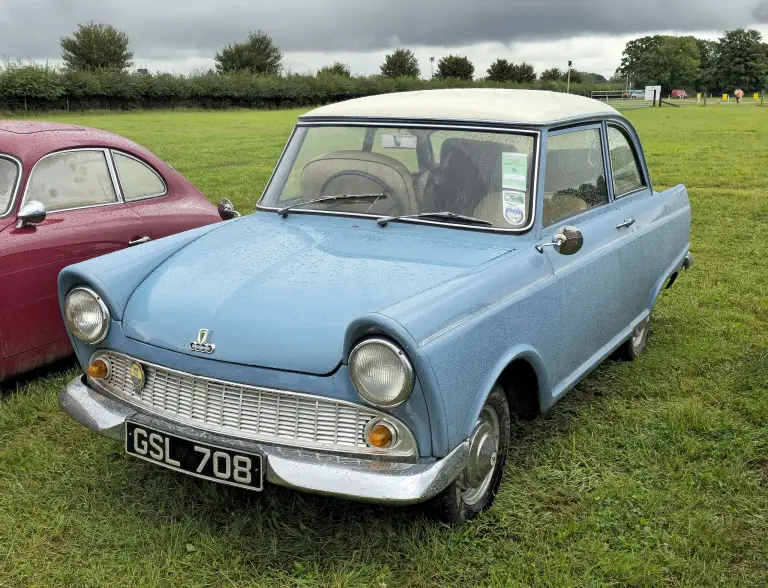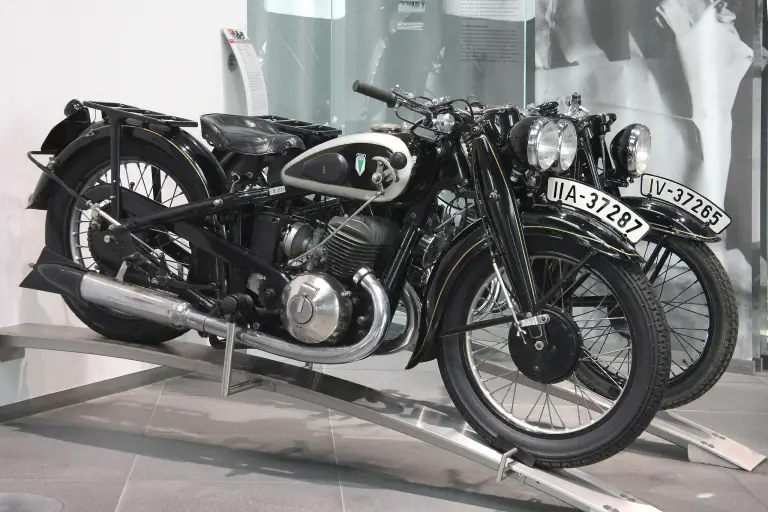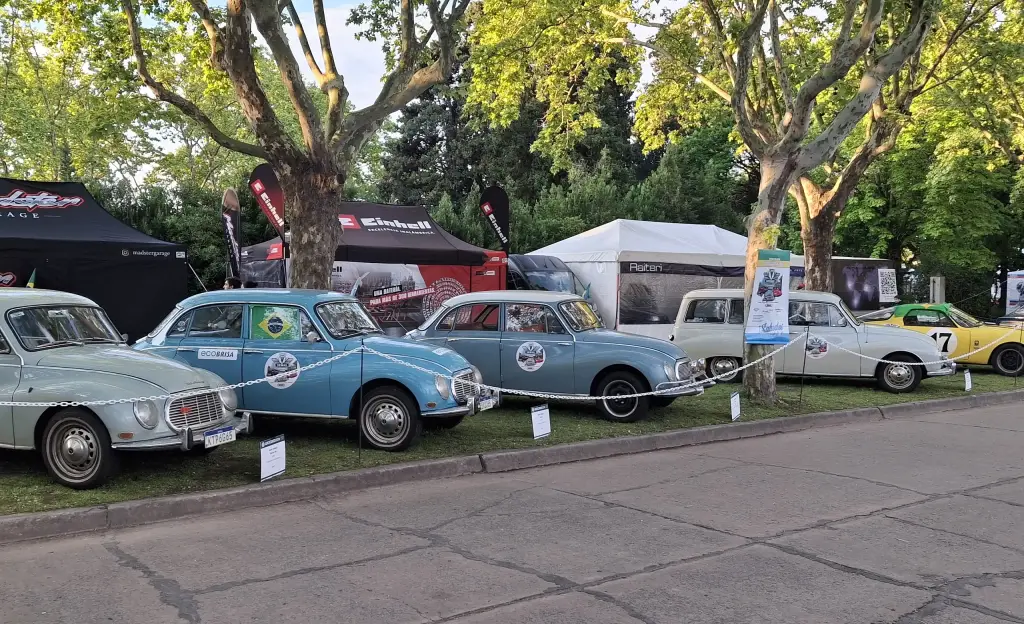
Vemag was a São Paulo company that started out assembling Studebakers and ended up as the only place in the world still building DKW cars in volume. From 1956 it assembled German DKW kits, from 1958 it made the cars itself under licence, and over eleven years it turned out a little more than 115,000 vehicles with DKW mechanicals before Volkswagen took it over.
DKW-Vemag at a glance
| Company | Veículos e Máquinas Agrícolas S.A. (Vemag) |
|---|---|
| Founded | 1945 in São Paulo, as Distribuidora de Automóveis Studebaker |
| Renamed | 1952, after merging with Elit Equipamentos |
| DKW assembly from | 1956, with the DKW F-91 Universal |
| Own production from | 1958, under Auto Union licence |
| Models | Belcar, Vemaguet, Caiçara, Pracinha, Candango, Fissore |
| Total built | just over 115,000 in eleven years |
| Record car | Carcará prototype, 1,000 cc record of 1966 |
| Taken over | Volkswagen, September 1967 |
| Plant closed | December 1967, then used for the VW Kombi |
based on Portuguese and German Wikipedia
History of the DKW-Vemag
From Studebaker to DKW
In 1945 the Distribuidora de Automóveis Studebaker was set up in the Ipiranga district of São Paulo to assemble Studebaker cars. It took on Scania Vabis trucks in 1951 and Ferguson tractors in 1954, and in 1952 the company was renamed Veículos e Máquinas Agrícolas after merging with Elit Equipamentos para Lavoura e Máquinas Agrícolas. Once the German Auto Union had taken a stake, Vemag began building DKW models in 1956.
Kits, then own production
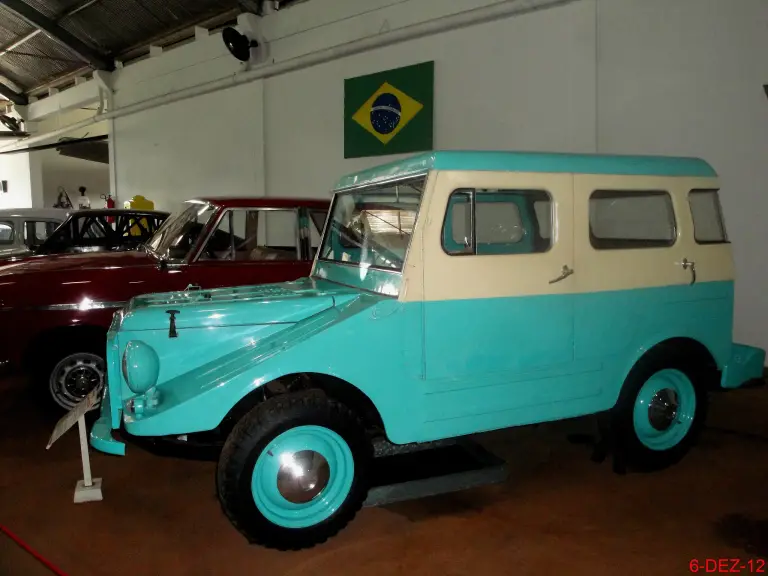
On 19 November 1956 Vemag put the DKW F-91 Universal estate on the market, derived from the German F-91 and its wood-bodied estate but assembled in Brazil from imported parts. It served as a laboratory for real local production, which began in 1958. In July that year came the Candango jeep, derived from the German Munga and first sold as the Jipe DKW, and a few months later the saloon and the estate derived from the German F-94, with a high level of local content. Those two cars used a 900 cc engine whose blocks, cast by Sofunge, were the first cast-iron automotive engine blocks made in Brazil.
The range grows up
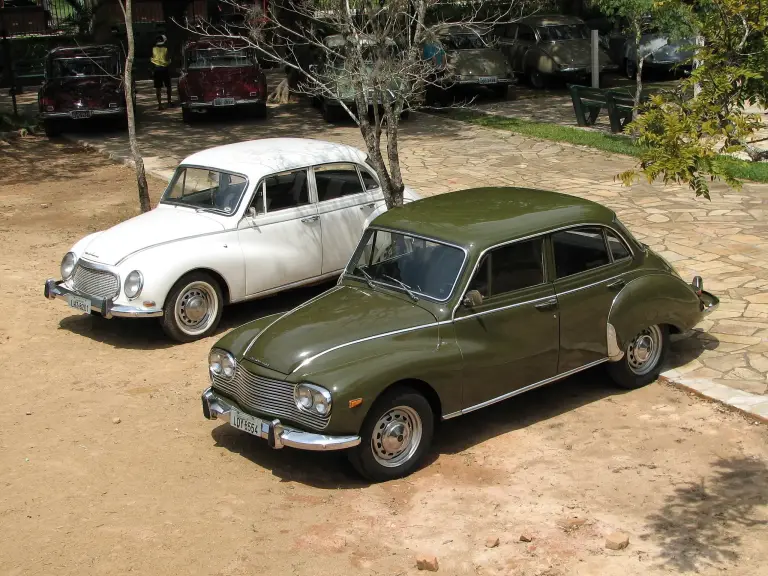
In 1959 Vemag switched to a 1,000 cc engine built in Brazil, and in 1961 the saloon and estate took the names they are remembered by: Belcar and Vemaguet. The sophisticated Fissore coupé was shown at the 1962 motor show and reached production at the end of the following year. In 1963 the Candango was dropped, mainly because the military showed no interest, and the cheaper Caiçara version of the Vemaguet took its place in the range; the Pracinha followed in 1965. By 1964 Vemag had 4,013 employees on a site of a little over 87,000 square metres, and its cars were practically 100 per cent Brazilian.
The end
Volkswagen had taken control of Auto Union in Europe in 1965 and turned it into Audi. In Brazil it bought Vemag in September 1967, promising not to stop production, and then closed the line in December, using the factory buildings to build the VW Kombi. The DKW mechanicals also lived on in sports cars: the Puma GT, known as the Puma DKW, was the best selling of them and was itself derived from the Malzoni GT.
Design and features
- Licensed production: German DKW designs built in Brazil, from kits in 1956 to fully local cars by 1964.
- Six models: Belcar, Vemaguet, Caiçara, Pracinha, Candango and Fissore.
- Local engineering: the first cast-iron engine blocks cast in Brazil came from this programme.
- Record car: the one-off Carcará set a 1,000 cc speed record in 1966 that stood into the next century.
- Sports car link: the Puma GT grew out of the DKW-engined Malzoni GT.
DKW-Vemag versions
- DKW F-91 Universal (from 1956): the first DKW assembled in Brazil, from imported parts.
- Belcar (1958–1967): the saloon, 51,072 built.
- Vemaguet (1958–1967): the estate, with the Caiçara and Pracinha derivatives.
- Candango (1958–1963): the Munga-based jeep.
- Fissore (1964–1967): the Italian-styled coupé-roofed saloon.
Each Vemag model has its own page in this collection: the Belcar, Vemaguet, Candango, Fissore and GT Malzoni. More cars are in the DKW collection.
Sources
- Vemag, Portuguese Wikipedia: company history, models, takeover
- DKW-Vemag Fissore, German Wikipedia: founding, Studebaker, licensing
- DKW-Vemag Belcar, Portuguese Wikipedia: local content and production