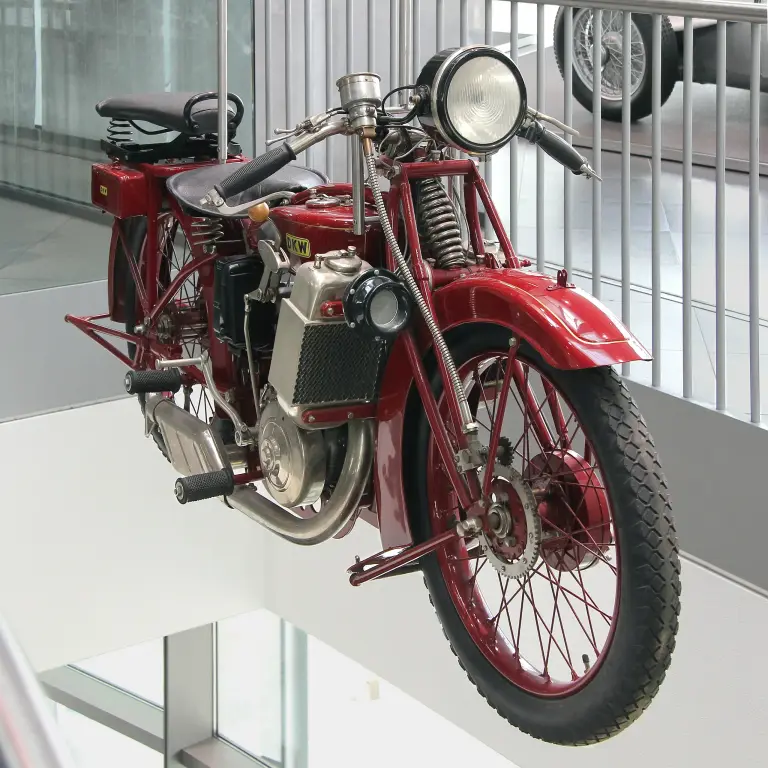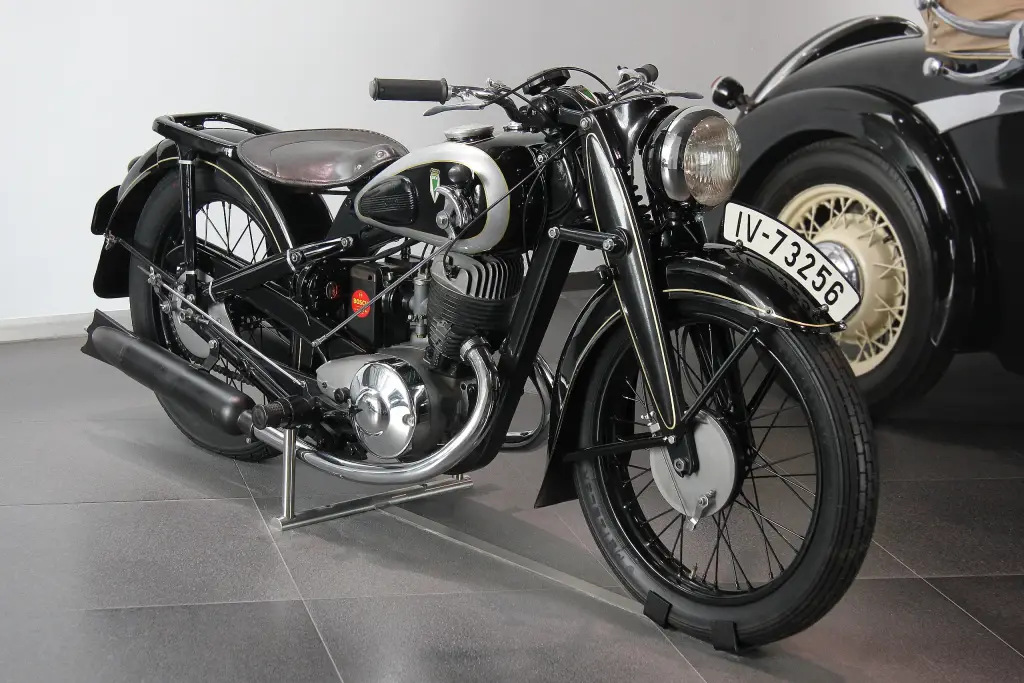
The DKW NZ was the last motorcycle series DKW built at its home works in Zschopau. Developed in 1936 but held back for two years while the SB models kept selling, it went into production in 1938 in three engine sizes. The NZ 500 was the biggest of them: a twin with 18.5 PS and, for the first time on a DKW, a sprung rear wheel.
DKW NZ at a glance
| Maker | Auto Union AG, Zschopau |
|---|---|
| Series introduced | 1938 |
| Predecessor | DKW SB series |
| Models | NZ 250, NZ 350, NZ 500 |
| Top model | NZ 500, two-cylinder two-stroke |
| NZ 500 engine | 494 cc, 18.5 PS |
| NZ 500 gearbox | four-speed, combined hand and foot shift |
| Frame | pressed steel, welded all round instead of bolted |
| New feature | adjustable rear suspension, a first for a DKW motorcycle |
| End of the line | the last DKW series from the Zschopau works |
History of the DKW NZ
Ready in 1936, built from 1938
The NZ range was a new design by Auto Union and was ready for production in autumn 1936. Sales of the SB series were still high and even rising, so the NZ waited about two years before it replaced them. By then the shadow of the coming war was already over the project: the NZ range turned out to be the last in the history of the Zschopau works.
The frame
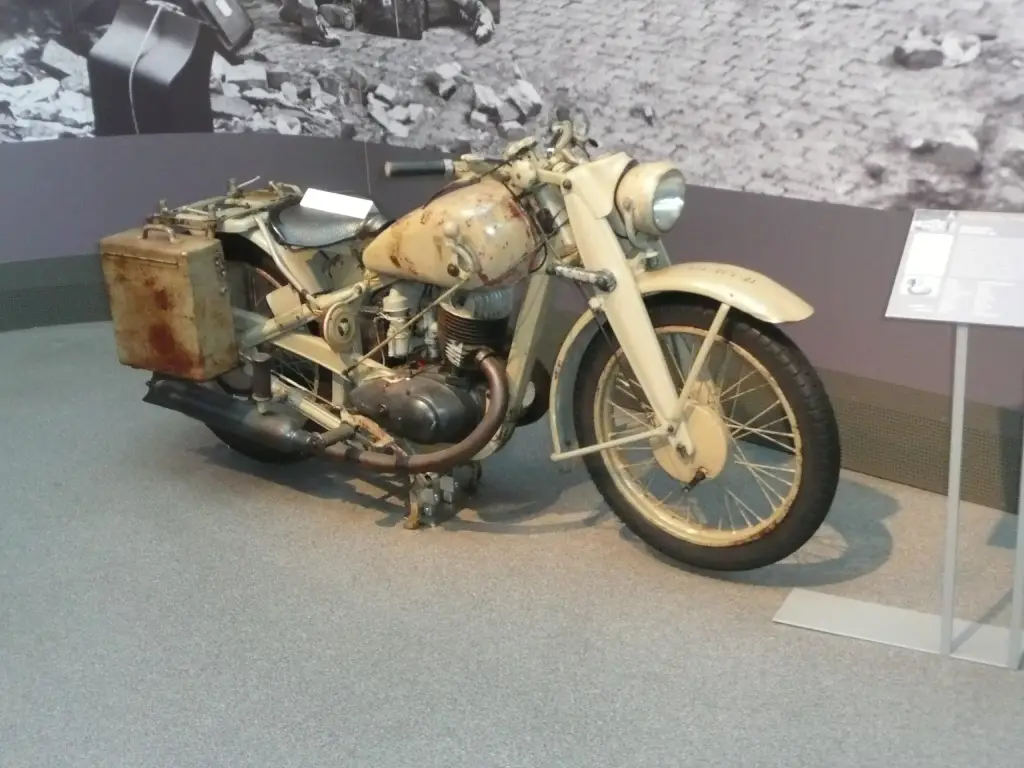
All NZ models used the same frame. Where the pressed-steel halves of the SB frames had been bolted together, on the NZ they were welded all round, and other frame joints were welded too. The welding drew so much current that it could only be done at night, when the local supply had capacity to spare. The 500 also had its engine mounting changed and, most importantly, received the first rear suspension ever fitted to a DKW motorcycle. The front fork had closed sliders with outboard rockers and, besides a coil spring, hydraulic damping.
The NZ 500
The largest model had a 494 cc two-cylinder two-stroke with 18.5 PS, a four-speed gearbox in a unit with the engine, and a primary chain instead of the earlier spur gears. It could be ordered with a combined hand-and-foot shift. Auto Union’s 1939 sales brochure called it ‘the motorcycle for the highest demands … smooth as a four-cylinder four-stroke’, and listed a central box frame suited to a sidecar, the four-speed unit gearbox, a sprung saddle and, as the significant novelty, adjustable rear suspension.
Smaller NZ models
The NZ 250 and NZ 350 shared the frame and the general layout, and the smaller bikes were the ones most often seen with sidecars in civilian use. The series ended with the war; after 1945 the Zschopau works continued under the MZ name instead.
Design and features
- Welded frame: pressed-steel halves welded all round, a step on from the bolted SB frame.
- Rear suspension: the first sprung rear wheel on a DKW motorcycle, adjustable and praised in the 1939 brochure.
- 495 cc twin: 18.5 PS from the largest engine in the NZ range.
- Unit gearbox: four speeds with combined hand and foot operation and a primary chain drive.
- Sidecar ready: the central box frame was designed for sidecar use.
DKW NZ versions
- NZ 250: the smallest of the three capacity classes.
- NZ 350: the middle model and the best known today, widely used in military service.
- NZ 500: 494 cc twin with 18.5 PS, the most powerful DKW of its day.
The NZ replaced the DKW SB series; the pre-war DKW RT 125 carried the two-stroke line into the war and beyond. More cars and bikes are in the DKW collection.
Video: DKW NZ 350 1941 model
Video by Rolf S. Ask on YouTube.
Sources
- DKW NZ 500, German Wikipedia: series history, frame, engine, brochure
- DKW, English Wikipedia: place of the NZ in the range