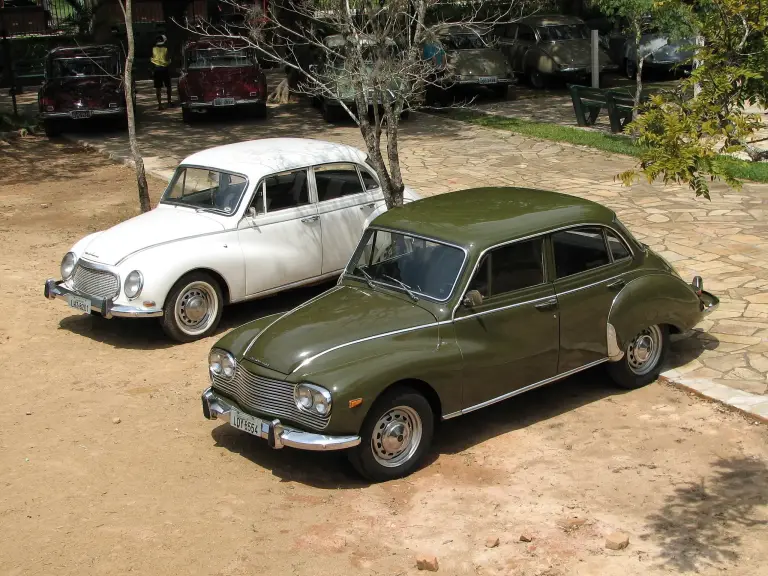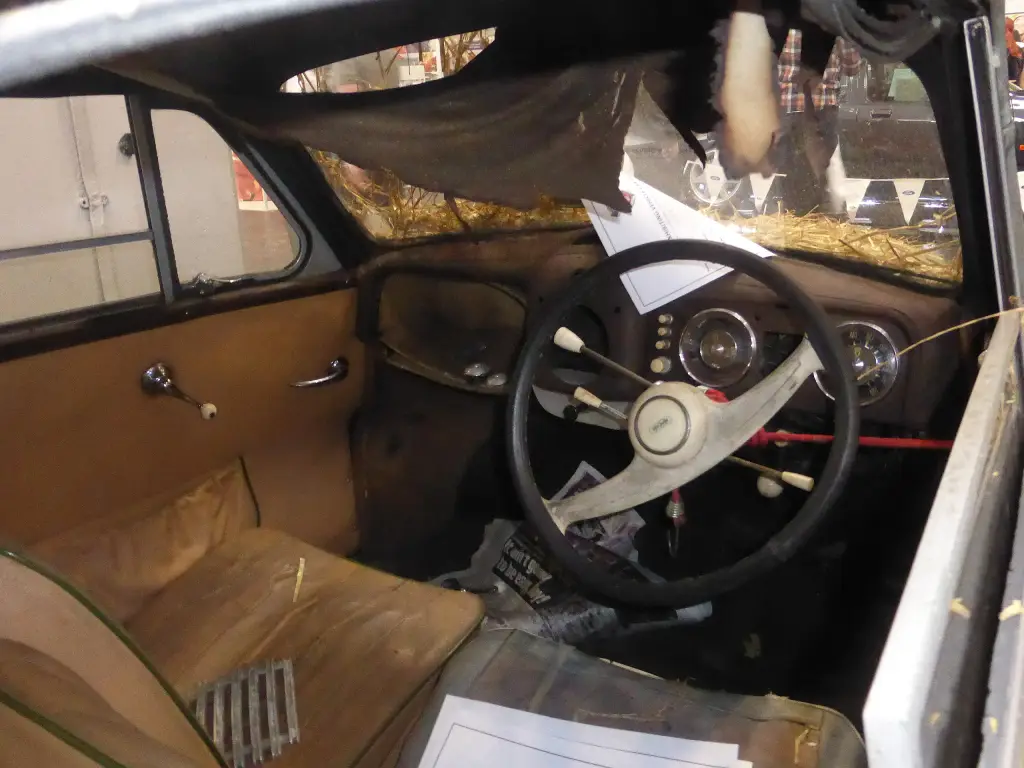
The DKW 3=6 was the car that carried DKW’s three-cylinder two-stroke into the second half of the 1950s. It was shown at the Frankfurt Motor Show in March 1953 as the F91 and sold, under a string of names, until 1959. On the right-hand front wing of every steel-bodied car it carried the words Sonderklasse — special class — which is what most people in Germany called it.
DKW 3=6 at a glance
| Maker | Auto Union GmbH, Düsseldorf |
|---|---|
| Production | 1953–1959 |
| Launched | Frankfurt Motor Show, March 1953 |
| Project names | F91 (1953), F93 (1955), F94 (1957) |
| Engine | 896 cc two-stroke three-cylinder |
| Drive | front-wheel drive |
| Bodies | two-door saloon, pillarless coupé, Karmann cabriolet, three-door Universal |
| Names | Sonderklasse, 3=6, Großer 3=6, DKW 900 (USA) |
| Predecessor | DKW F89 Meisterklasse |
| Successor | Auto Union 1000 |
History of the DKW 3=6
A new class
The 3=6 replaced the DKW F89 Meisterklasse, which stayed in production until April 1954. The first version carried the factory project number F91: the F stood for Frontantrieb, front-wheel drive, and the design was an evolution of the DKW F9 prototype shown in 1938. That prototype had been readied for production after the war and was being built in Zwickau as the IFA F9, so the old Auto Union in the west could not use the name and took a new project number instead.
Sonderklasse
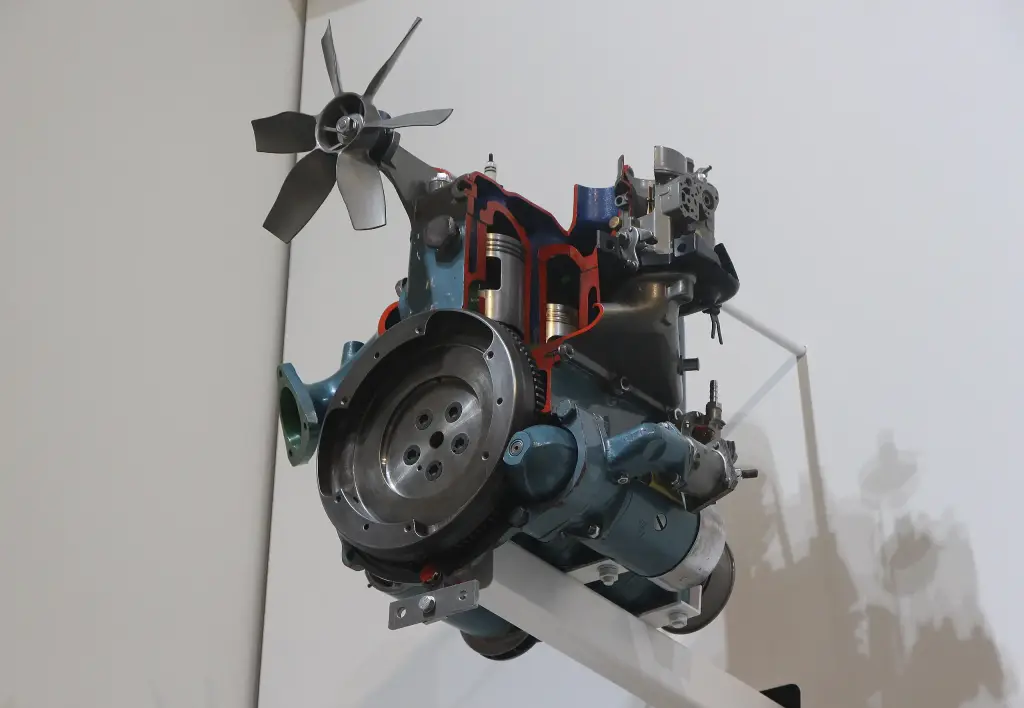
The name Sonderklasse set the car apart from the earlier Meisterklasse; both names had already been used by DKW in the 1930s. The 3=6 part began as an advertising slogan. A two-stroke engine fires in every cylinder on every turn of the crankshaft while a four-stroke fires only on alternate turns, so DKW argued that its three-cylinder was doing the work of a six. In terms of torque the claim had something behind it, but much of the theoretical gain went into heat, and the big cooling fan needed to deal with it made the engine noisy right in front of the driver.
F91, F93 and F94
The F91 arrived as a two-door saloon with front-opening doors. A pillarless coupé followed in 1953 and was produced from 1954, a cabriolet was bodied by Karmann of Osnabrück, and a three-door estate called the Universal was offered unchanged until 1956. The coupé launched with a three-piece wrap-around rear window, which reached the two-door saloon at the end of 1954; advertising made much of a fuel gauge and an interior light that came on when the door opened. For the 1956 model year the F93 arrived, the Großer 3=6 or Big DKW 3=6, followed by the F94. From 1958, with the successor already on sale, the old car was sold in the United States and the Netherlands simply as the DKW 900.
Famous owners
Audi Tradition keeps a 1954 3=6 Sonderklasse and brings it out for historic events. Among the car’s owners were the aviator Elly Beinhorn, who named hers Alwine VII, the boxer Max Schmeling and the actress Anita Ekberg.
Design and features
- Three-cylinder two-stroke: 896 cc, mounted ahead of the driver and driving the front wheels.
- Sonderklasse badge: the model name sat on the right-hand front wing of every steel-bodied car.
- Sure-footed handling: front-wheel drive gave the small DKW a grip advantage on poor roads.
- Many bodies: saloon, pillarless coupé, Karmann cabriolet and the three-door Universal estate.
- Wrap-around glass: the coupé introduced a three-piece panoramic rear window, later used on the saloon.
DKW 3=6 versions
- F91 (1953–1955): the original Sonderklasse saloon, with coupé, cabriolet and Universal estate.
- F93 Großer 3=6 (1955–1957): the facelifted Big 3=6 for the 1956 model year.
- F94 (1957–1959): the final development of the range before the Auto Union 1000.
- DKW 900: the run-out name used in the USA and the Netherlands from 1958.
- Universal: the three-door estate, offered unchanged until 1956.
The 3=6 succeeded the DKW F89 Meisterklasse and was replaced by the Auto Union 1000. The later DKW F102 closed the line. More cars are in the DKW collection.
Sources
- DKW 3=6, English Wikipedia: history, names, bodies, owners
- DKW F 93, German Wikipedia: model development
- DKW 3=6, Portuguese Wikipedia: place in the range