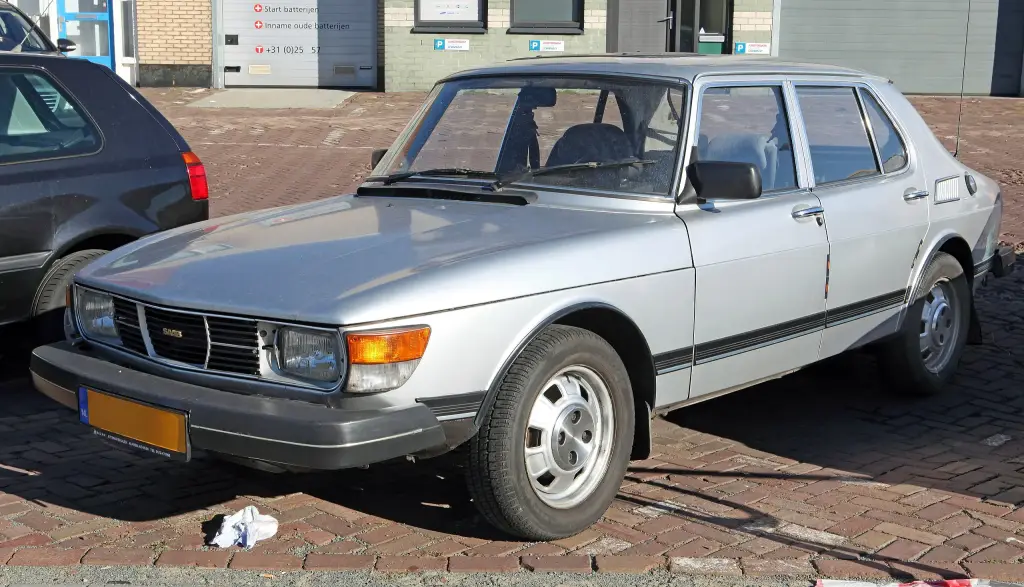
The Saab 99 was produced from 1968 to 1984 and was Saab’s first move into a class above the Saab 96. It brought a wrap-around windscreen, front-wheel drive with a reversed longitudinal engine and, in 1977, a turbocharger that made it one of the first turbocharged family cars.
Saab 99 at a glance
| Production | 1968–1984 |
|---|---|
| Project | Gudmund, started 2 April 1964 |
| Designer | Sixten Sason |
| Unveiled | Stockholm, 22 November 1967 |
| First engine | 1709 cc Triumph slant-four, 87 PS |
| From 1971 | 1854 cc Triumph engine with the four-door 99 |
| From 1972 | 1985 cc Saab B engine |
| Layout | front-wheel drive, engine reversed and tilted 45 degrees |
| Drag coefficient | 0.37 |
| Assembly | Trollhättan, Sweden, and Uusikaupunki, Finland |
| Turbo | 99 Turbo from 1977 |
| Successors | Saab 900 and Saab 90 |
Based on one source, the English Wikipedia article on the 99.
History of the Saab 99
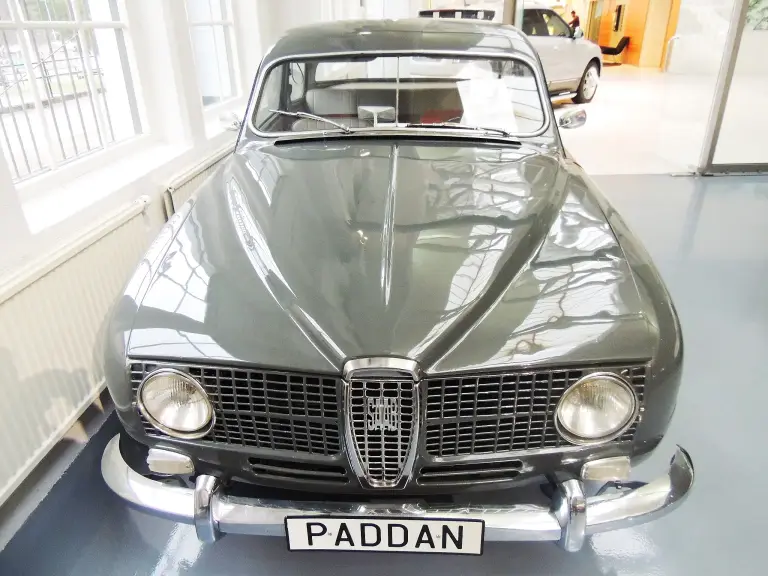
On 2 April 1964 the Saab board started Project Gudmund, a plan for a larger car to take the company beyond the Saab 96. The result was the Saab 99, designed by Sixten Sason and shown in Stockholm on 22 November 1967. The first prototypes were made by cutting a Saab 96 lengthwise and widening it by 20 centimetres, a mule known as the Paddan, or toad; later a 99 body shell was badged “Daihatsu” to hide what it was.
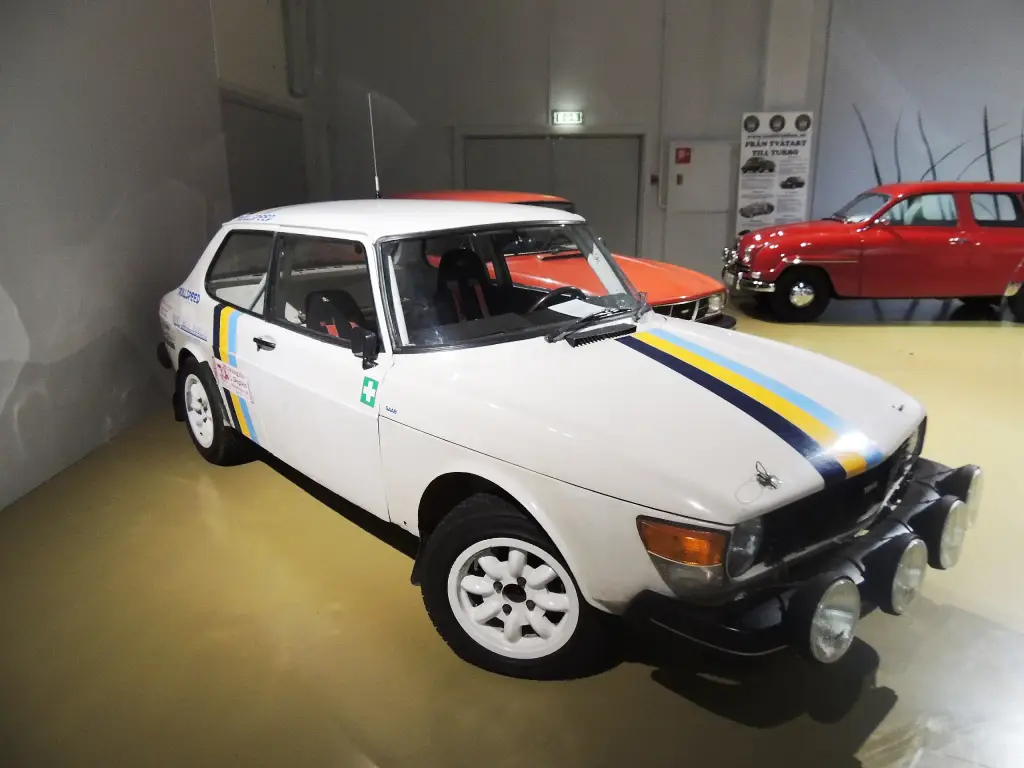
The 99 was built at Trollhättan and, from 1969, also by Valmet in Uusikaupunki, Finland. Saab engineers liked the two-stroke engine but decided a four-stroke was needed, and chose a 1.7-litre engine from Triumph, the slant-four used in the Triumph Dolomite, fitted with a Zenith-Stromberg carburettor developed for Saab. It produced 87 PS. In February 1971, when the four-door 99 appeared, the engine grew to 1854 cc; reliability problems with the Triumph unit led Saab to bring the design in-house, and from September 1972 the 1985 cc Saab B engine was used.
The car was front-wheel drive with the engine mounted longitudinally but reversed, clutch towards the front, so that its weight sat behind the gearbox and the nose was not too heavy; drive to the under-mounted gearbox ran through a triplex chain. The bonnet was front-hinged and extended over the wheel arches, and the wrap-around windscreen was unusually deep for the period, giving excellent visibility. The drag coefficient was 0.37 where most contemporary cars were between 0.4 and 0.5, and the chassis had deformation zones front and rear. Cars for the United States had four round headlights instead of the two rectangular units used elsewhere.
Early 99s kept the freewheel transmission of the 96, removed when the 1.85-litre engine arrived, and the handbrake worked on the front wheels. The 99 was Saab’s last factory rally car, first in EMS form and later as the Turbo. The 99 Turbo, sold from 1977, was one of the first family cars with a turbocharger after the Oldsmobile Jetfire of 1962–63; Popular Mechanics placed it second on its list of the greatest turbocharged cars. The 99 was succeeded by the Saab 900, and the simpler Saab 90 took over from it in late 1984.
Design and features
- Wrap-around windscreen: deep glass and a steep A-pillar for good visibility.
- Reversed engine: mounted longitudinally with the clutch forward to balance the weight.
- Safety chassis: deformation zones front and rear at a time when this was rare.
- 99 Turbo: one of the first turbocharged family cars, sold from 1977.
Saab 99 versions
- 99 (1968–1971): two-door with the 1709 cc Triumph engine.
- 99 four-door (1971): new body and the 1854 cc engine.
- 99 EMS: the sporting version with fuel injection, used for rallying.
- 99 Turbo (1977–): turbocharged two- and three-door model.
- 99 GL and LE: the later everyday versions.
The 99 grew out of the Saab 96 and was replaced by the Saab 900 and the simpler Saab 90. Its turbocharged engine led to the Saab 9000. More cars are in the Saab collection.
Video: Saab 99 Turbo ’78
Video by the uploader on YouTube.
Sources
- Saab 99, English Wikipedia: development, engines, design, turbo