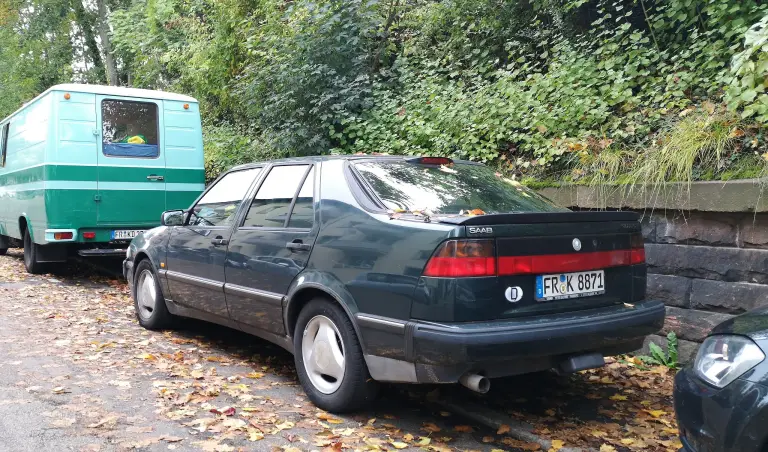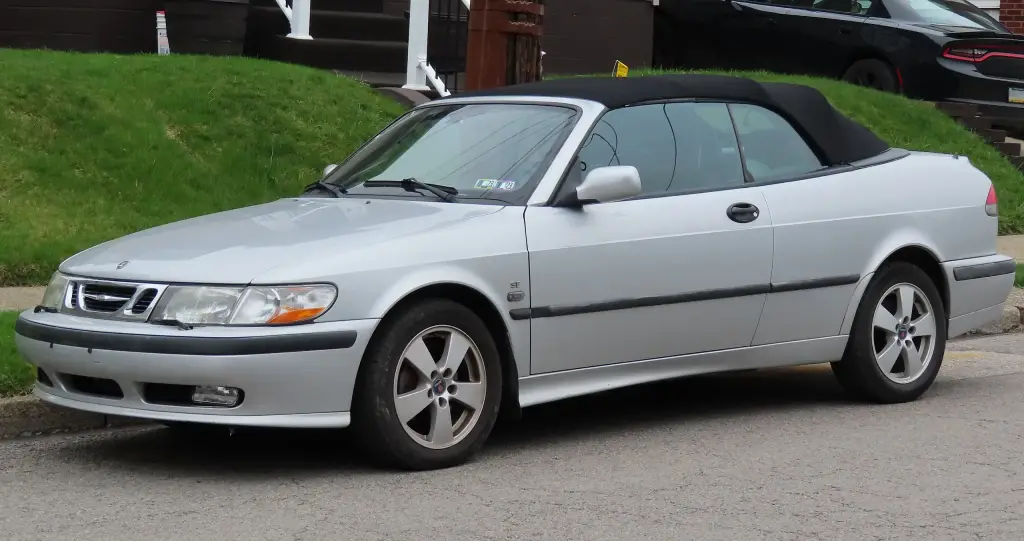
The Saab 9-3 was a compact executive car introduced in 1998 for the 1999 model year. The first generation was an updated Saab 900 with about 1,100 changes, and it is remembered for the Viggen, a 230 PS limited edition named after a Saab fighter aircraft. A second generation arrived in 2003.
Saab 9-3 at a glance
| Production | 1998–2003, first generation |
|---|---|
| Class | compact executive car |
| Platform | GM2900, as the second-generation 900 |
| Changes over 900 | about 1,100 |
| Bodies | three-door and five-door hatchback, two-door convertible |
| Petrol engines | 2.0 turbo, 154 to 205 PS |
| Diesel | the first diesel-engined Saab |
| Gearbox | five-speed manual |
| Built | 326,370 first-generation cars |
| Viggen | 1999–2002, about 4,600 cars, 230 PS |
| Assembly | Trollhättan, Sweden, and Uusikaupunki, Finland |
| End of production | 8 May 2002 in Sweden, 25 April 2003 at Valmet |
Based on one source, the English Wikipedia article on the 9-3.
History of the Saab 9-3
The 9-3 arrived in 1998 as a rebadged and heavily reworked Saab 900. Saab counted some 1,100 changes, among them revised suspension with more wheel travel, quicker steering, a stronger body with extra A-pillar reinforcement and redesigned B-pillars, standard side airbags and Saab active head restraints. The electrical system moved to a CAN bus, and the convertible received a hydraulically operated roof. The car was sold as a three- or five-door hatchback and as a two-door convertible, and it kept the Night Panel that allowed the driver to dim the instrument lighting at night.
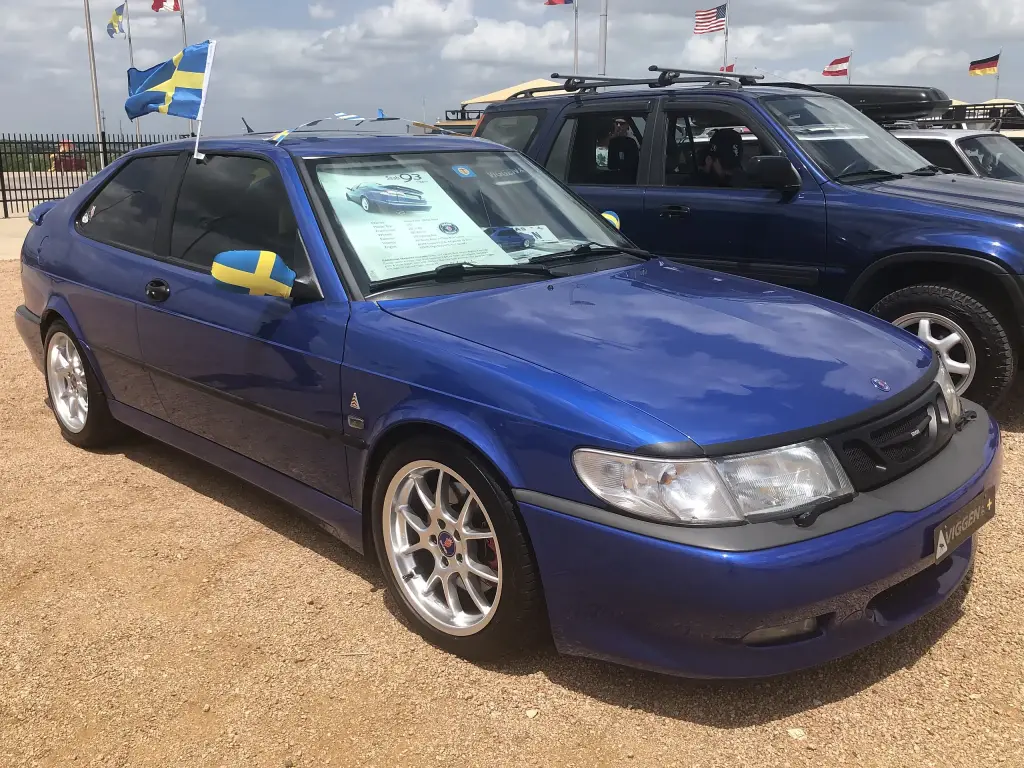
The engines were turbocharged four-cylinders of the B204 and later B205 families. Depending on the market they produced from 154 PS in the low-pressure turbo version to 205 PS in the “HOT” version, and the 9-3 was the first Saab with a diesel engine, a unit borrowed from Opel. The 2000 model year brought the Trionic 7 engine management system. Convertibles were built by Valmet in Uusikaupunki, Finland, which also assembled every 9-3 Viggen.
The Viggen appeared in 1999 and stayed on the market until 2002. It was named after the Saab 37 Viggen aircraft and developed with help from Tom Walkinshaw Racing. Its 2.3-litre B235R engine produced 225 PS at first and 230 PS later, with a larger intercooler, stronger gearbox casing, heavy-duty clutch, stiffer and lower springs and bigger brakes. Only a five-speed manual was offered, and about 4,600 cars were built. A Viggen could be ordered in Lightning Blue, Monte Carlo Yellow or Laser Red, with leather seats in contrasting colours.
Production of the first generation ended on 8 May 2002 in Trollhättan and on 25 April 2003 at Valmet. The second generation, built on the GM Epsilon platform shared with the Opel Vectra and Cadillac BLS, went on sale in 2003 and lasted until 2012. National Electric Vehicle Sweden briefly assembled a few 9-3 sedans in 2013 and 2014.
Design and features
- Night Panel: a switch that blacks out all instrument lighting except the essentials.
- Saab active head restraints: standard equipment, along with dual-stage side airbags.
- Turbo engines throughout: every petrol 9-3 in the United States was turbocharged.
- Viggen performance model: 230 PS, stiffer suspension and a heavy-duty transmission.
Saab 9-3 versions
- 3-door and 5-door hatchback: the main body styles of the first generation.
- Convertible: built by Valmet, with a hydraulically operated roof.
- SE: the better-equipped version, with the 205 PS HOT engine in some markets.
- Viggen (1999–2002): 230 PS, five-speed manual only, about 4,600 built.
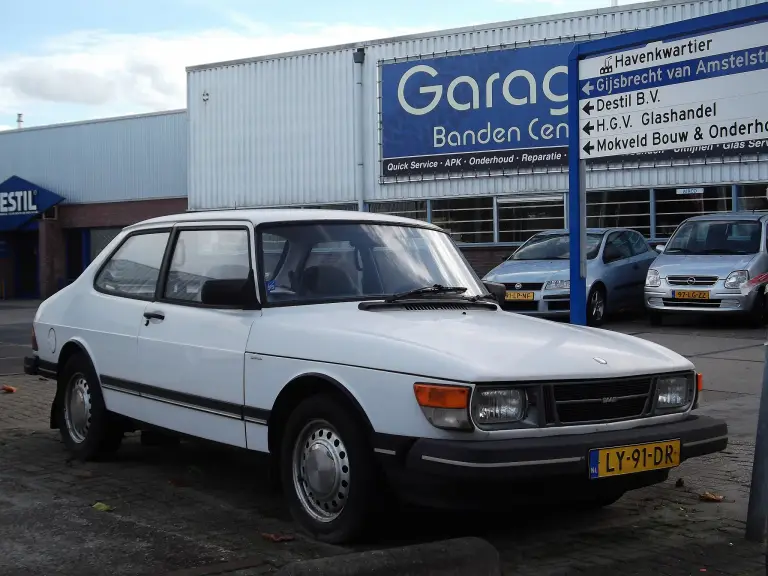
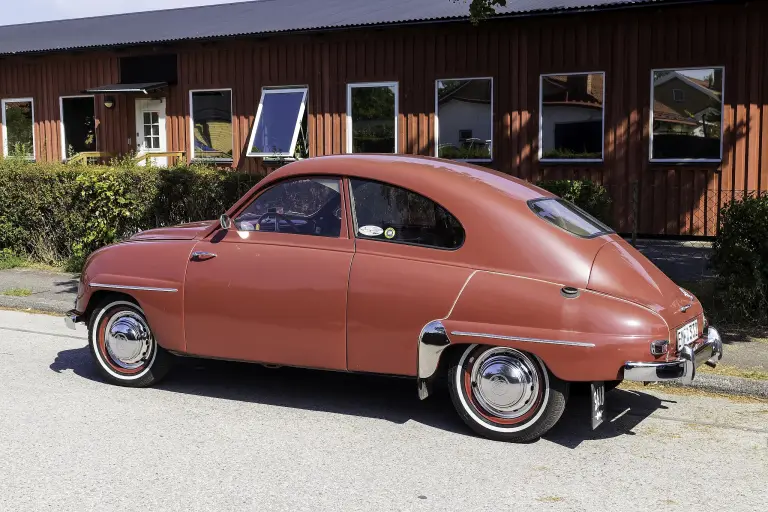
The 9-3 was the smaller stablemate of the Saab 9-5 and the successor to the Saab 900. Its ancestors include the two-stroke Saab 93, a different car despite the similar name. More cars are in the Saab collection.
Sources
- Saab 9-3, English Wikipedia: development, engines, Viggen, production