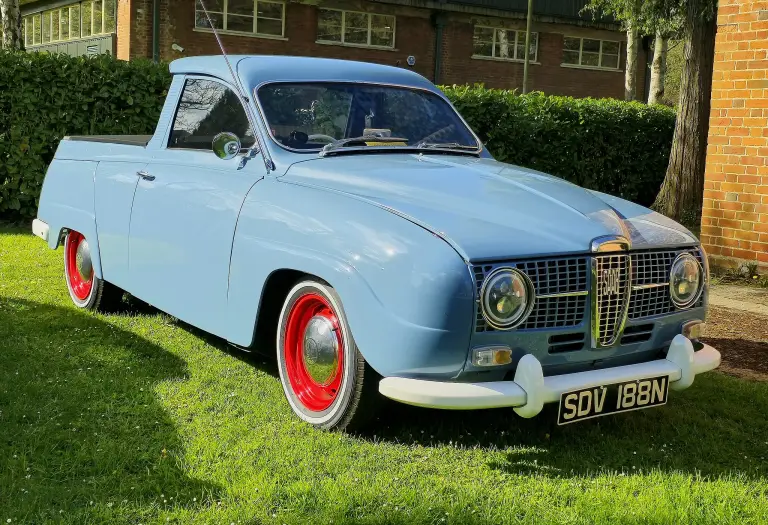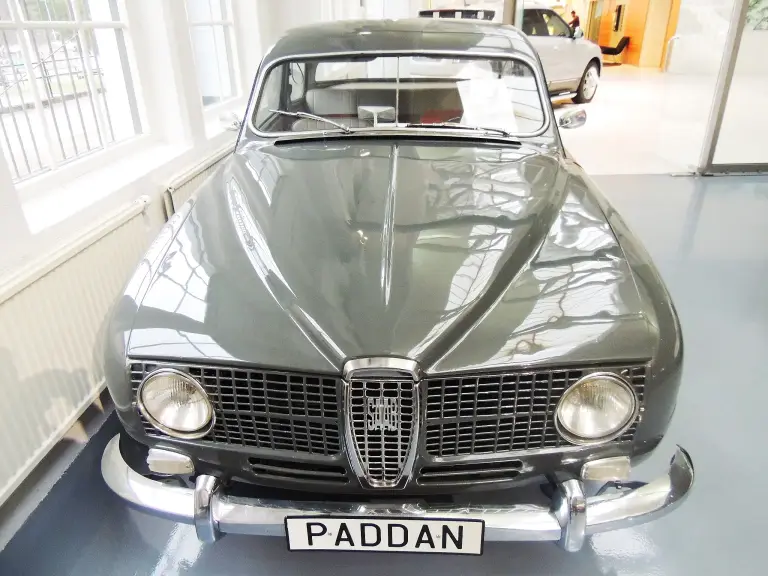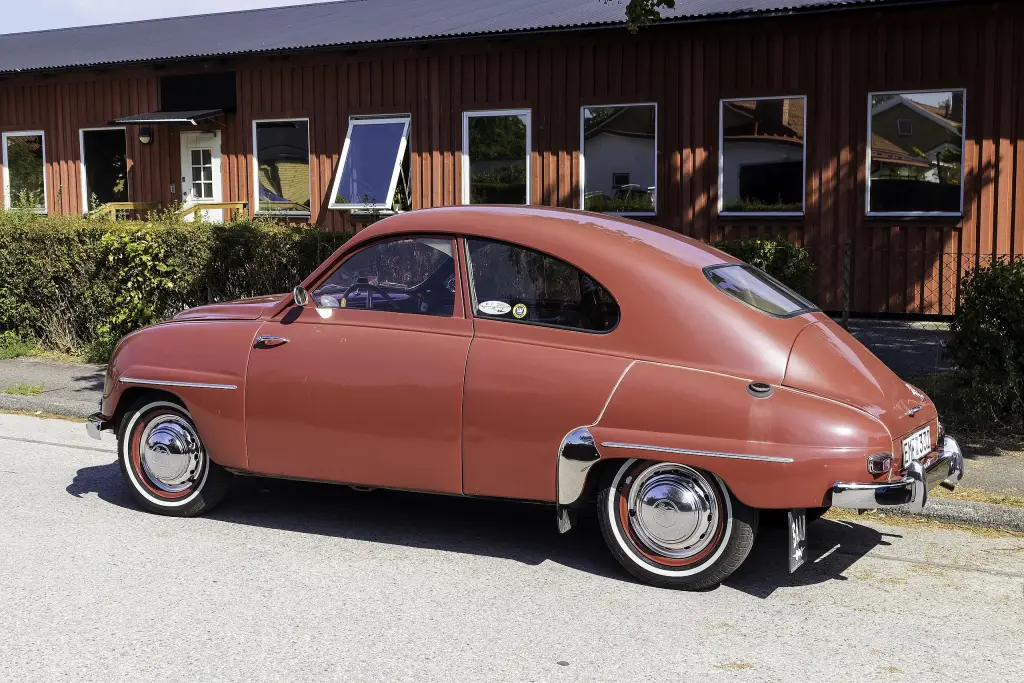
The Saab 93 was the second production car from Saab, presented on 1 December 1955. It was styled by Sixten Sason, used a 748 cc three-cylinder two-stroke engine and became the first Saab exported from Sweden, mostly to the United States.
Saab 93 at a glance
| Production | 1955–1960 |
|---|---|
| Presented | 1 December 1955 |
| Designer | Sixten Sason |
| Engine | 748 cc three-cylinder two-stroke, 33 hp |
| Layout | longitudinally mounted, front-wheel drive |
| Gearbox | three-speed, first unsynchronised, with a freewheel |
| Options | Saxomat clutch, cloth sunroof |
| Seatbelts | two-point belts optional from 1957 |
| 93B | September 1957, one-piece windscreen |
| 93F | late 1959, front-hinged doors from the GT750 |
| Built | 52,731 |
| Replaced by | Saab 96 |
Based on one source, the English Wikipedia article on the 93.
History of the Saab 93
The 93 followed the Saab 92 into production and was first shown on 1 December 1955. Its body was styled by Sixten Sason, the designer responsible for much of Saab’s early identity, and it kept the aerodynamic shape of the 92 while adding a larger rear window and more usable space. The engine was a longitudinally mounted 748 cc three-cylinder two-stroke producing 33 hp, and the gearbox had three gears with an unsynchronised first, as on the 92.
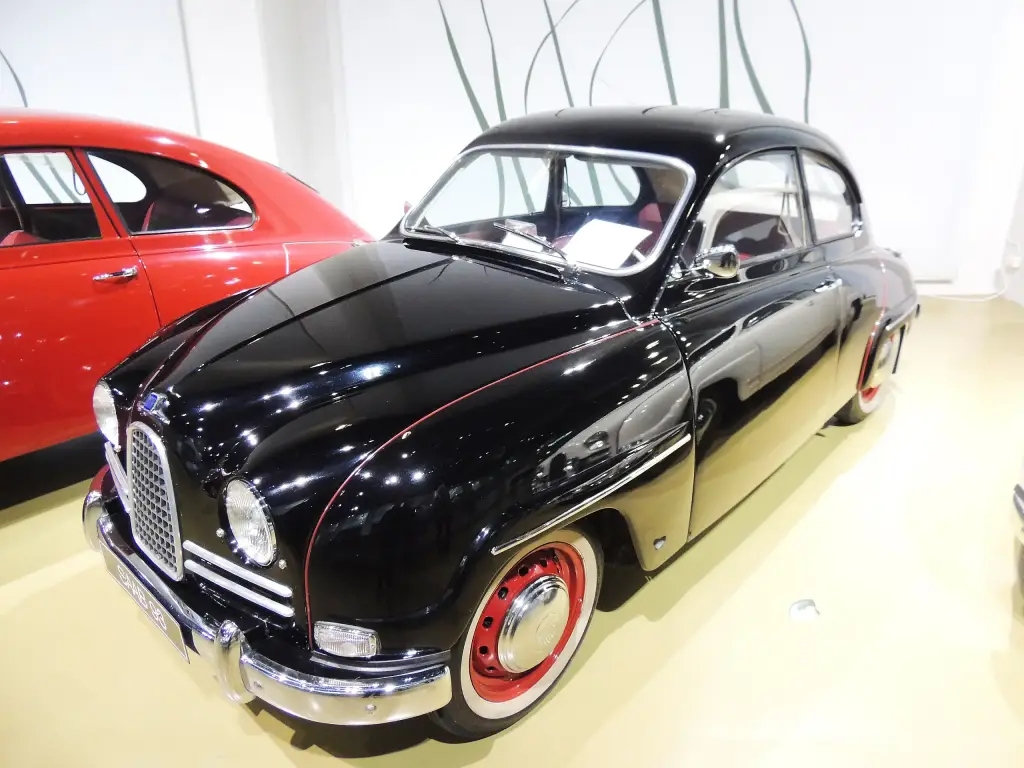
A freewheel device was fitted so that the two-stroke engine would not be starved of oil when the car was decelerating on a closed throttle. Two-point seatbelts became an option in 1957, and a Saxomat automatic clutch and a large cloth sunroof were also available. The 93 was the first Saab exported from Sweden, with most cars going to the United States.
The 93B arrived on 2 September 1957 and replaced the original two-piece windscreen with a single curved one. Late in 1959 came the 93F, which used the front-hinged doors of the Saab GT750. Production ended in 1960, when the 93 was replaced by the Saab 96, although the two were sold side by side for part of that year. In total 52,731 Saab 93s were built.
The car earned Saab its rally reputation. Erik Carlsson won the 1957 Finland Rally and the 1959 Swedish Rally in a 93, and Saab drivers took class wins and podium places in events from the Mille Miglia and the 1000 Lakes Rally to the Great American Mountain Rally. The Saab Sonett I roadster later shared many of its components with the 93. The model should not be confused with the much later Saab 9-3, which is a different car with a similar name.
Design and features
- Sixten Sason styling: an aerodynamic two-door shape with a larger rear window than the 92.
- Three-cylinder two-stroke: 748 cc and 33 hp, with a freewheel to protect the engine.
- Export pioneer: the first Saab sold outside Sweden, mainly in America.
- Rally pedigree: Erik Carlsson’s victories in Finland and Sweden in 1957 and 1959.
Saab 93 versions
- 93 (1955–1957): the original car with a two-piece windscreen.
- 93B (1957–1959): one-piece windscreen.
- 93F (1959–1960): front-hinged doors taken from the Saab GT750.
The 93 followed the Saab 92 and was replaced by the Saab 96. Its sporting version is described in the article on the Saab Granturismo. More cars are in the Saab collection.
Sources
- Saab 93, English Wikipedia: design, engine, versions, motorsport