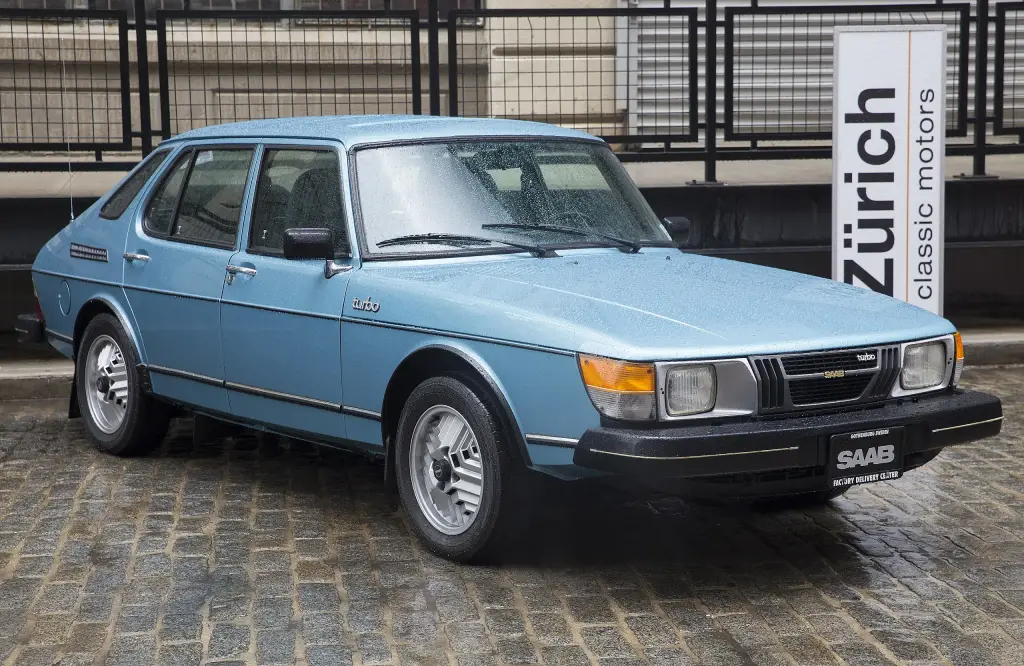
The Saab 900 was a compact car built in two generations between 1978 and 1997. The first, known today as the 900 Classic, grew out of the Saab 99 and became famous for its curved windscreen, its reversed engine and its turbocharged versions; the second generation arrived in 1993.
Saab 900 at a glance
| Production | 1978–1997, two generations |
|---|---|
| First generation | 1978–1993, the 900 Classic |
| Launched | 12 May 1978, for the 1979 model year |
| Based on | Saab 99 chassis with a longer front end |
| Bodies | two- and four-door sedan, three- and five-door hatchback |
| Cabriolet | from 1986 |
| Engine | longitudinally mounted inline four, canted 45 degrees |
| Engine position | installed backwards, with the transaxle under the engine |
| Suspension | double wishbone front, beam axle rear |
| Built at Valmet | 238,898 base cars in Finland |
| Sport version | 900 Aero, called SPG in the United States |
Based on one source, the English Wikipedia article on the 900; the article covers the first generation in most detail.
History of the Saab 900
The 900 was introduced on 12 May 1978 for the 1979 model year and was based on the Saab 99, with a longer front end added to meet American crash regulations and to make room for turbocharging and air conditioning. The Combi Coupé body came from the 99, while the two- and four-door sedans received a new rear end that was later used for the convertible. The 900 was offered as a two- or four-door sedan and as a three- or five-door hatchback, and from 1986 as a cabriolet.
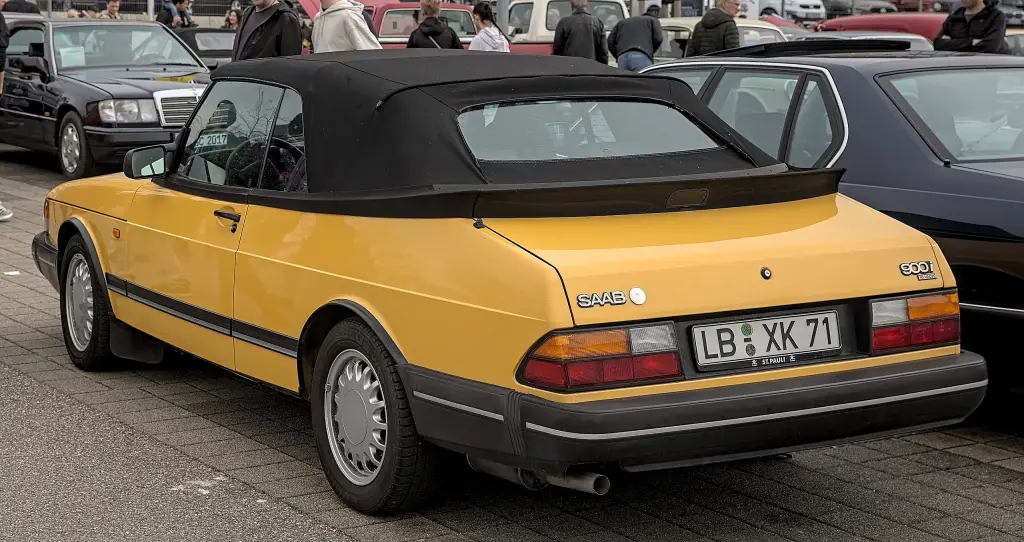
Its engineering was unusual. The four-cylinder engine was mounted longitudinally, canted at 45 degrees, and installed backwards so that the crankshaft drive faced the front of the car. The transaxle was bolted directly under the engine and formed the oil pan, with power taken from the front of the crank and transferred down and back through chain-driven primary gears. The front suspension used double wishbones, the rear a beam axle located by an arrangement of two Watt’s linkages, and the car had a deeply curved windscreen and a curved dashboard with controls placed by frequency of use.
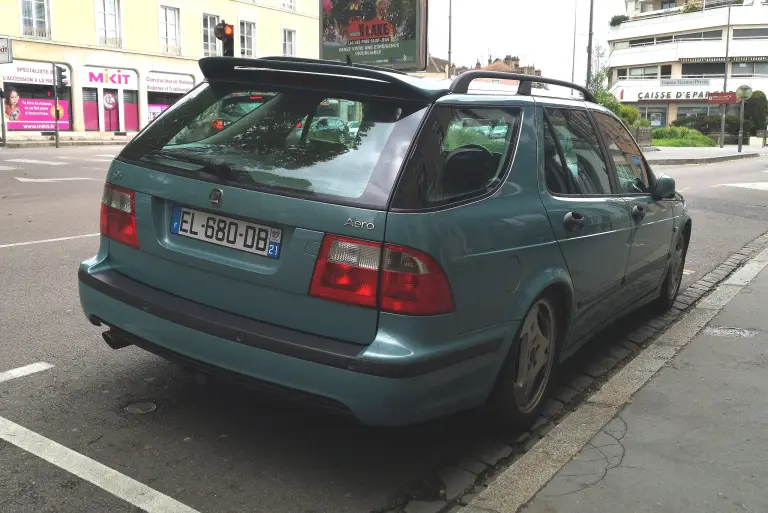
Engines ranged from single- and twin-carburettor units through fuel injection to turbocharged versions, including full-pressure turbos and, in Europe in the early 1990s, low-pressure turbos. The sporty option was the 900 Aero, sold in the United States as the Special Performance Group, with a body skirt, shorter and stiffer springs, firmer dampers and anti-roll bars. In 1987 the car received a restyled front end with more sloped bumpers, although the basic undercarriage stayed unchanged throughout the run.
Base models were built at Valmet in Finland, a total of 238,898 cars, and the Arlöv plant near Malmö also assembled the 900. The first generation was replaced in 1993 by a second-generation 900 on a General Motors platform, which lasted until 1997 and was then renamed the Saab 9-3. The first-generation 900 remains the car most people mean when they speak of the Saab 900.
Design and features
- Reversed engine: the engine sits backwards, with the transaxle underneath forming the oil pan.
- Curved windscreen and dashboard: deep glass and controls grouped by how often they are used.
- Turbocharging: from full-pressure turbos to the low-pressure units of the early 1990s.
- 900 Aero: body skirt, sport suspension and anti-roll bars, sold as the SPG in America.
Saab 900 versions
- Combi Coupé: the three- and five-door hatchback with the 99-derived body.
- Sedan: two- and four-door versions with the new rear end.
- Cabriolet (from 1986): the convertible, using the sedan rear end.
- 900 Aero / SPG: the sporting version with a body skirt and uprated suspension.
- Second generation (1993–1997): the General Motors-based 900, later renamed 9-3.
The 900 grew out of the Saab 99 and was replaced by the Saab 9-3. Its five-door estate ancestor was the Saab 95. More cars are in the Saab collection.
Sources
- Saab 900, English Wikipedia: design, engines, production