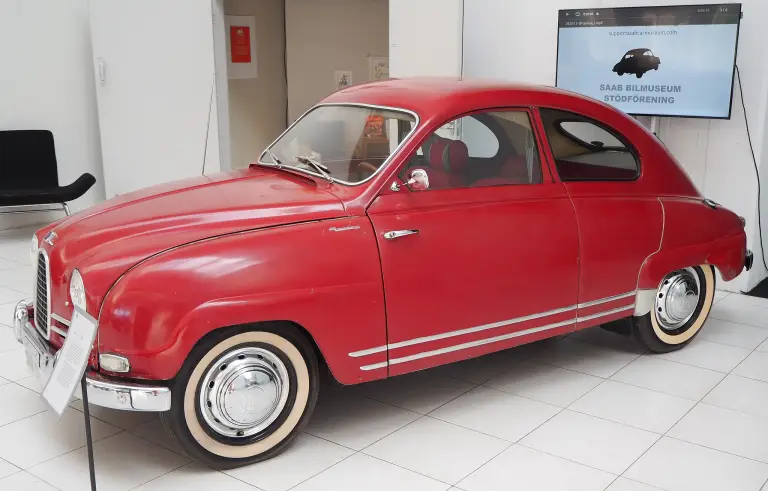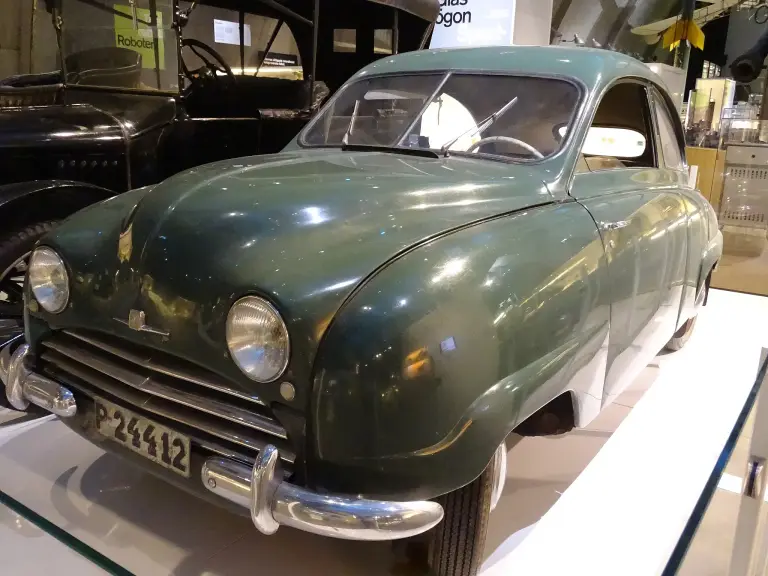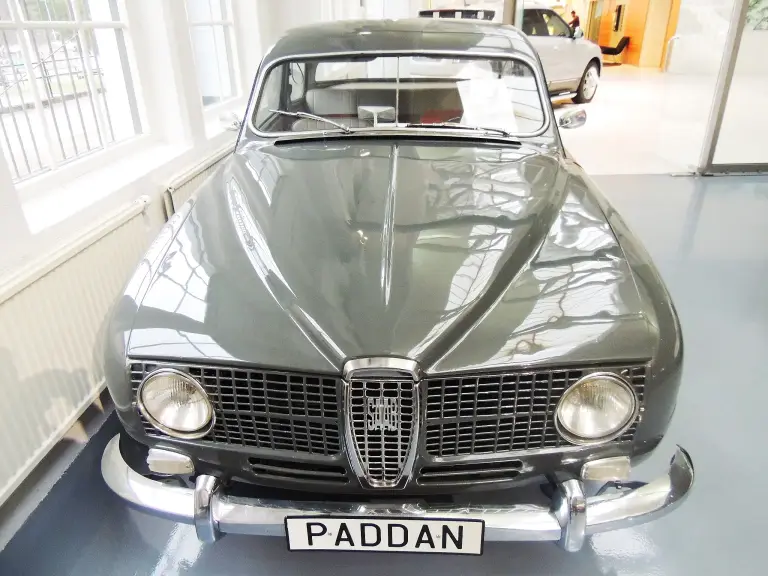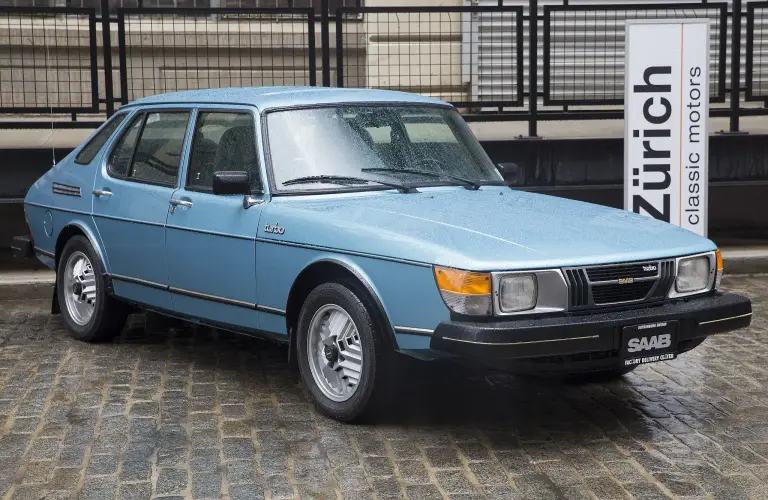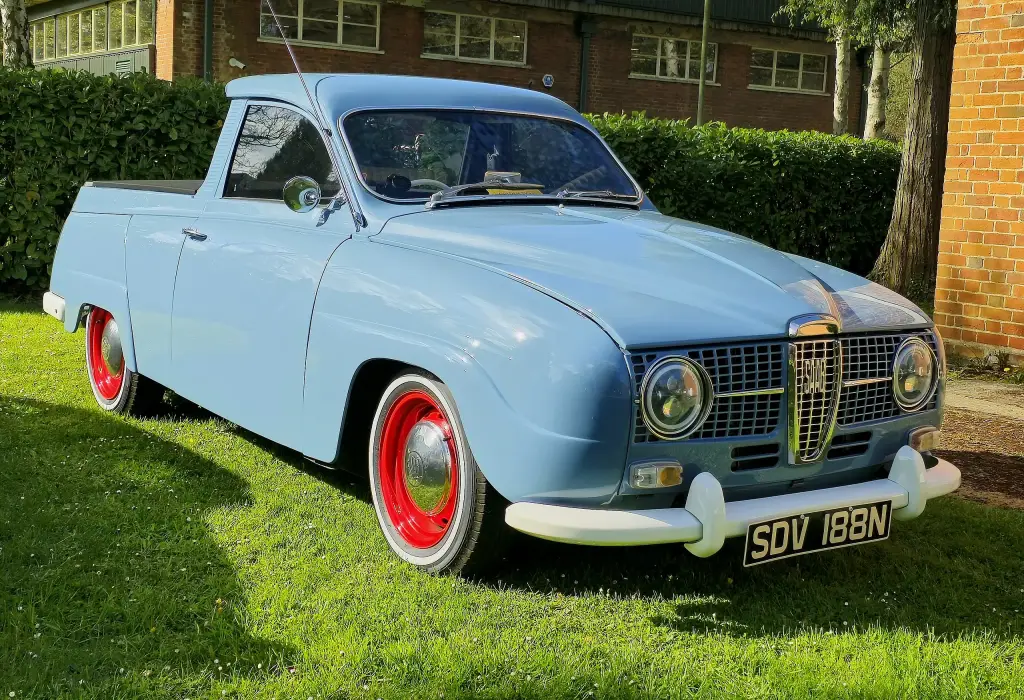
The Saab 95 was a seven-seater, two-door station wagon built from 1959 to 1978. It began as an estate version of the Saab 93, followed the development of the Saab 96, and later adopted the four-stroke Ford Taunus V4 engine.
Saab 95 at a glance
| Production | 1959–1978 |
|---|---|
| Type | two-door station wagon, seven seats |
| Based on | Saab 93, later developed alongside the Saab 96 |
| First engine | 841 cc three-cylinder two-stroke |
| From 1967 | Ford Taunus V4 four-stroke |
| Gearbox | four-speed manual, column-mounted lever |
| Freewheel | selected by a small handle on the firewall |
| US engine 1971 | 1.7-litre V4, 73 hp |
| Five-seater from | 1976, when the rear-facing seat was dropped |
| Built | 110,527 |
Based on one source, the English Wikipedia article on the 95.
History of the Saab 95
The 95 was introduced in 1959 as a two-door estate based on the Saab 93, but because only 40 cars were made that year, production is often said to have started in 1960. It offered seven seats: two front seats, a rear bench and a rear-facing folding seat in the load area, which made it an unusually practical small car for its time.
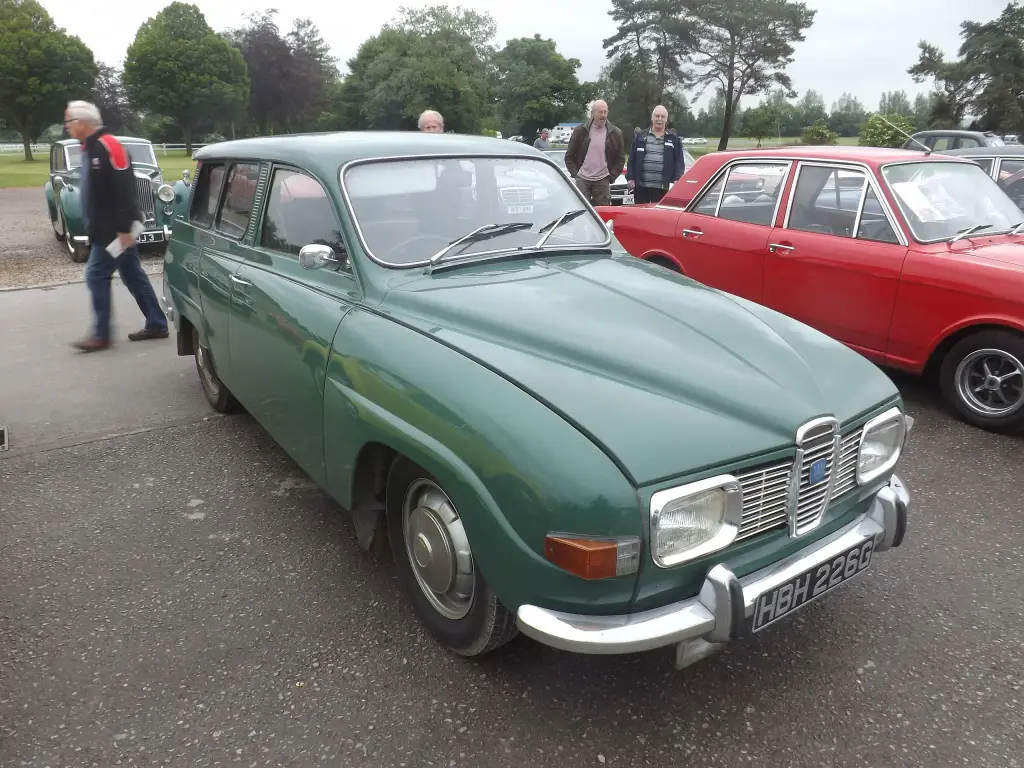
The first engine was an 841 cc three-cylinder two-stroke. A small handle on the firewall put the car into a freewheeling mode, which allowed the driver to coast downhill without risking the two-stroke engine, with the transmission re-engaging when power was needed again. The 95 received a four-speed gearbox before the 96 did, which is why it was also used for rallying while the 96 still had the old three-speed unit.
From 1967 the 95 became available with the same four-stroke Ford Taunus V4 engine used in the Saab 96, Sonett V4 and Sonett III. In the United States the car received the larger 1.7-litre V4 for the 1971 model year in response to tighter emissions rules; the compression ratio was lowered to 8.0:1 so that power stayed at 73 hp. The 95 and 96 remained on sale in America until 1973.
For the 1976 model year the rear-facing folding seat was dropped, turning the car into a regular five-seater. Production ended in 1978, when only 470 cars were built, and in total 110,527 Saab 95s were made. For Norway and Denmark a special export version was offered as a sedan delivery van, without a rear seat and without rear side windows.
Design and features
- Seven seats: a rear-facing folding seat turned the small estate into a family car.
- Freewheeling mode: a handle on the firewall let the car coast without harming the two-stroke engine.
- Ford V4: from 1967 the four-stroke Taunus V4 replaced the two-stroke.
- Van version: a seatless delivery model for Norway and Denmark.
Saab 95 versions
- 95 two-stroke (1959–1967): 841 cc three-cylinder engine.
- 95 V4 (1967–1978): Ford Taunus V4 four-stroke engine.
- US 1.7 V4 (1971–1973): larger engine with a lower compression ratio.
- Delivery van: export version without rear seat or rear side windows.
The 95 was the estate member of the family that included the Saab 93 and the Saab 96, and its practical body anticipated the Saab 900 hatchbacks. More cars are in the Saab collection.
Sources
- Saab 95, English Wikipedia: body, engines, production