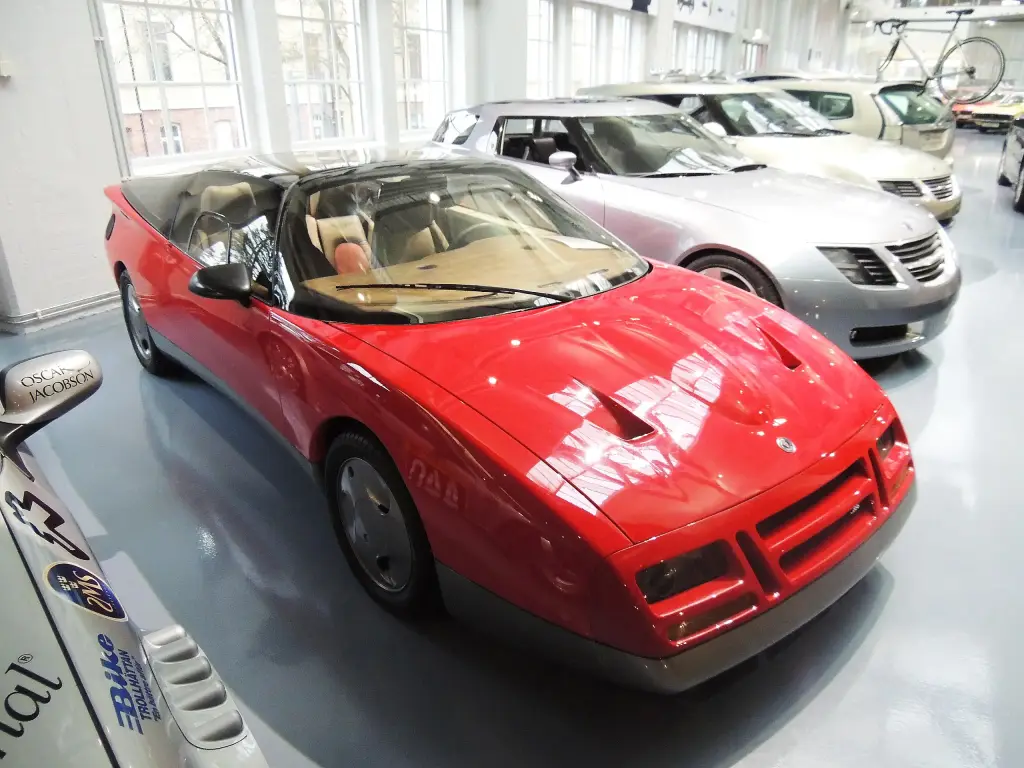
The Saab EV-1, or Experimental Vehicle One, was built by Saab in 1985 as a fully roadworthy concept car. Based on the Saab 900 Turbo 16, it was a wedge-shaped 2+2 coupé with a glass roof containing solar cells and a body tuned to 285 hp.
Saab EV-1 at a glance
| Built | 1985 |
|---|---|
| Name | Experimental Vehicle One |
| Basis | Saab 900 Turbo 16 |
| Body | wedge-shaped 2+2 coupé, steel |
| Roof | all glass, with 66 solar cells |
| Designer | Björn Envall |
| Metalwork | Leif Mellberg |
| Bumpers | aramid fibre composite, self-reforming |
| Doors | carbon-fibre side impact protection |
| Seats | from a Chevrolet Corvette |
| Power | 285 hp |
| Top speed | 270 km/h |
| 0–100 km/h | 6.9 seconds |
Based on one source, the English Wikipedia article on the EV-1.
History of the Saab EV-1
The EV-1 was developed in 1985 as a study of what a future Saab might look like, but unlike many concept cars it was fully functional and roadworthy. It was based on the Saab 900 Turbo 16, carried a steel body and had a wedge-shaped 2+2 coupé profile. The design was by Björn Envall and the metalwork by Leif Mellberg.
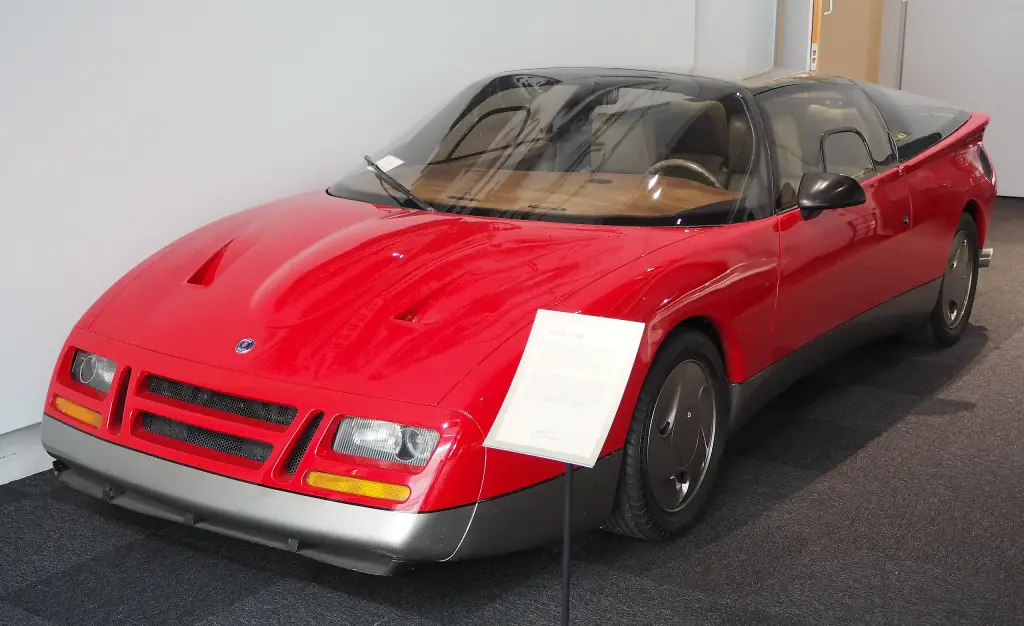
Its most distinctive feature was the roof, made entirely of glass with 66 solar cells mounted in it. The cells drove a fan that cooled the interior when the car was parked in sunlight. The bumpers were made of aramid fibre composites, the material known as Twaron or Kevlar, and were designed to absorb impacts and return to their original shape. The side doors had carbon-fibre side impact protection.
Most mechanical parts came from the 900 Turbo 16 and were modified for the study, although the seats were borrowed from a Chevrolet Corvette. The engine was tuned to 285 hp, enough for a top speed of 270 km/h and acceleration from 0 to 100 km/h in 6.9 seconds. The car also had a wrap-around windscreen, deep and steeply inclined for the period, with a more vertical A-pillar for good visibility.
One detail from the EV-1 reached production: its speedometer lit only the area around the current speed, and a modified version of this idea later became standard on Saab models. The car also appeared in the background of the film Back to the Future Part II.
Design and features
- Solar roof: 66 solar cells in an all-glass roof power a fan that cools the parked car.
- Self-reforming bumpers: aramid fibre composites that absorb an impact and spring back.
- 285 hp: a tuned 900 Turbo 16 engine with a 270 km/h top speed.
- Speedometer idea: the dial lights only around the current speed, a feature later used in production.
Saab EV-1 versions
- EV-1 (1985): the single experimental vehicle built by Saab.
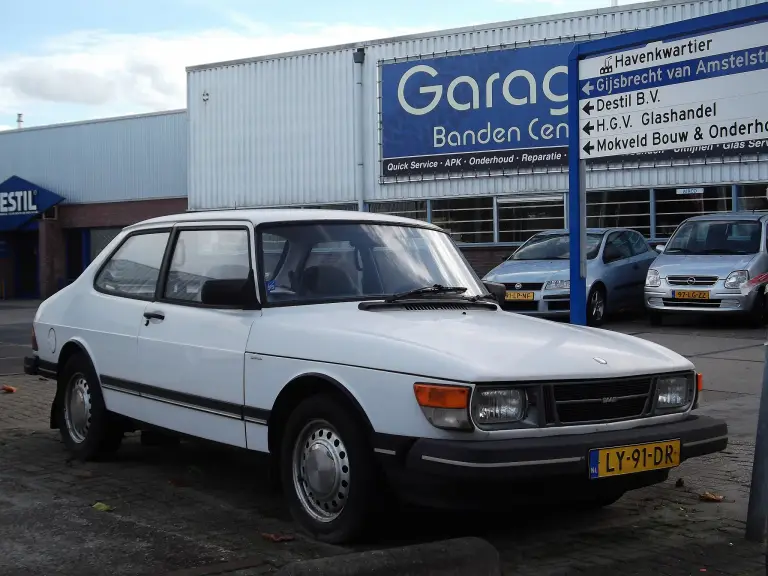
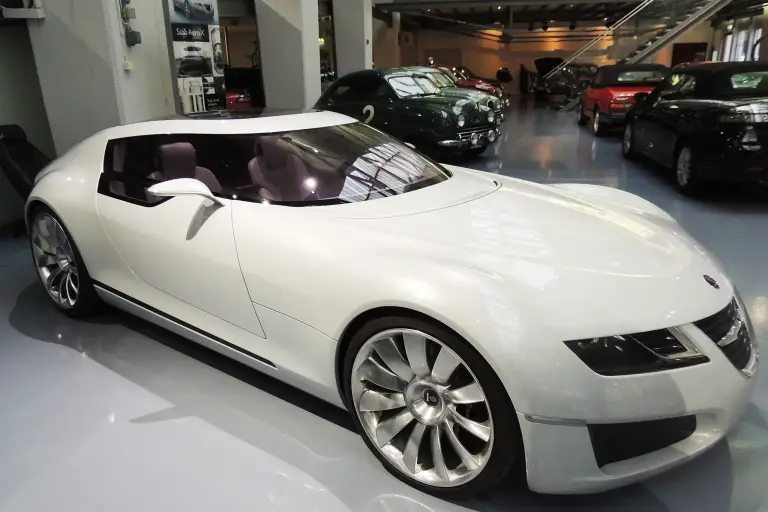
The EV-1 was based on the Saab 900 and explored ideas later seen in the Saab 9-5. Its design language looks forward to the Saab Aero-X. More cars are in the Saab collection.
Video: Saab EV1 official promotional video 1985
Video by the uploader on YouTube.
Sources
- Saab EV-1, English Wikipedia: design, materials, performance