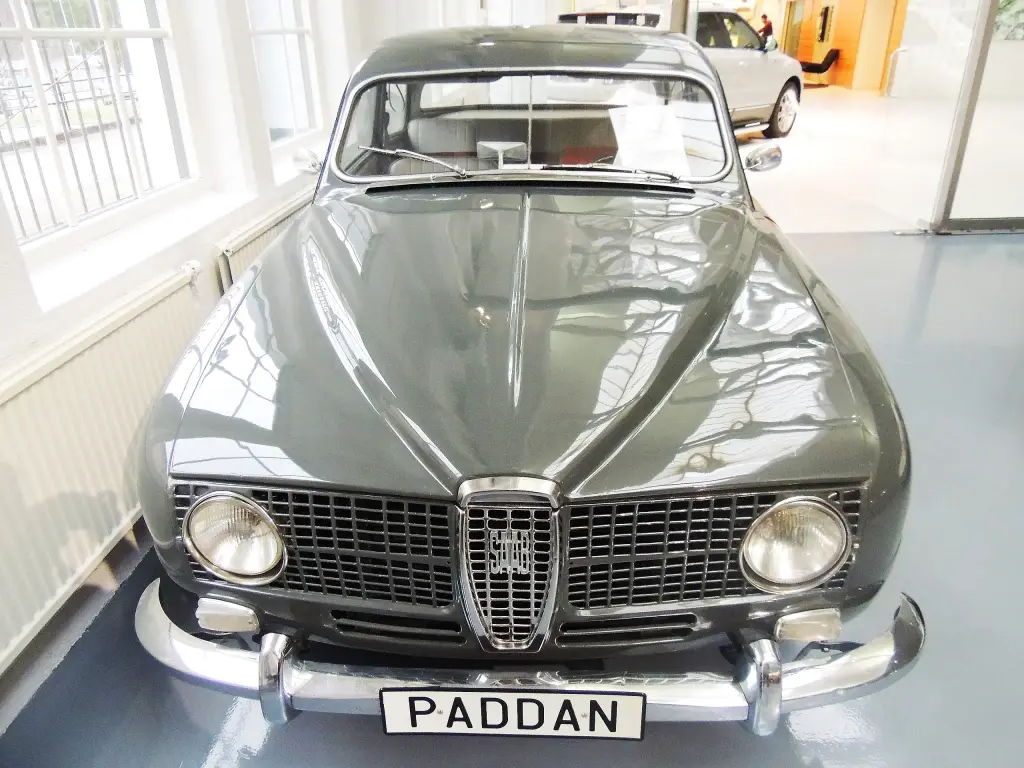
The Saab Paddan, called the Toad in English, was a development car built in 1966 to test the chassis, drivetrain and engine of the future Saab 99. To keep the project secret, Saab used a Saab 96 body cut in half and widened by 20 centimetres, so that the car looked ordinary on Swedish roads.
Saab Paddan at a glance
| Built | 1966 |
|---|---|
| Swedish name | Paddan, English Toad |
| Purpose | testing the chassis, drivetrain and engine of the Saab 99 |
| Base body | Saab 96, cut lengthwise and widened |
| Widening | 20 centimetres of steel spacer |
| Engine | inline four developed by Triumph with Saab |
| Built | four cars |
| Survivors | one, in dark grey |
| Location | Saab museum, Trollhättan |
| Project | Gudmund, started 2 April 1964 |
Based on one source, the English Wikipedia article on the Saab Toad.
History of the Saab Paddan
On 2 April 1964, Gudmund’s day in Sweden, the Saab board started Project Gudmund, a plan to develop a larger car to replace the Saab 96. The result would be the Saab 99, designed by Sixten Sason and shown in Stockholm on 22 November 1967, but during development the project had to stay secret, because the 99 was Saab’s first completely new body shape since the first cars of 1947.
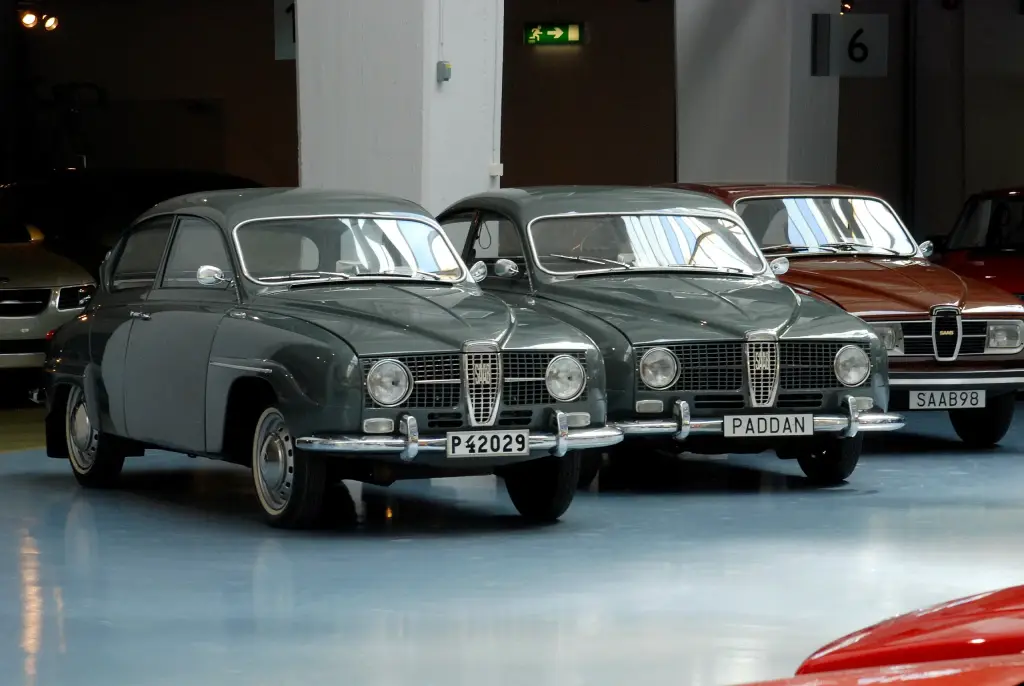
The solution was the Toad. Saab took the body of a Saab 96, which was long enough for the purpose, and widened it by 20 centimetres. This was done by cutting the body in half lengthwise and inserting 20 centimetres of steel spacer. The windscreen and rear window clearly showed the seam, and the bonnet and grille had to be widened differently so that the centrally placed features kept their appearance.
Under the bonnet sat the inline four-cylinder engine intended for the future Saab 99, developed by Triumph in cooperation with Saab. The engineers believed, correctly, that a slightly wider body would not be noticed on Swedish roads, where Saab 96s were an everyday sight. The deception worked for a while, until test drivers allowed a grey Toad to be followed by a similarly coloured Saab 96, which made the different proportions obvious.
Four Saab Toads were built, but only one survives. It is painted dark grey and is displayed in the Saab museum in Trollhättan. Further development was carried out with the Saab Daihatsu, a test car with the new body but badged “Daihatsu” so that journalists would not identify it as a Saab; that car is in the museum as well.
Design and features
- Hidden in plain sight: a Saab 96 body widened by 20 cm so that it looked ordinary.
- Seam in the glass: the windscreen and rear window show where the body was cut.
- Triumph engine: the inline four developed for the future Saab 99 was tested under the bonnet.
- Four cars, one survivor: the only remaining Toad is in the Saab museum.
Saab Paddan versions
- Toad / Paddan (1966): four widened Saab 96 development cars.
- Saab Daihatsu: a later test car with the new 99 body and a misleading badge.
The Paddan led to the Saab 99 and was built from the Saab 96. The production car it hid was replaced in turn by the Saab 900. More cars are in the Saab collection.
Sources
- Saab Toad, English Wikipedia: construction, secrecy, survivors