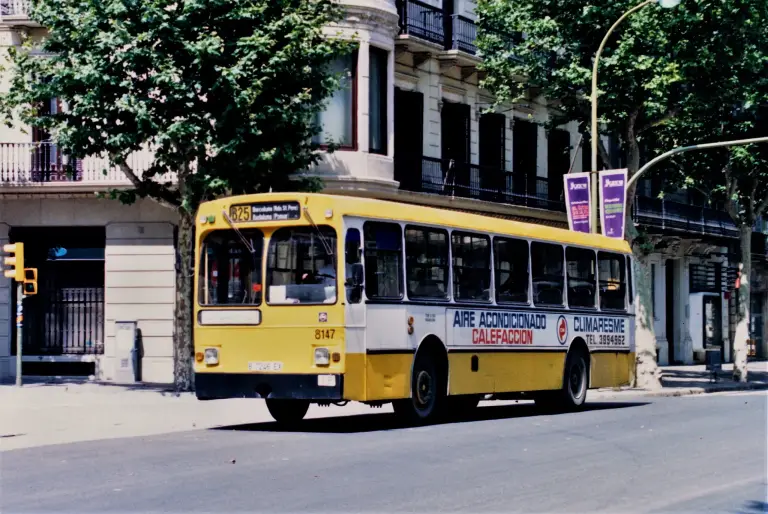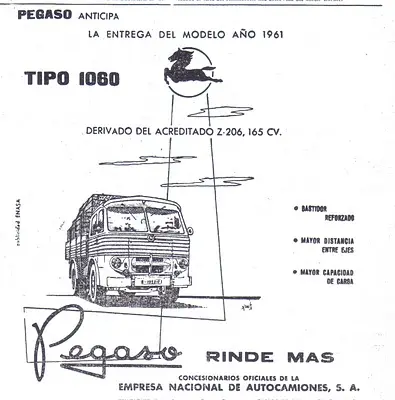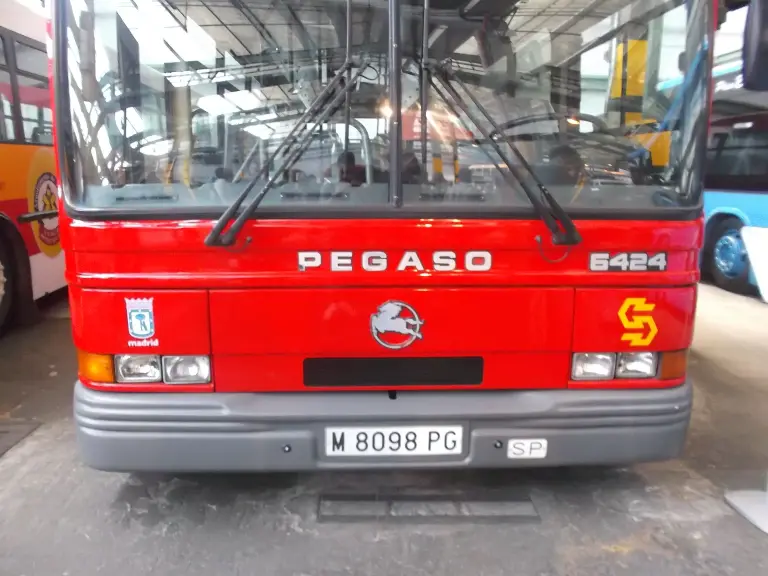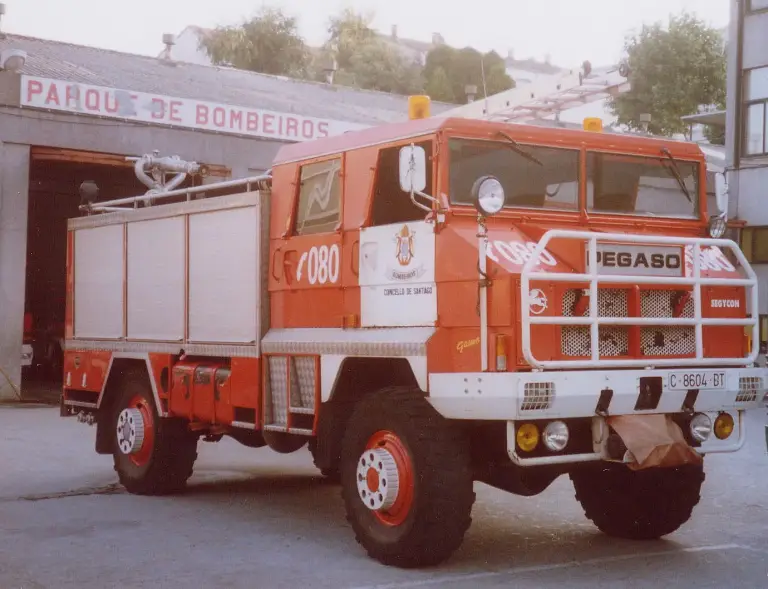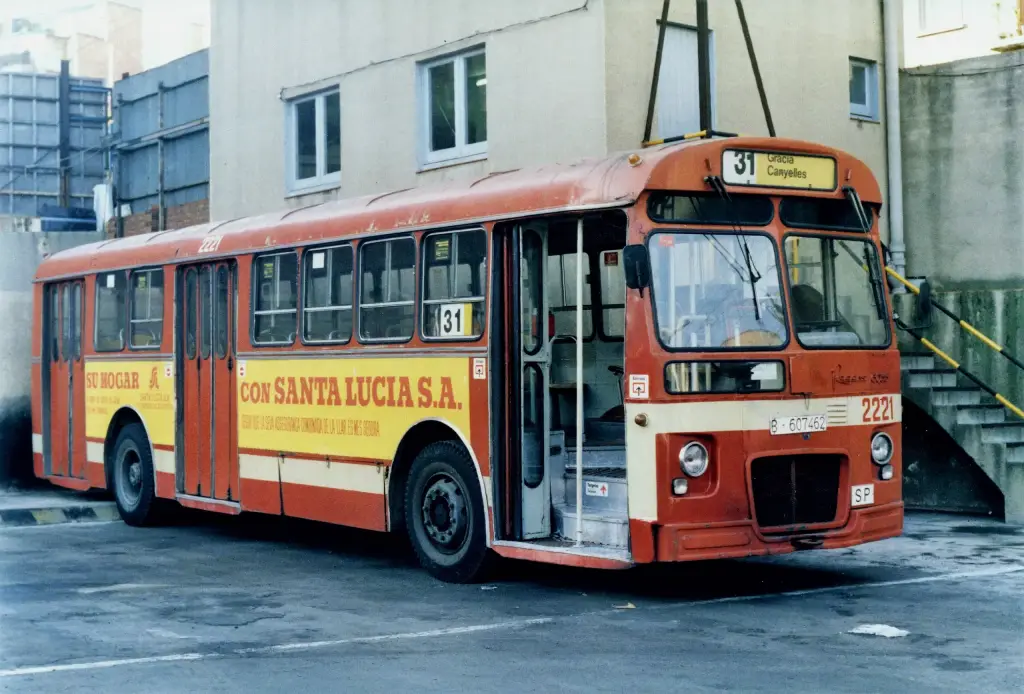
Pegaso Monotral was the name given to the chassisless buses and coaches that ENASA began building in 1961 on an Italian Viberti design. The line ran for two decades and produced a long series of integral models, beginning with the 6030-N.
Pegaso Monotral at a glance
| Maker | ENASA, Barcelona |
|---|---|
| Marque | Pegaso |
| Name | Monotral, from the Viberti design |
| Production began | 1961 |
| Design origin | Officine Viberti, Italy |
| First model | 6030-N coach |
| 6030-N layout | underfloor horizontal engine, single-tyre rear axle |
| Licence in Spain | Jorsa of Mataró, from 1960 |
| Span | about two decades of chassisless models |
The Monotral line is described in the English and Spanish Wikipedia articles on Pegaso and on the 6035 bus; the article stays within those passages.
History of the Pegaso Monotral
The Monotral structure was an Italian idea: Officine Viberti of Turin had sold chassisless bus bodies under that name since 1947. In 1960 ENASA’s own Jorsa works at Mataró, Construcciones Jover, Obiols y Rosell, signed a licence to build the structure in Spain, and production of Pegaso Monotral buses and coaches began in 1961.
The first of the line was the 6030-N coach, which had its horizontal engine under the floor and a single-tyre rear axle. That made it very light for a full-length vehicle, and it set the pattern for the models that followed.
The Monotral principle then spread through ENASA’s bus programme: the 6020 and 6021 used the integral structure, and the 6035 of 1964 developed it with an underfloor horizontal engine and a semi-automatic gearbox. The 6038 of 1980 and the 6420 and 6424 of the 1980s continued with integral bodies, by then adapted from MAN designs.
Pegaso’s chassisless buses competed with the Setra Seida coaches that Seida built in Spain from 1963 under Kässbohrer licence with Pegaso engines, sold as the Setra Seida S14 and Pegaso 5070. Between them, the two families dominated Spanish coach and city bus fleets for two decades.
Design and features
- Chassisless structure: the Viberti Monotral body carried the loads itself, without a separate frame.
- Underfloor engine: the 6030-N put its horizontal engine beneath the floor, freeing passenger space.
- Light weight: a single-tyre rear axle helped keep the full-length coach light.
- Spanish licence: built by ENASA’s Jorsa works at Mataró from 1960.
Pegaso Monotral versions
- 6030-N: the first Monotral coach, 1961.
- 6020 and 6021: earlier integral buses on the same structural principle.
- 6035 and 6035-A: the urban buses that developed the formula from 1964.
- 6038, 6420, 6424: later integral buses derived from the same tradition.
The urban bus built on this principle is in Pegaso 6035, its successors in Pegaso 6038 and Pegaso 6420, and the coachbuilt chassis range in Pegaso 5000; more under Pegaso.
Video: PEGASO MONOTRAL
Video by eb3cdh on YouTube.
Sources
- Pegaso, English Wikipedia: Monotral production from 1961, Viberti design, 6030-N
- Pegaso 6035, Spanish Wikipedia: Viberti licence, Jorsa of Mataró, integral structure