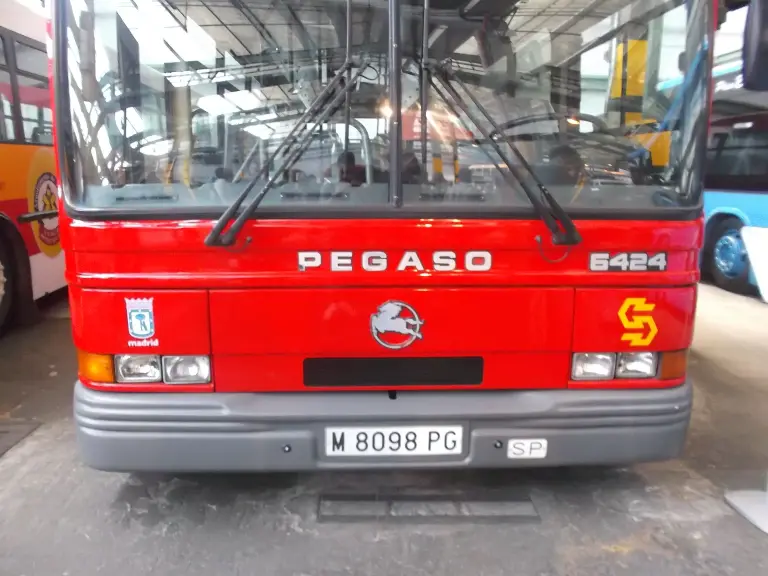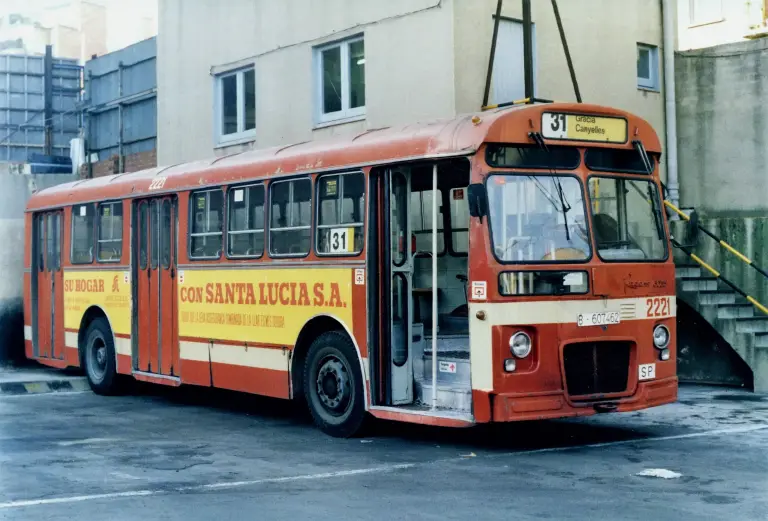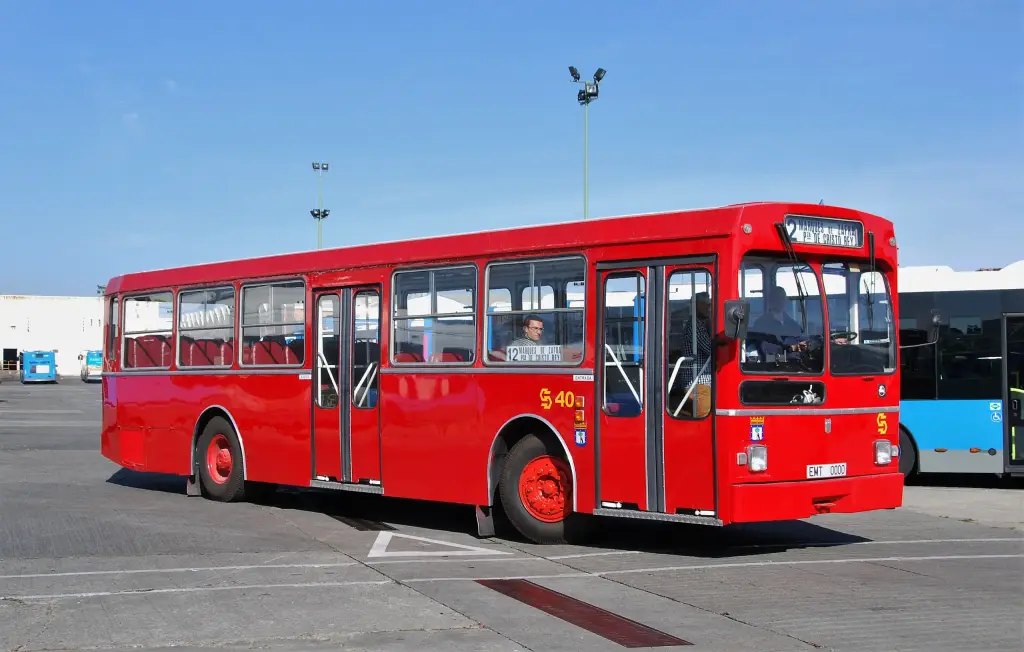
The Pegaso 6050 was the urban bus ENASA built from 1972 to 1980 with a rear engine and a lowered floor, designed to replace the 6035. It never did: 1,004 were built against 1,402 of the older model in the same years, and overheating of the rear-mounted engine is the likely reason.
Pegaso 6050 at a glance
| Maker | ENASA, Barcelona |
|---|---|
| Production | 1972–1980 |
| Type | urban bus, rear engine, low floor |
| Designed for | one-man operation, without a conductor |
| First shown | Barcelona motor show, April–May 1972, with the short 6025 |
| Series production from | 1974, first order of 200 for EMT Madrid |
| Built | 1,004 |
| Main customers | EMT Madrid 563, TITSA Tenerife 120, SALTUV Valencia 54 |
| Engine | Pegaso diesel of more than 200 hp |
| Structure | integral, Monotral licence via Jorsa of Mataró |
History of the Pegaso 6050
At the start of the 1970s Spain’s municipal transport companies had to renew their fleets and cut operating costs. ENASA designed a bus that broke with the classic layout of the 6035, which it was then building in large numbers. The Jorsa works at Mataró, part of ENASA, designed an integral structure based on the licences bought from Italy’s Officine Viberti in 1960.
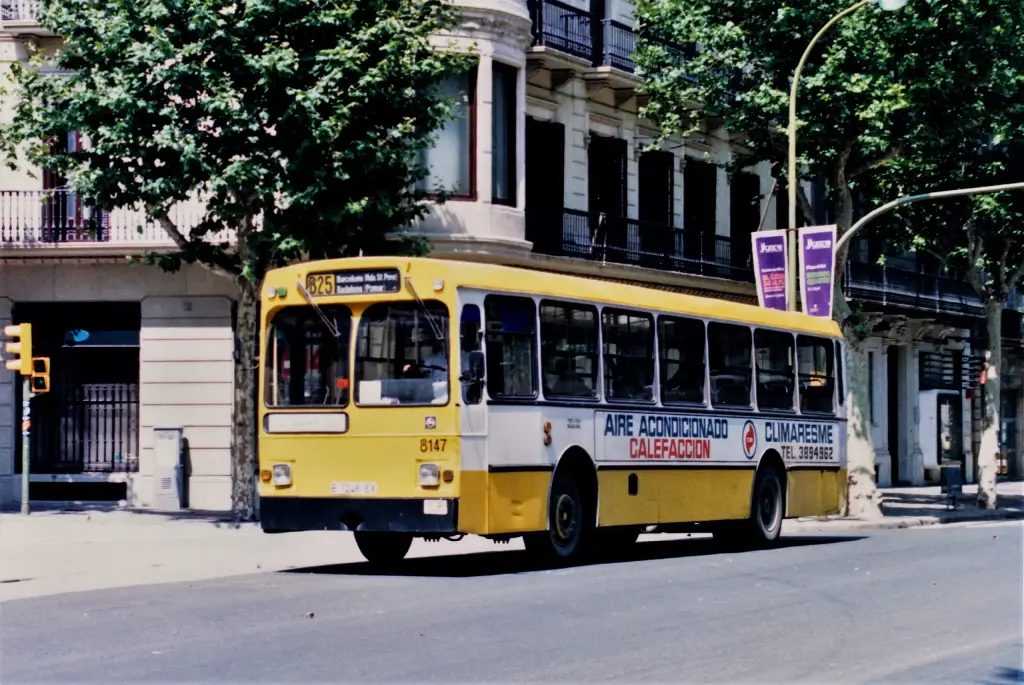
The 6050 was conceived for one-man operation, so the conductor was no longer needed and the rear door could go. With no rear door, the engine moved to the back of the bus, which in turn allowed a lower floor and easier access. It was also the first urban bus ENASA built with an engine of more than 200 hp. ENASA made the integral structure and it was bodied either by its own Jorsa works or by outside coachbuilders.
The prototype was shown at the fourteenth Barcelona motor show, held from 22 April to 2 May 1972, together with its short version, the 6025. Series production only began in 1974, with the first order of 200 buses for the Madrid municipal operator EMT.
A total of 1,004 were built up to 1980, and 737 of them went to just three operators: EMT Madrid took 563, TITSA of Tenerife 120 and SALTUV of Valencia 54. Production ran alongside that of the 6035 it was meant to replace, and ENASA built 1,402 of the older bus during the 6050’s lifetime, four hundred more than the new model. The engine suffered from overheating because of poor cooling, both from its position and from repeated failures of the ventilation belts, which is probably why the model did not succeed. Some were also exported.
Design and features
- Rear engine: possible because one-man operation removed the need for a rear door.
- Low floor: the layout lowered the floor and made boarding easier.
- More than 200 hp: the first ENASA urban bus above that mark.
- Integral structure: Monotral-type chassisless body from the Viberti licences, built by Jorsa.
- Bodybuilder choice: ENASA supplied the structure, finished by Jorsa or outside firms.
Pegaso 6050 versions
- 6050: the standard urban bus.
- 6025: the short version shown with it in 1972.
- Export examples: buses built for operators outside Spain.
The model it replaced is Pegaso 6035, the one that finally succeeded it Pegaso 6038, and the chassis range it paralleled Pegaso 5000; more under Pegaso.
Video: Autobus Pegaso 6050 en Buñol (Valencia)
Video by juanrapegaso on YouTube.
Sources
- Pegaso 6050, Spanish Wikipedia: design, dates, production totals, customers, overheating
- Pegaso 6038, Spanish Wikipedia: the 6050 trials in Barcelona and their result