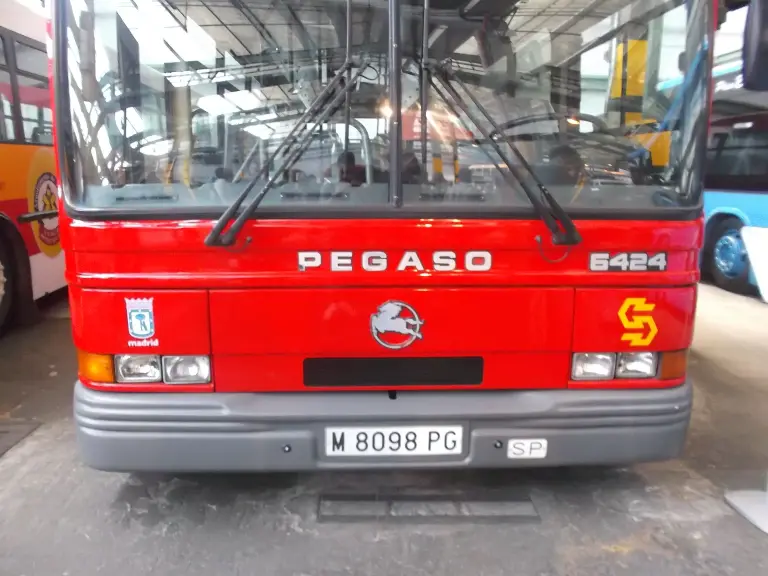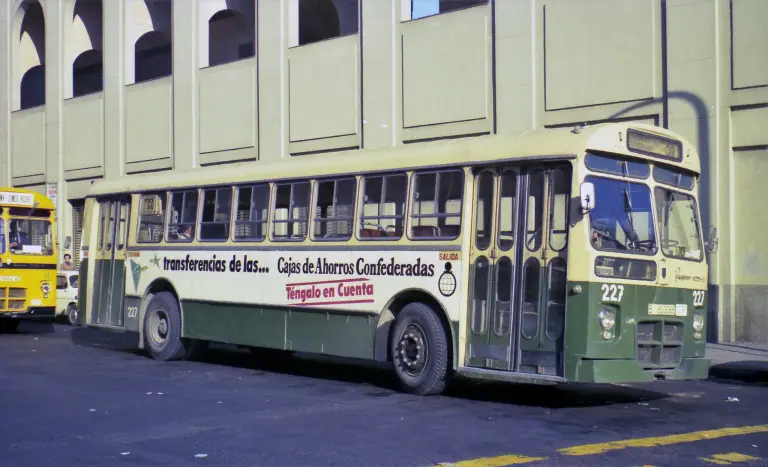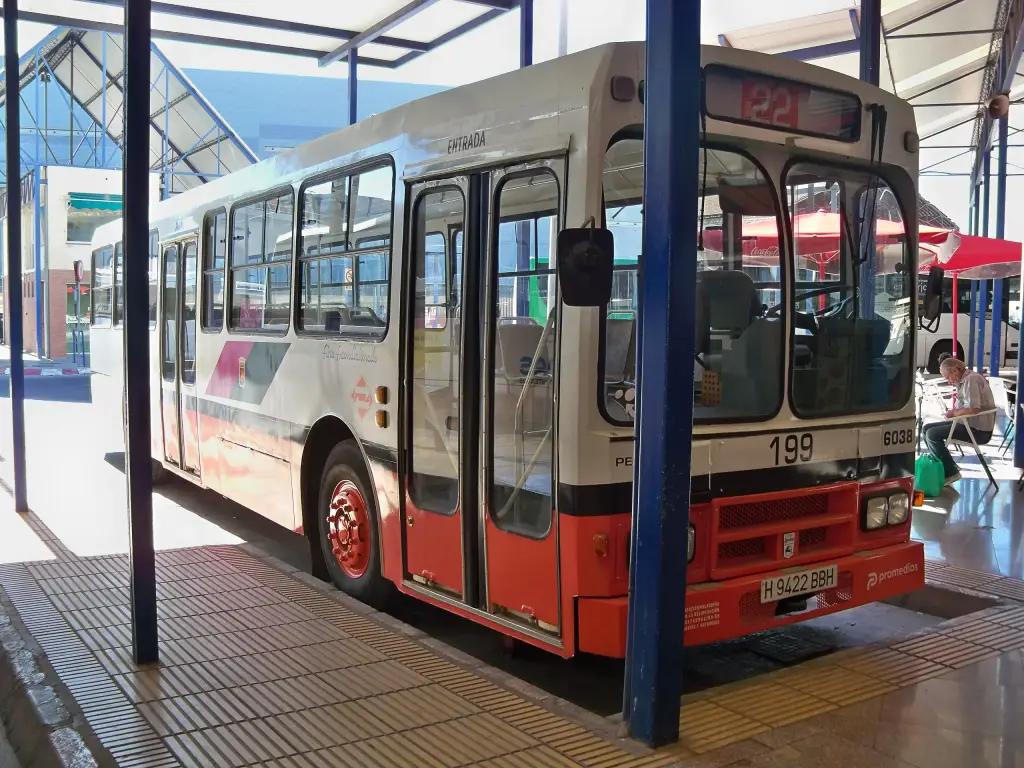
The Pegaso 6038 was an integral urban bus developed by ENASA in 1980 to solve the problems that growing demand was creating for Spain’s city transport operators. It was not planned: it took the proven 6035 mechanicals and the modern 6050 body, and in ENASA’s catalogue its rigid-chassis equivalent was the 5024, which shared the 200 hp Pegaso Diesel 9107 engine.
Pegaso 6038 at a glance
| Maker | ENASA, Barcelona |
|---|---|
| Developed | 1980 |
| Type | integral urban bus |
| Mechanical basis | Pegaso 6035 |
| Bodywork | derived from the Pegaso 6050 |
| Engine | Pegaso Diesel 9107, 200 hp |
| Catalogue equivalent | Pegaso 5024 in the 5000 chassis range |
| First customers | EMT Valencia and AUCORSA of Córdoba |
| Distinguishing feature | large destination display across the whole front |
History of the Pegaso 6038
By the late 1970s Spain’s urban bus fleets were old and ENASA’s existing models did not answer the operators’ complaints. The 6038 was born almost as an emergency solution rather than as part of the company’s plans.
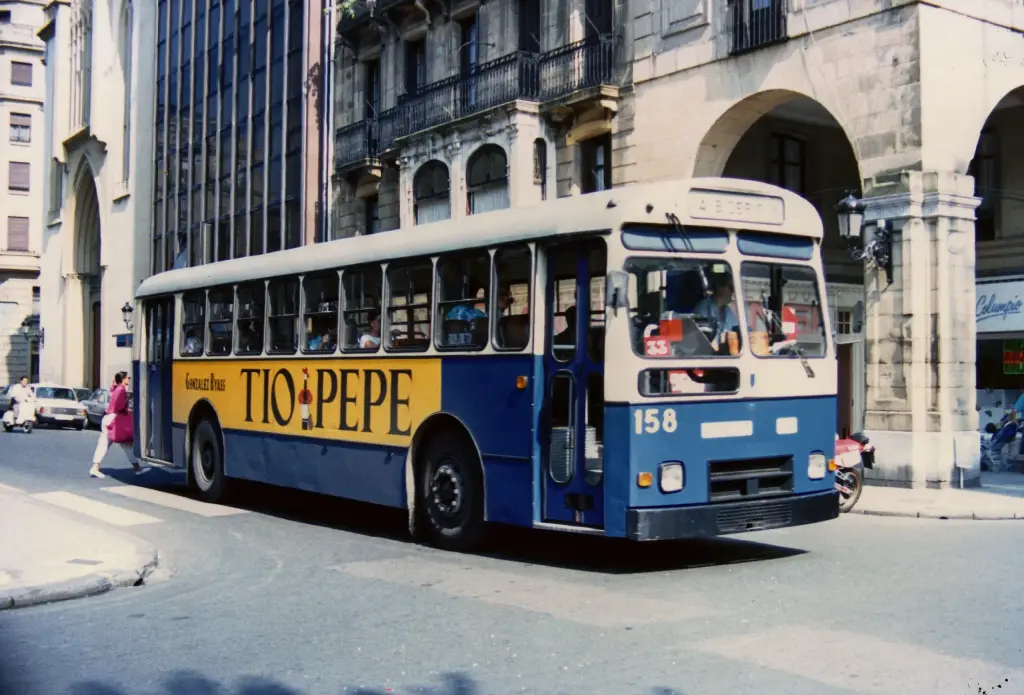
The story begins in Barcelona, where the municipal operator then called Tranvías de Barcelona tested two examples of the Pegaso 6050 in 1976. That bus had a rear engine and an integral Monotral-type structure that put the floor at little more than 60 cm above the road between the front of the vehicle and the second door, allowing a single step at the entrances, and its straight lines made room for larger windows.
The tests were part of a fleet renewal programme and were meant to judge whether the 6050 could replace the 6035s, most of them dating from the 1960s. The result was modest enough that Barcelona decided not to buy 6050s, although it did like the body design. With renewal urgent, ENASA developed a bus on the already proven 6035 technical base with a more powerful engine, a semi-automatic gearbox and bodywork similar to the 6050.
That bus was the 6038. In the ENASA catalogue it corresponded to the Pegaso 5024 of the rigid-chassis 5000 range, with the same 200 hp Pegaso Diesel 9107 engine and mechanical layout. The large destination display covering the whole front became its visual signature, and the main operators to take it were the Valencia municipal company and AUCORSA of Córdoba.
Design and features
- Mixed design: 6035 mechanicals under bodywork derived from the 6050.
- 200 hp engine: the Pegaso Diesel 9107, shared with the 5024 chassis.
- Semi-automatic gearbox: a step up from the earlier buses, easing city work for drivers.
- Full-width front display: the large destination panel that identified the model.
Pegaso 6038 versions
- 6038: the integral urban bus described here.
- 5024: the equivalent rigid chassis in the 5000 range, with the same engine.
Its predecessor is in Pegaso 6050, its replacement in Pegaso 6420, and the chassis range in Pegaso 5000; all under Pegaso.
Video: Pegaso 6038 rescatado por el team Alvi, el arranque
Video by juanrapegaso on YouTube.
Sources
- Pegaso 6038, Spanish Wikipedia: origin, 6050 tests, 5024 equivalent, engine
- Pegaso 6050, Spanish Wikipedia: the bus whose bodywork the 6038 borrowed