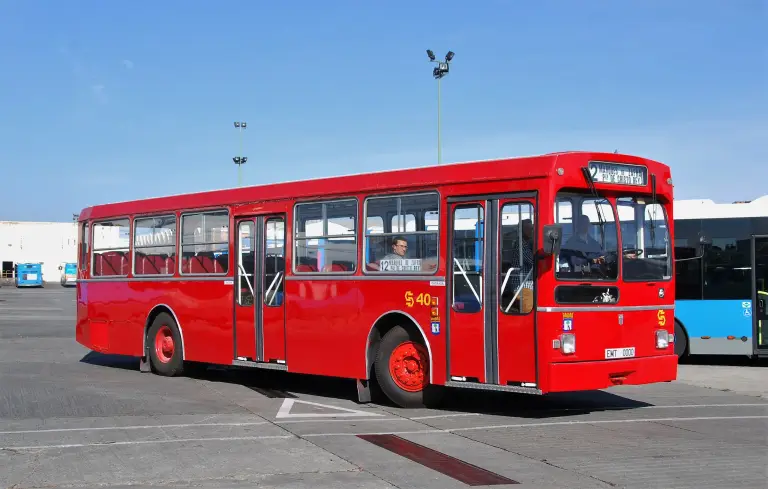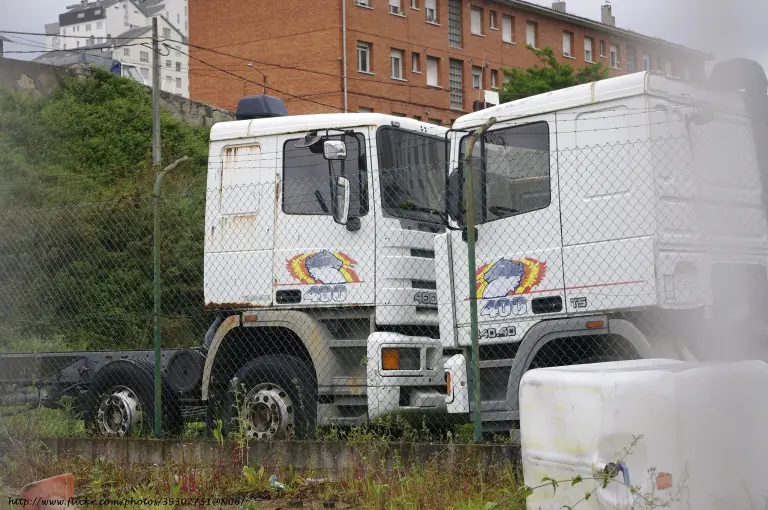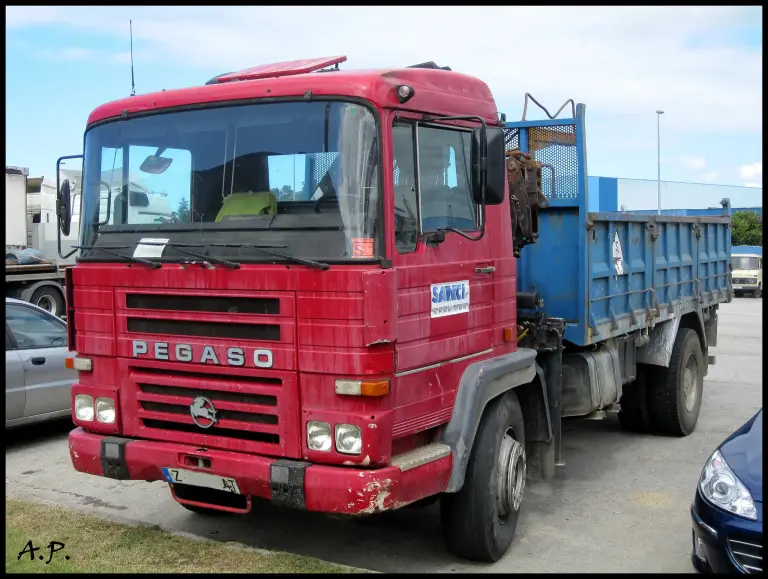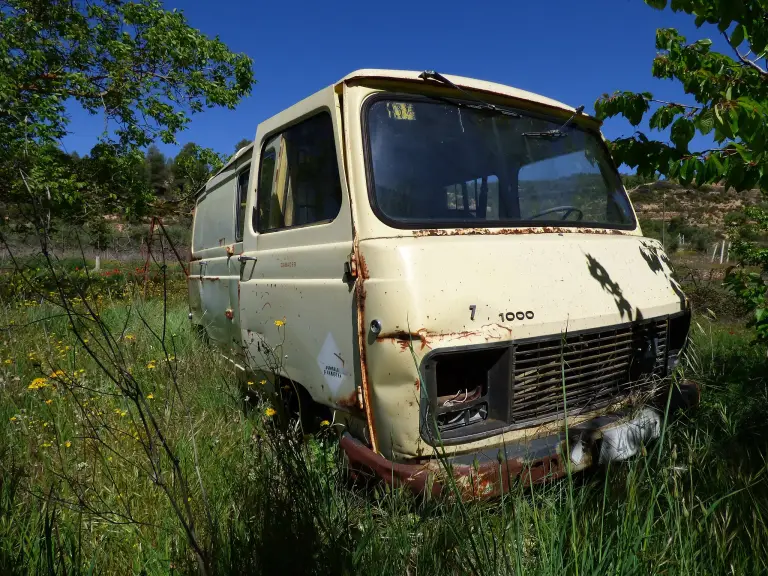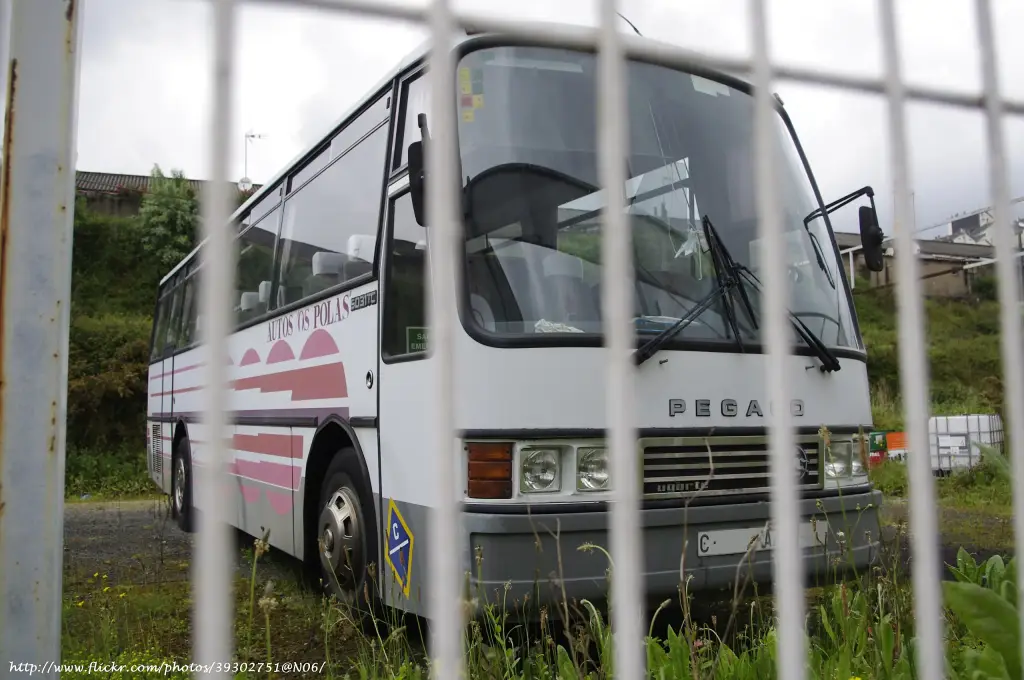
The Pegaso 5000 series was the chassis range that ENASA sold to coachbuilders rather than completing itself. On these frames Spanish body firms such as Ugarte built urban buses, interurban buses and coaches, and the system survived into the 1990s, long after the integral 6000 buses had taken over the biggest fleets.
Pegaso 5000 at a glance
| Maker | ENASA, Barcelona and Madrid |
|---|---|
| Marque | Pegaso |
| Type | bus and coach chassis, bodied by outside firms |
| Model numbers | 5020, 5022, 5023, 5031, 5036, 5231 |
| Purpose | urban, interurban and long-distance bodies |
| Related integral bus | Pegaso 5024 was the chassis equivalent of the 6038 |
| Setra link | the Pegaso 5070 was a Setra Seida S14 with Pegaso mechanicals, 1963 |
| Owner | ENASA until 1990, then Iveco |
| Main customers | Spanish coachbuilders and municipal fleets |
The Spanish Wikipedia article on Pegaso describes the 5000 series as a group rather than model by model; details of the individual numbers come only from what those pages state.
History of the Pegaso 5000
After the reorganisation of ENASA’s model designations, the frames intended to be completed by coachbuilders were gathered mainly in the 5000 series. Spanish and foreign body firms used them for urban buses, interurban buses and coaches, which is why two vehicles on the same 5000 chassis can look entirely different.
The series overlapped with the integral buses of the 6000 range. When ENASA developed the 6038 integral urban bus in 1980, its catalogue listed the Pegaso 5024 as the rigid-chassis equivalent, sharing the 200 hp Pegaso Diesel 9107 engine and the mechanical layout. The relationship worked both ways: the 5000 chassis kept the older body-building trade alive while the 6000 models took the largest municipal orders.
Pegaso also used the 5000 numbers for badge-engineered coaches. From 1963 the Seida works in Spain built Setra coaches under Kässbohrer licence with Pegaso engines and mechanical units, sold with a double badge as the Setra Seida S14 and the Pegaso 5070.
The range stayed in production into the late 1980s and early 1990s, when chassis such as the 5031 were still being bodied by Spanish firms. Production of Pegaso buses ended under Iveco, which from 1993 sold the Spanish-market Turbocity as the Iveco-Pegaso 5522.
Design and features
- Chassis only: ENASA supplied the frame, engine and running gear; the body came from a coachbuilder.
- Bodybuilder freedom: the same chassis could become an urban bus, an interurban bus or a coach.
- Shared engines: units such as the 200 hp Pegaso Diesel 9107 were common to 5000 chassis and 6000 integral buses.
- Long life: 5000-series chassis were still being bodied in the early 1990s.
Pegaso 5000 versions
- 5020, 5022, 5023: urban and interurban chassis of the first generation.
- 5024: the rigid-chassis counterpart of the 6038 integral bus.
- 5031, 5036: later chassis, still bodied by Spanish firms into the 1990s.
- 5231: a further number in the series.
- 5070: a Setra Seida S14 coach with Pegaso mechanicals, sold under both badges.
The integral buses that grew out of this work are in Pegaso 6035 and Pegaso 6038; everything else is under Pegaso.
Sources
- Pegaso, Spanish Wikipedia: Gama 5000, coachbuilders, 6000 series
- Pegaso, English Wikipedia: Setra Seida S14 and Pegaso 5070, Monotral buses