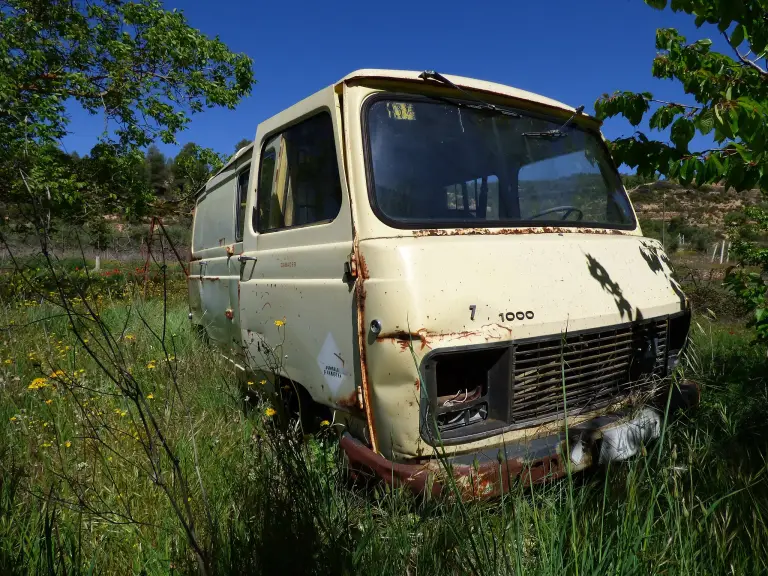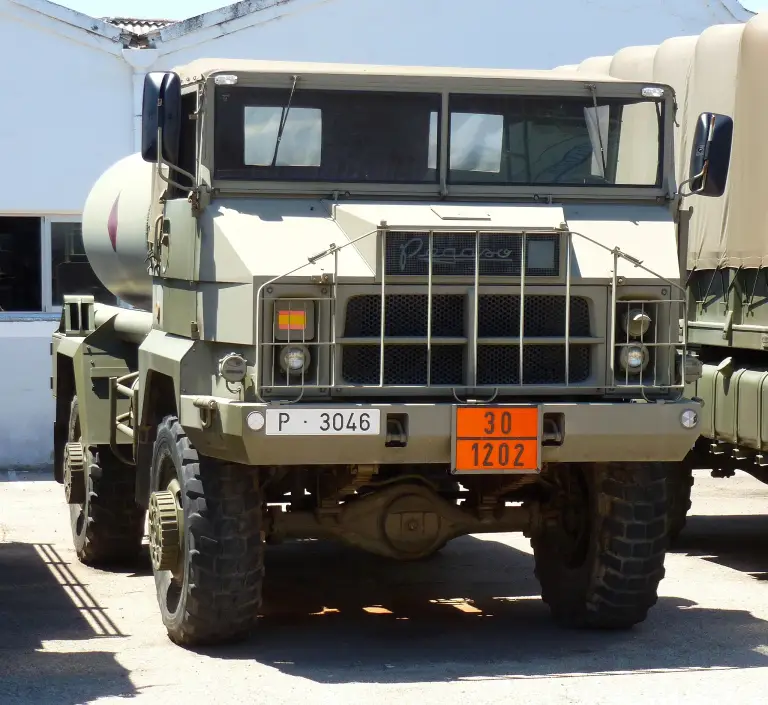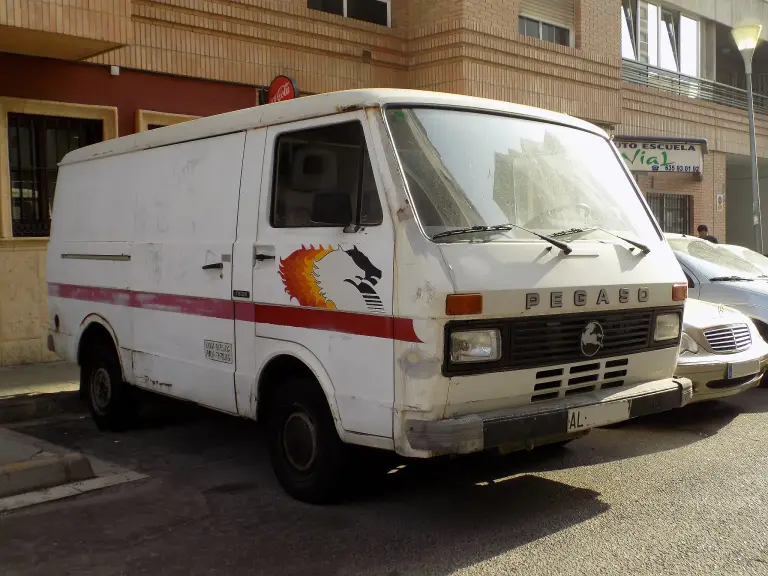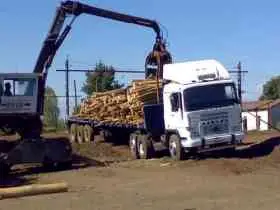
The Pegaso 1200 stands for the 1223 and 1234, two heavy models in the numbered commercial range that ENASA sold from the 1960s onwards. The numbers placed them at the upper end of Pegaso’s catalogue, where the company’s own engines and cabs competed with imported lorries.
Pegaso 1200 at a glance
| Maker | ENASA, Barcelona and Madrid |
|---|---|
| Marque | Pegaso |
| Model numbers | 1223, 1234 |
| Period | numbered range of the 1960s and 1970s |
| Owner | ENASA until 1990, then Iveco |
| Marque production | over 350,000 vehicles, 1946–1990 |
| Peak year | more than 26,000 vehicles in 1974 |
| Factories | Barcelona, Madrid (Barajas), Valladolid |
| Heavy range of the time | 8×4 rigids, 6×4 tractors, 6×6 off-road vehicles |
Neither 1223 nor 1234 has its own Wikipedia page; the article relies on the English and Spanish articles about the Pegaso marque.
History of the Pegaso 1200
Pegaso began in 1946, when ENASA took over Hispano-Suiza’s automotive works in Barcelona and put Wifredo Ricart in charge. The first lorries were refined versions of the Hispano-Suiza 66-G; by 1949 the company had its own diesel, the 125 hp Z-202 nicknamed Mofletes, and the marque became the standard Spanish lorry.
Through the 1960s and 1970s the catalogue grew into a full range, with eight-wheeled rigids, six-wheeled semi-trailer tractors, six-wheeled off-road dumpers and buses, all on Pegaso’s own engines of up to 352 hp. The 1200 numbers belong to this system of designations, in which the digits identified body style and weight class within one engineering family.
Output peaked in 1974 at more than 26,000 vehicles, and Pegaso exported to the Benelux countries, Venezuela and Cuba. The 1990 sale of ENASA to Iveco ended the independent marque; the last Pegaso heavy lorry was built in 1994 and the last engine in 1995.
Design and features
- Heavy classification: 1223 and 1234 sit with the larger Pegaso models of their day.
- Own engines and cabs: Pegaso built both, which kept the lorries suited to Spanish roads and workshops.
- Numbered system: closely spaced designations let ENASA offer many bodies and weights from one basic design.
- Workshop familiarity: the density of the Pegaso range made these lorries easy to service across Spain.
Pegaso 1200 versions
- 1223: the earlier of the two designations.
- 1234: the later number, still remembered in Spanish lorry circles.
Compare the 1100 range and the 2000 series, or browse the Pegaso collection.
Sources
- Pegaso, English Wikipedia: history, engines, heavy range, production
- Pegaso, Spanish Wikipedia: ENASA, factories, sale to Iveco