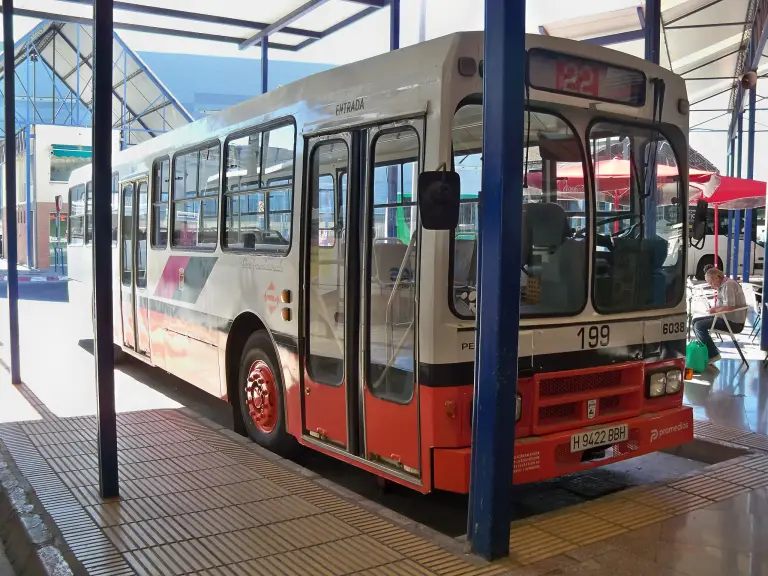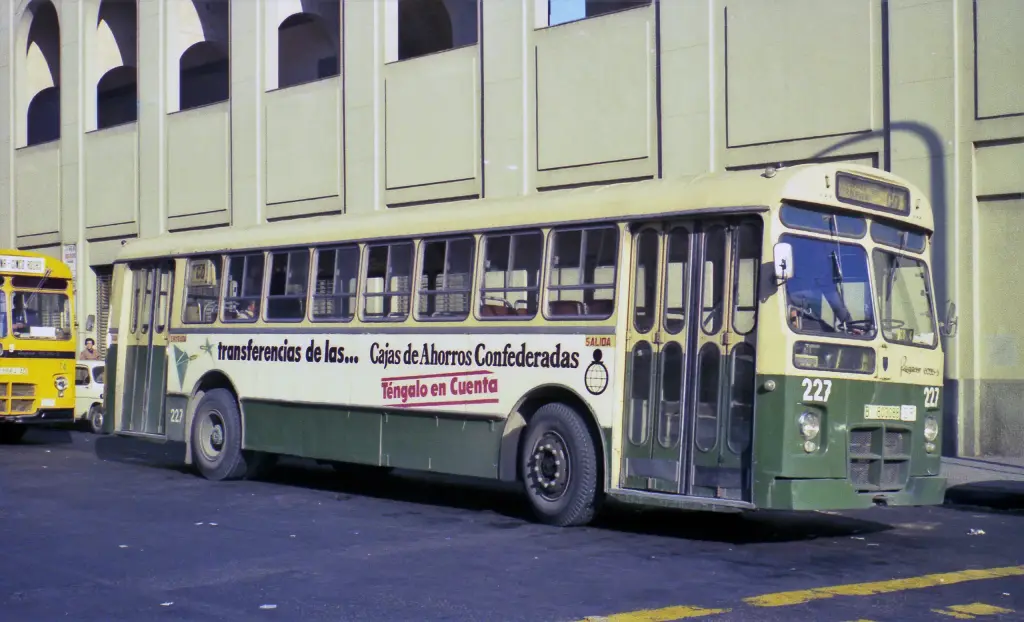
The Pegaso 6035 was the urban and suburban bus that ENASA built from 1964 to 1981, in standard and articulated form. Its underfloor horizontal engine and semi-automatic transmission made it the model that carried Spanish cities through the 1960s and 1970s.
Pegaso 6035 at a glance
| Maker | ENASA, La Sagrera, Barcelona |
|---|---|
| Production | 1964–1981 |
| Type | urban and suburban bus, standard and articulated |
| Structure | integral, Monotral licence from Officine Viberti |
| Engine | horizontal diesel 9101 under the floor |
| Gearbox | semi-automatic, hydraulic clutch and electro-pneumatic change |
| Articulated version | 6035-A, 18 m, shortened to 16.5 m for the road code |
| Later options | 9101 with 15 hp more, and the 9107 with 30 hp more |
| Transmission variants | 6035-4 (four speeds), 6035-5 (five speeds from 1967) |
| Export version | 6036, 236 built 1972–1979, mostly for Algiers |
| Built at | La Sagrera until 1971, then the new plant |
History of the Pegaso 6035
In 1964 ENASA built the prototype of a new bus, the 6035, on an integral structure the company had already used for its 6020 and 6021. The structure came from the Italian firm Officine Viberti, which had sold it since 1947 under the Monotral name; ENASA’s own Jorsa works at Mataró had signed a licence in 1960 to build it in Spain.
The step beyond the 6021 was the engine. The 6035 put a new horizontal diesel, the 9101 derived from the vertical 9100, under the floor instead of at the front, which freed space for passengers. It also came with a semi-automatic transmission using a hydraulic clutch and an electro-pneumatic gear change, tried earlier on a few examples of previous models.
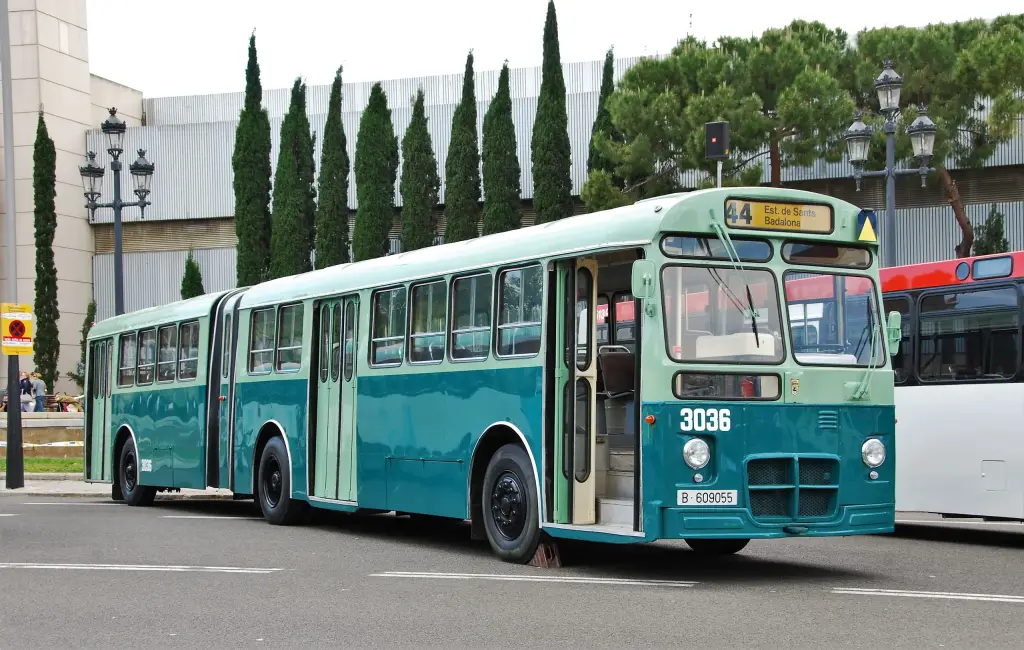
A two-part articulated prototype followed in 1965 as the 6035-A. At 18 metres it exceeded the 16.5-metre limit of the Spanish traffic code, so it had to be shortened before entering service. Series production of both began in 1965 with a revised front of straighter lines and the large Pegaso grille with its characteristic cross.
Bodies were built with different door arrangements, always with a front door plus a central or rear one, or a three-door version. Two more engines were later offered, the 9101 with 15 hp more and the 9107 with 30 hp more. A four-speed transmission came first; from 1967 a five-speed alternative appeared, and the buses were then distinguished as 6035-4 and 6035-5.
Between 1972 and 1979 ENASA built 236 buses of the 6036 model, essentially a lightly modified 6035, mainly for export to Algiers; fifteen entered service in Spain in 1977 and one more in 1979. The 6035 itself was built until 1981, although a last articulated example was registered in 1984, probably from leftover production. Assembly took place at La Sagrera in Barcelona until 1971 and then at the new factory.
Design and features
- Underfloor engine: the horizontal 9101 diesel sat beneath the floor, giving more room for passengers than the front-engined 6021.
- Semi-automatic gearbox: hydraulic clutch with electro-pneumatic gear selection, standard from the start.
- Integral structure: the Monotral chassisless design licensed from Officine Viberti and built by ENASA’s Jorsa works.
- Articulated bus: the 6035-A joined two bodies and, after shortening to 16.5 m, became one of Spain’s first articulated city buses.
- Door layouts: front door plus centre or rear door, or a three-door body.
Pegaso 6035 versions
- 6035: the standard urban and suburban bus.
- 6035-A: articulated two-body version, 18 m as built, shortened to 16.5 m.
- 6035-4 and 6035-5: four- and five-speed versions, the latter from 1967.
- 6036: export version, 236 built 1972–1979, mostly for Algiers.
Its successor was the 6050 with a rear engine, and the integral line continued with the 6038; the coachbuilt chassis range is in Pegaso 5000, and the marque under Pegaso.
Video: Recuperación del primer Pegaso 6035-A que prestó servicio en Málaga
Video by Canal TUSSAM on YouTube.
Sources
- Pegaso 6035, Spanish Wikipedia: design, production years, 6035-A, 6036, engines
- Pegaso, Spanish Wikipedia: bus ranges in the ENASA catalogue