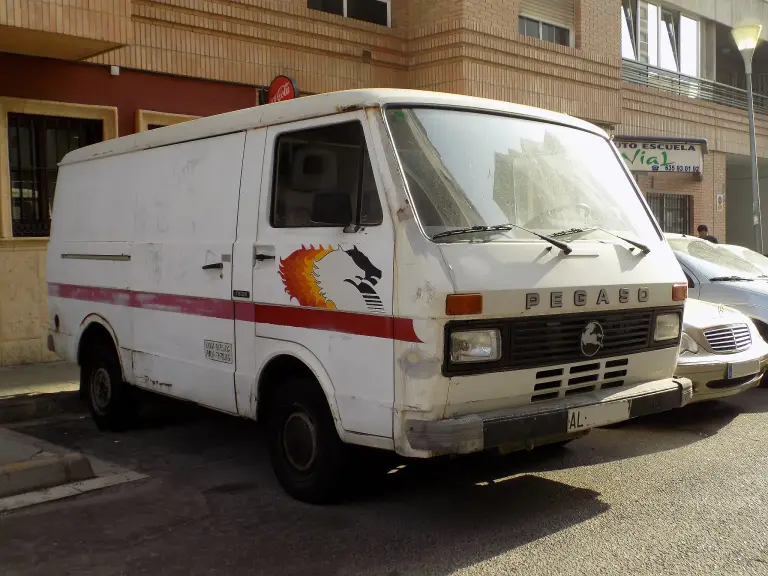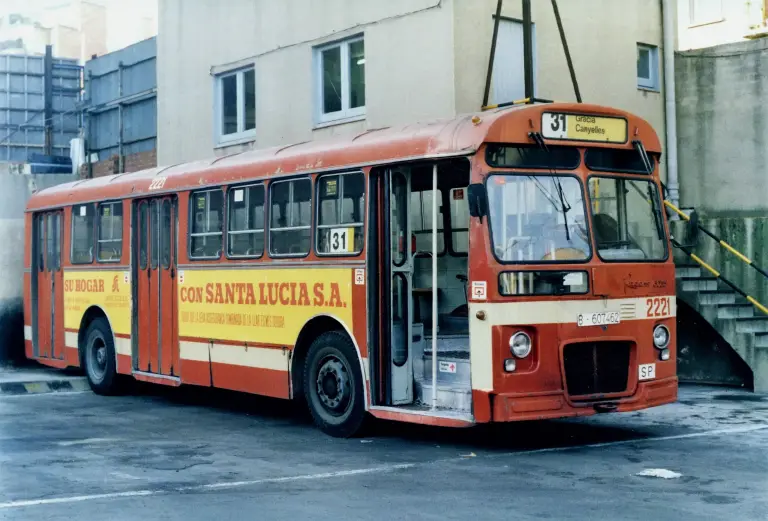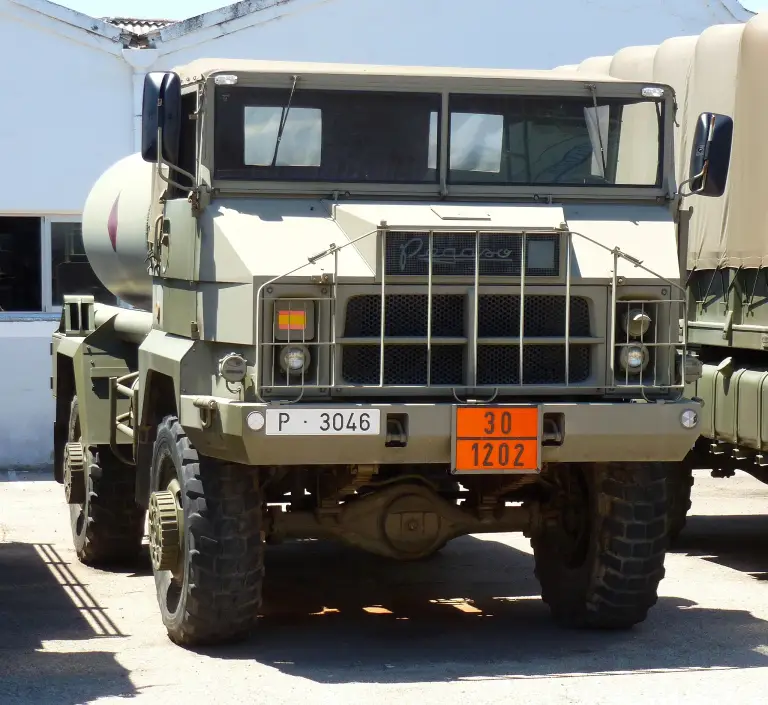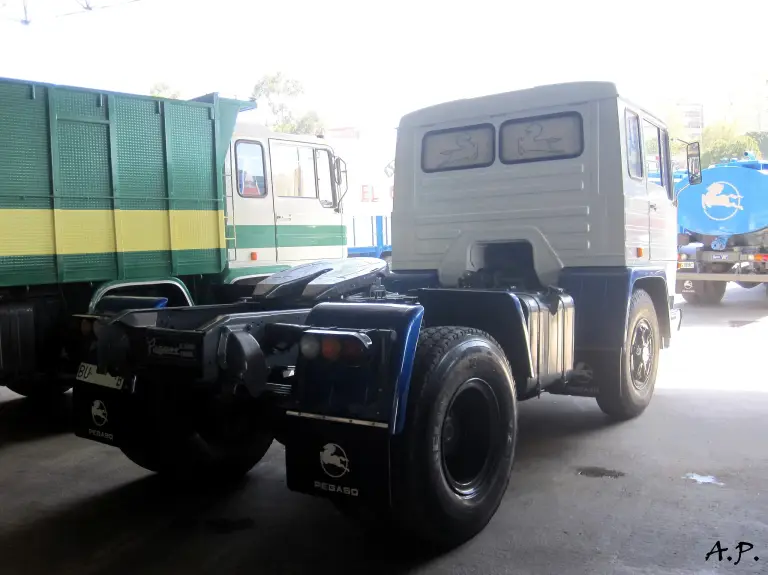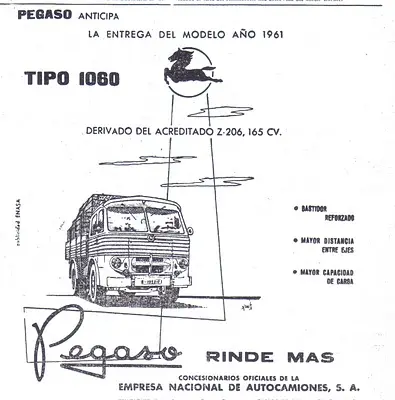
The Pegaso 1060 belongs to the run of closely numbered commercial vehicles with which ENASA covered the Spanish market in the 1960s and 1970s. Among owners the family is remembered as the Cabezón, the “big-headed” truck, a nickname still used for surviving examples at rallies.
Pegaso 1060 at a glance
| Maker | ENASA, Barcelona and Madrid |
|---|---|
| Marque | Pegaso |
| Model numbers | 1060, 1061, 1062, 1063, 1064, 1065, 1066 |
| Nickname | Cabezón |
| Owner | ENASA until 1990, then Iveco |
| Marque production | over 350,000 vehicles, 1946–1990 |
| Peak year | more than 26,000 vehicles in 1974 |
| Factories | Barcelona (La Sagrera), Madrid (Barajas), Valladolid |
| Main markets abroad | Benelux, Venezuela, Cuba |
Published Pegaso history describes the marque and its ranges rather than the 1060 individually, so this page stays inside what the English and Spanish Wikipedia articles on Pegaso say.
History of the Pegaso 1060
ENASA was set up in 1946 by the Spanish state on the industrial remains of Hispano-Suiza’s automotive division in La Sagrera, Barcelona, with Wifredo Ricart as technical director. Its first vehicles were evolved from the last Hispano-Suiza lorry, the 66-G, and were sold under the new name Pegaso, the winged horse of Greek myth that also became the company badge.
The 1060 and its sisters belong to the period in which Pegaso was the dominant supplier of lorries and buses in Spain. Between 1946 and 1990 the company built more than 350,000 vehicles, and its best single year, 1974, produced over 26,000. The range ran from light vans taken over with SAVA in 1968 to heavy tractors, and included the numbered bonneted models that gave Pegaso its nickname among drivers.
In 1990 the state holding company INI sold a majority of ENASA to Iveco, which phased the Pegaso name out of new models during the 1990s. The last Pegaso-badged heavy lorry, a Troner, left the Barajas factory in Madrid in July 1994, and the last Pegaso engine was built in 1995. Surviving 1060s are now show vehicles.
Design and features
- Numbered range: the 1060 sits in a group of models from 1060 to 1066, the sort of closely spaced designations with which Pegaso covered different bodies and weights.
- Cabezón nickname: the name by which Spanish drivers knew this generation of bonneted Pegaso lorries.
- Home-grown engineering: Pegaso built its own engines and cabs rather than assembling foreign kits, and supplied units up to 352 hp in the 1960s and 1970s.
- National reach: the marque’s Barcelona, Madrid and Valladolid plants made it the standard lorry of Spanish roads and of exports to Benelux, Venezuela and Cuba.
Pegaso 1060 versions
- 1060: the designation that gives the group its name.
- 1061 to 1064: further numbers in the same block.
- 1065: the best-known member of the group, built both as a lorry and as the Europa.
- 1066: the last number in the block.
Other Pegaso ranges are covered in the articles on the 2000 series and the 5000 chassis range; the whole marque is collected under Pegaso.
Video: Pegaso Cabezón 1060, un clásico maltratado
Video by juanrapegaso on YouTube.
Sources
- Pegaso, English Wikipedia: history, production, engines, markets
- Pegaso, Spanish Wikipedia: ENASA, factories, SAVA, sale to Iveco