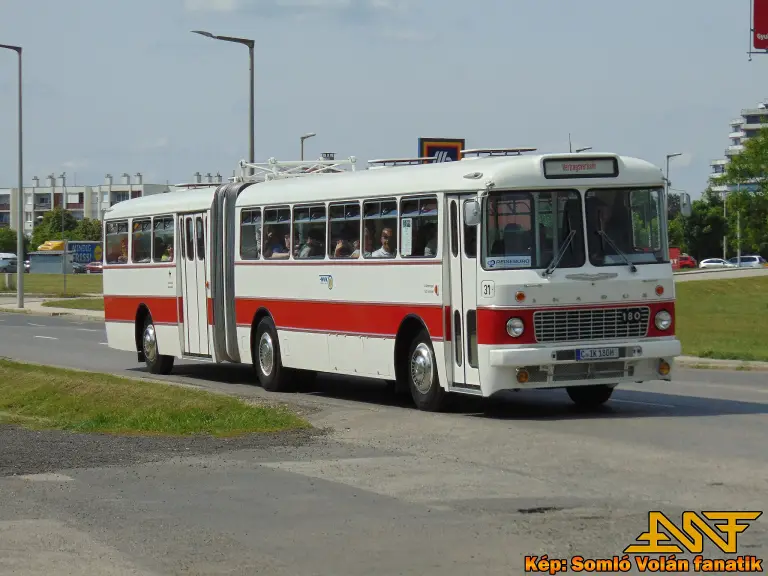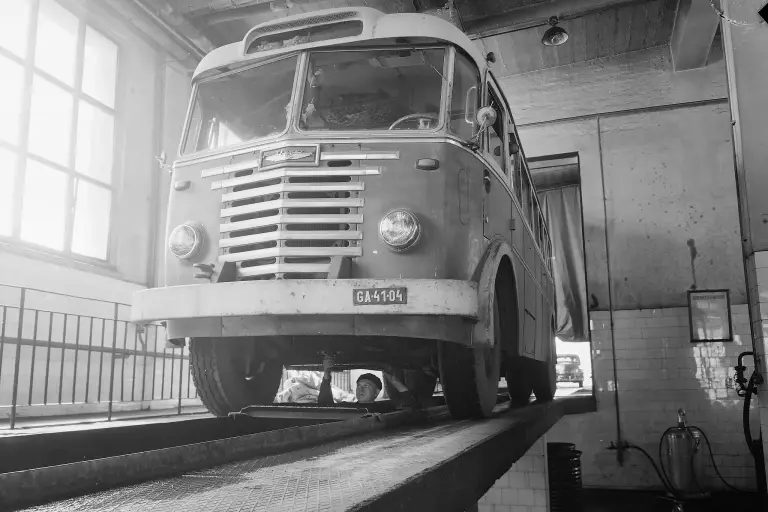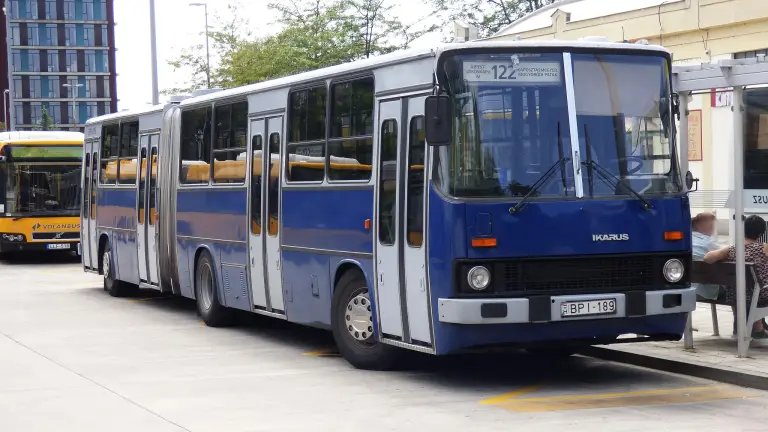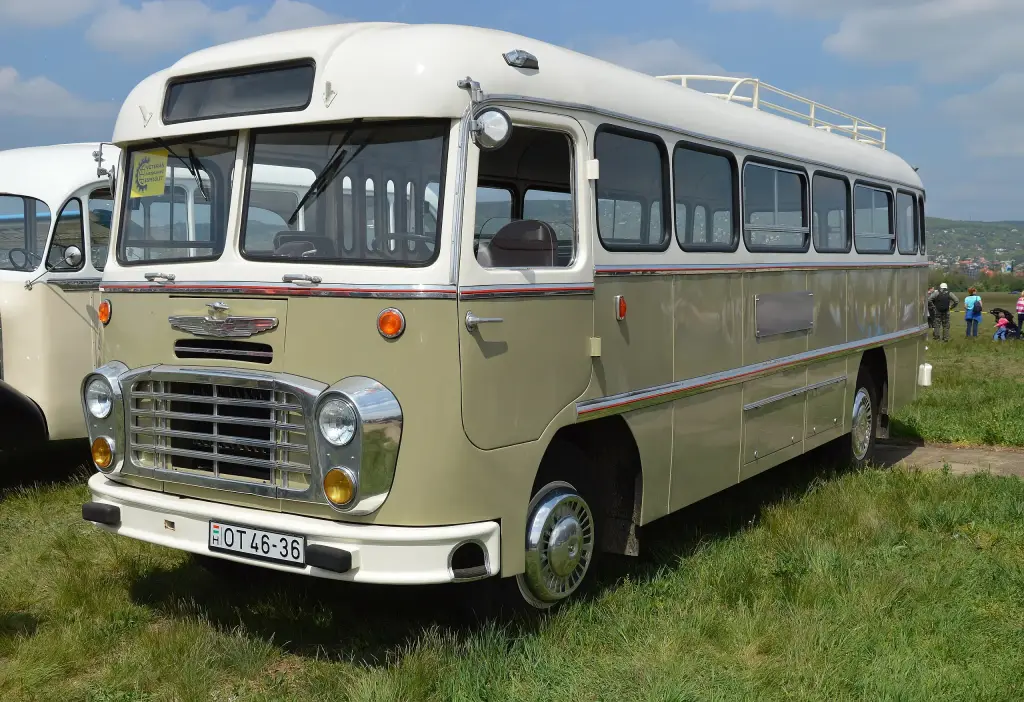
The Ikarus 311 was the more powerful development of the Ikarus 31, the front-engined bus that followed the Ikarus 30 in the mid-1950s. Made from 1961 to 1972, it kept the conventional layout — engine at the front, self-supporting body — and found its main market in East Germany.
Ikarus 311 at a glance
| Maker | Ikarus, Budapest-Mátyásföld |
|---|---|
| Type | city and interurban bus |
| Predecessor | Ikarus 31, built 1956–1965 |
| Production | 1961–1972 |
| Engine | Csepel D-414 four-cylinder diesel, 5,517 cm³ |
| Power | 70 kW (95 PS) |
| Top speed | 78 km/h |
| Layout | front engine, self-supporting body, front control |
| Empty weight | 5.95 t |
| Gross weight | 9.37 t |
| Seats | 20–35 plus a companion seat |
| East German imports | 1956–1973; 198 Ikarus 311 still in the GDR in 1988 |
The Ikarus 311 is described in the German Wikipedia article on the Ikarus 31, of which it was the developed version.
History of the Ikarus 311
After the Ikarus Tr 3,5 of 1948 — regarded as the first series-built bus in the Eastern Bloc with a self-supporting body — and the Ikarus 30 developed from it, the factory designed a somewhat larger bus in the middle of the 1950s: the Ikarus 31, built from 1956 to 1965. Its further development was the Ikarus 311, made from 1961 to 1972. The two shared the same conventional chassis arrangement, with the engine at the front as in the lorries of the day and a self-supporting bus body placed on the floor assembly in front-control form.
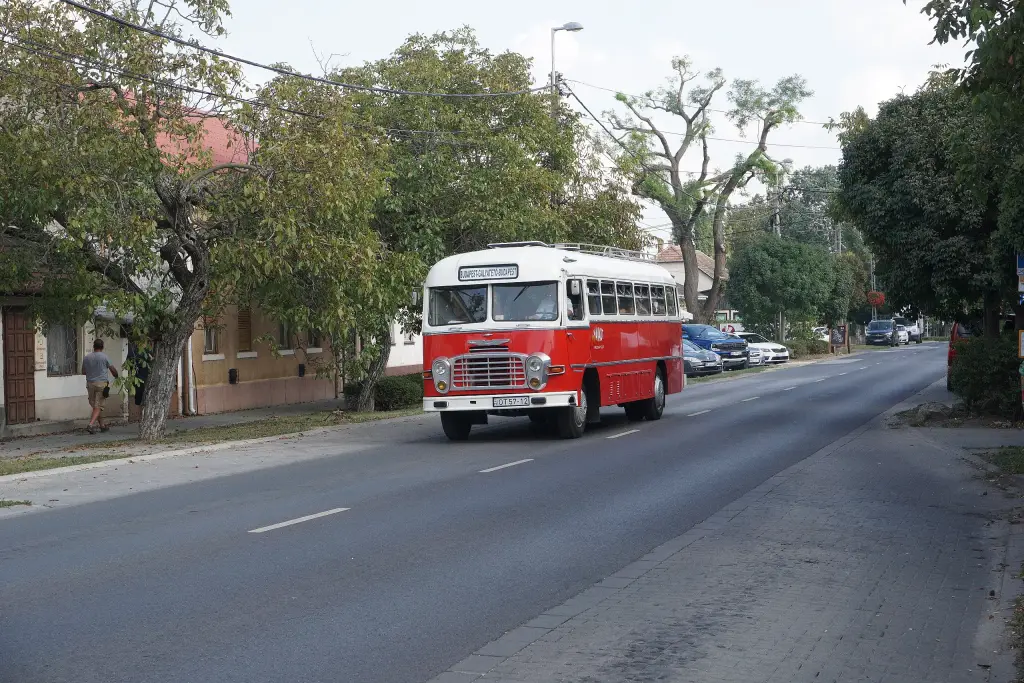
The Ikarus 31 used a water-cooled four-cylinder swirl-chamber diesel of the Csepel D-413 type, built under licence from the Austrian maker Steyr, with a displacement of 5,322 cm³ and a partly synchronised five-speed manual gearbox. The engine produced 63 kW (85 PS) and sat at the front, driving the rear axle through a two-piece tubular propeller shaft with three needle-roller joints; the top speed was 75 km/h. The Ikarus 311 received the developed Csepel D-414 engine, enlarged to 5,517 cm³, with power raised to 70 kW (95 PS) and a top speed of 78 km/h.
The running gear was conventional: leaf-sprung rigid axles with telescopic shock absorbers, and a hydraulico-pneumatic brake acting on all wheels, backed by a mechanical parking brake. The empty weight of the 311 was 5.95 tonnes and the permissible gross weight 9.37 tonnes. The passenger compartment took 20 to 35 seated passengers, with a place for a companion to the right of the engine beside the driver; over the long production period several body variants with different seat counts were built, and some buses were finished as coaches with side roof windows. The doors were hand-operated and opened outwards, though some vehicles had air-operated folding doors. Because the engine sat over the front axle, the front passenger door was placed behind that axle, which made the bus only partly suitable for one-man operation in city service. East Germany imported the buses from 1956 to 1973 and still had 156 Ikarus 31 and 198 Ikarus 311 in September 1988. For countries with left-hand traffic there were right-hand-drive versions called the Ikarus 32 and 321, used in Indonesia and the Sudan among other places.
Design and features
- Csepel D-414 diesel: 5,517 cm³ and 70 kW (95 PS), a development of the engine in the Ikarus 31.
- Conventional layout: front engine, self-supporting body and front-control styling.
- Robust running gear: leaf-sprung rigid axles with telescopic shock absorbers.
- Hydraulico-pneumatic brakes: on all wheels, with a mechanical parking brake.
- Long service in the GDR: 198 Ikarus 311 were still registered in East Germany in 1988.
Ikarus 311 versions
- Ikarus 31 (1956–1965): the predecessor with the 85 hp D-413 engine and a 75 km/h top speed.
- Ikarus 311 (1961–1972): the developed bus with the 95 hp D-414 engine.
- Coach bodies: some buses were finished as coaches with side roof windows.
- Ikarus 32 and 321: right-hand-drive versions for Indonesia, the Sudan and other left-hand-traffic countries.
The 311 was the last development of the front-engined line that began with the Ikarus 30; its rear-engined contemporaries were the Ikarus 55 and Ikarus 66. More buses are in the Ikarus collection.
Sources
- Ikarus 31, German Wikipedia: engines, chassis, body, weights, doors, GDR imports, right-hand-drive versions