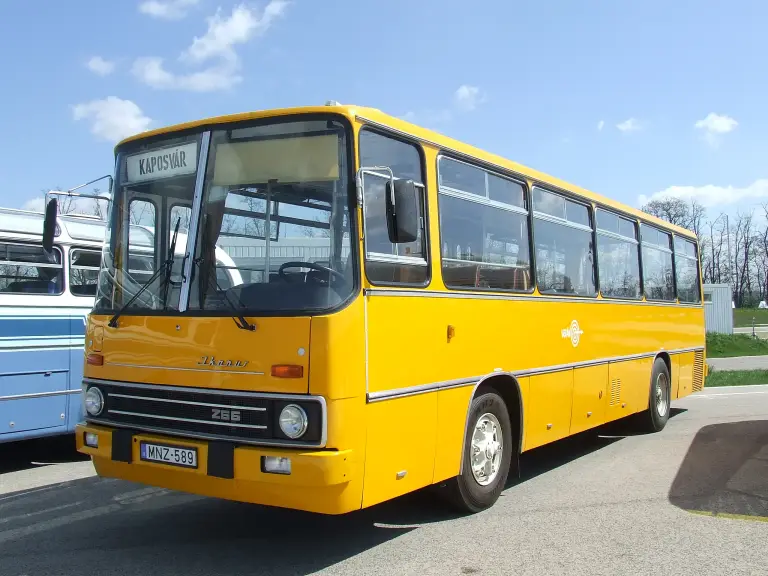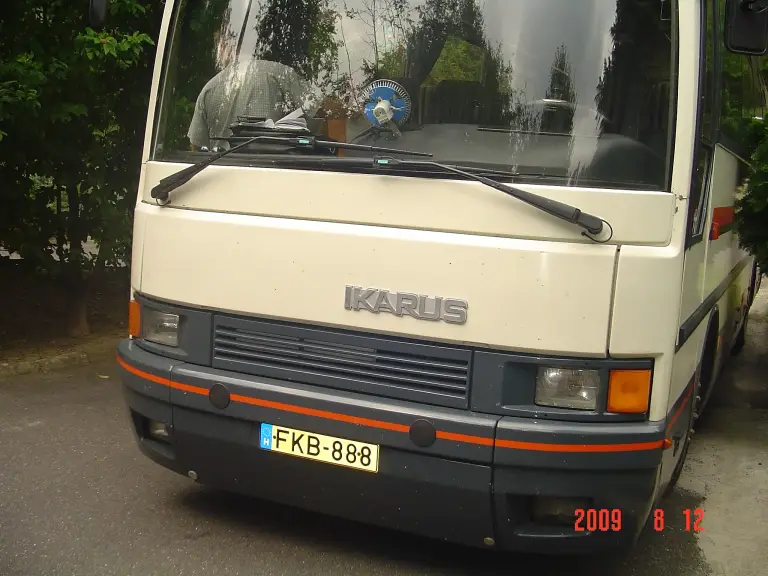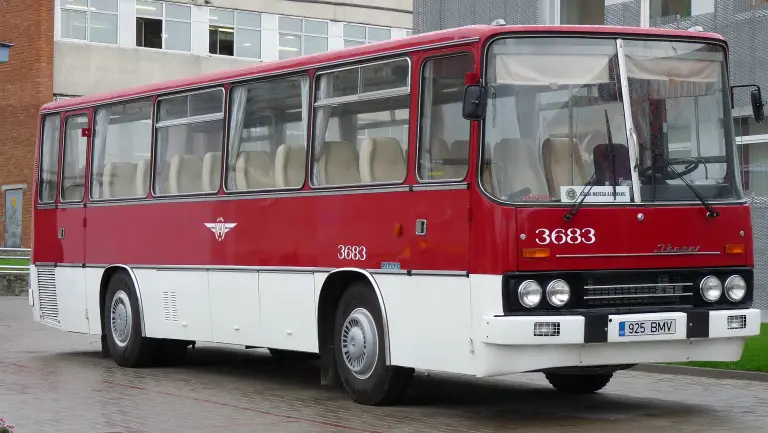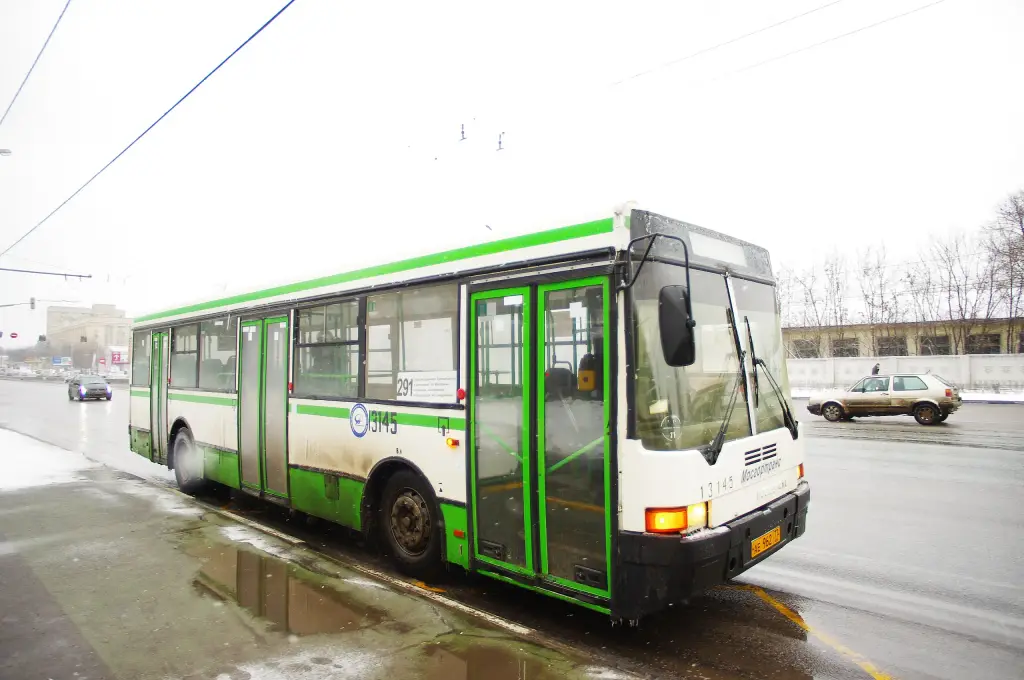
The Ikarus 415 was the normal-floor city and suburban bus of the 400 family and the model meant to replace the long-lived Ikarus 260. The prototype came in 1985 and series production began in 1987; Budapest ran the type until 2022, and a trolleybus version went to Romania.
Ikarus 415 at a glance
| Maker | Ikarus, Budapest and Székesfehérvár |
|---|---|
| Type | normal-floor city and suburban bus |
| Prototype | 1985 |
| Series production | from 1987 |
| Engine | MAN D 0826 LUH 12 six-cylinder diesel (first series) |
| Gearbox | ZF Ecomat four-speed automatic (first series) |
| Series | three |
| Front doors | two full-size planetary doors |
| Rear door | a 660 mm half-door |
| BKV farewell | June 2022 |
| Trolleybus version | Ikarus 415T, 200 to Bucharest and 3 to Galați |
Neither article gives a final production year for the bus version; the trolleybus was built until 2002.
History of the Ikarus 415
Encouraged by the success of the 200 family, Ikarus began developing a new generation of city and suburban buses under 400-series type numbers in 1970. After years of experiments six prototypes were tested in parallel, and the first was shown in 1979. In 1982 the public saw the new model, numbered 410, at the Budapest International Fair. One prototype went to Pécs, where it was scrapped after a fire; the other prototypes and test vehicles are scattered around Hungary, for example with Nógrád Volán. The BKV bought the first series 415s in two batches of thirty in 1987 and 1988, with Praga gearboxes.
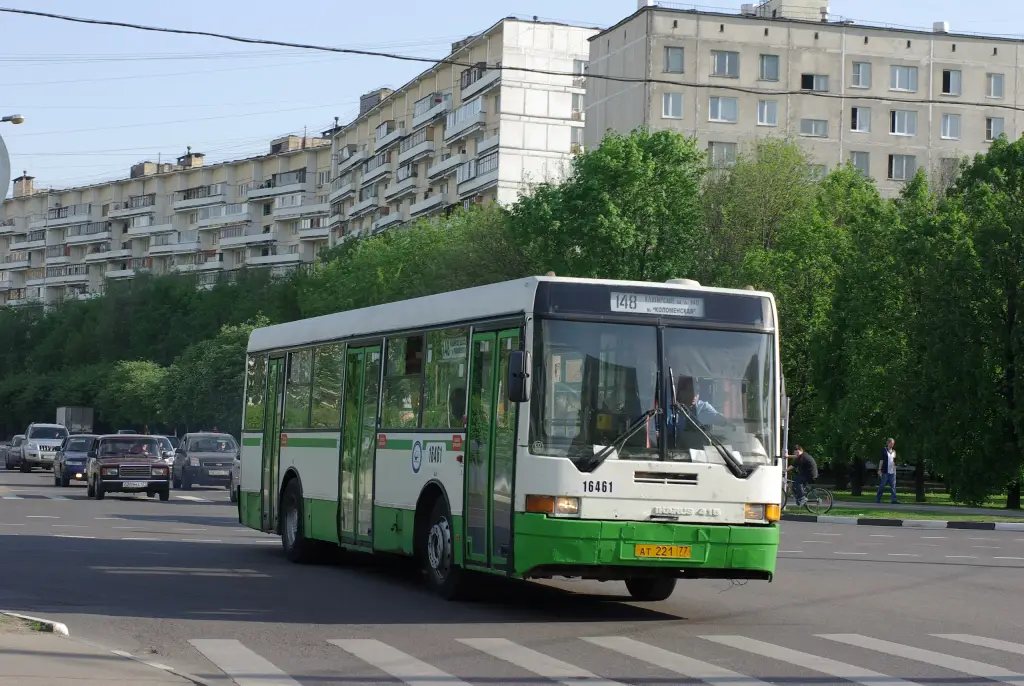
Those first buses arrived with D12 engines, but cylinder-head problems led to most of them being fitted with the Rába D11 developed together with the Austrian firm LIST. When the second series arrived the cars were rebuilt thoroughly: the original engines were replaced by DAF units, the Praga gearboxes by a mixture of ZF and Voith, and the rear axle known from the 200-series Ikarus by a ZF unit. They received FOK-Gyem displays inside and out, seats from the 400 series and a repaint in the colours of the newly bought series, and the factory plate was restamped 415.14 or 415.15 depending on the gearbox even though the chassis number kept the original type. The distinctive front and the wide rear doors still tell them apart from the later series. The passenger information followed the prototypes: large numbers and big destination boards could be inserted towards the windscreen and side windows, with only a number plate above the rear window; after the first years the boards were dropped.
The second part of the 415’s career began in 1992, when the BKV ordered new buses: 30 arrived in 1992, 100 in 1993 and 15 in 1994 as the 415.14 and 415.15. Compared with the first series they had a split windscreen, a renewed nose, a narrower rear door and conventional destination signs. In 1999 and 2000 fifty buses were refurbished with FOK-Gyem equipment, green grab rails, plush seats and electronic ticket machines. Budapest withdrew the type from scheduled service on 29 January 2021, but from 15 February 2021 the buses ran again after the Volvo 7000s that had replaced them unexpectedly returned to the Kelenföld garage; the final farewell programme ran from 10 to 15 June 2022. Outside Budapest the 415 went to Pécs (two prototypes, ten in 1993 and ten in 1995), Miskolc (one in 1994 and eight in 1998–99) and the Volán companies, and abroad to Poland, Germany, Finland and Slovakia, where Bratislava had 44 and Košice 6. The third series was built in small numbers because the low-floor Ikarus 412 took its place; a 415.32 returned from a Russian export order went to Volánbusz, Moscow runs 415.33 buses, Miskolc 415.35, and a 415 demo with the new 1999 front ran in Szeged in Auchan colours until the end of 2015. The 415T trolleybus was prototyped in 1992 and built from 1997 to 2002 for Romania alone: 200 for Bucharest and 3 for Galați.
Design and features
- Normal-floor city body: two full-size planetary doors at the front for fast boarding.
- MAN diesel and ZF automatic: the specification of the first series.
- Continuous development: D12, Rába D11 and DAF engines were used in turn, with ZF and Voith gearboxes.
- Passenger information: FOK-Gyem displays on refurbished buses; older cars kept simple destination boards.
- Trolleybus version: the 415T, sold only to Romania.
Ikarus 415 versions
- First series (1987–1988): thirty buses per batch for the BKV with Praga gearboxes.
- 415.14 and 415.15 (1992–1994): the second series with split windscreen and renewed nose.
- 415.32, 415.33 and 415.35: later export and domestic versions, including buses in Moscow and Miskolc.
- 1999 facelift: the new-front 400 series shown in Frankfurt, with a demo bus in Szeged.
- 415T: the trolleybus version, 200 for Bucharest and 3 for Galați.
The 415 was meant to replace the Ikarus 260 and belongs to the same generation as the articulated Ikarus 435. More buses are in the Ikarus collection.
Sources
- Ikarus 415, English Wikipedia: prototype, series start, engine and gearbox
- Ikarus 415, Hungarian Wikipedia: development, series, operators, trolleybus