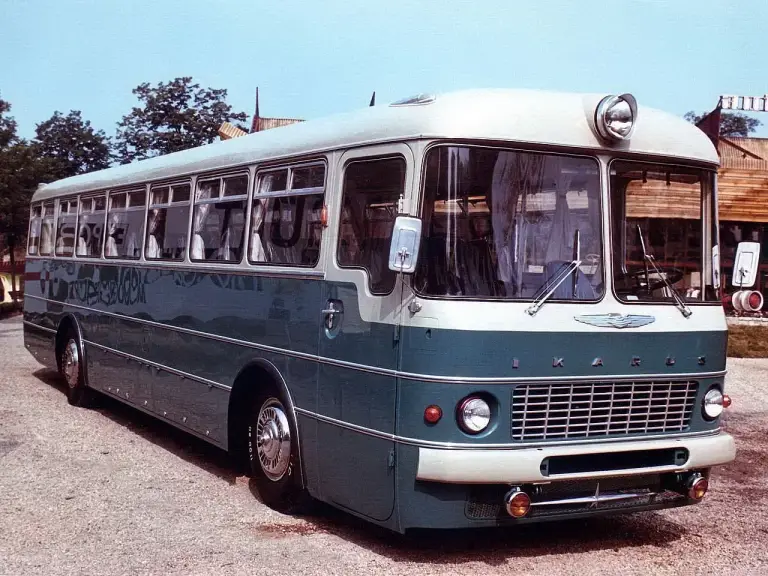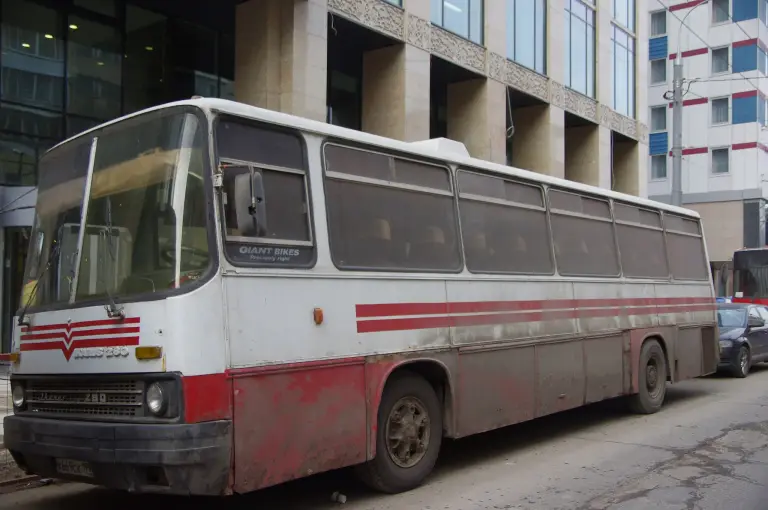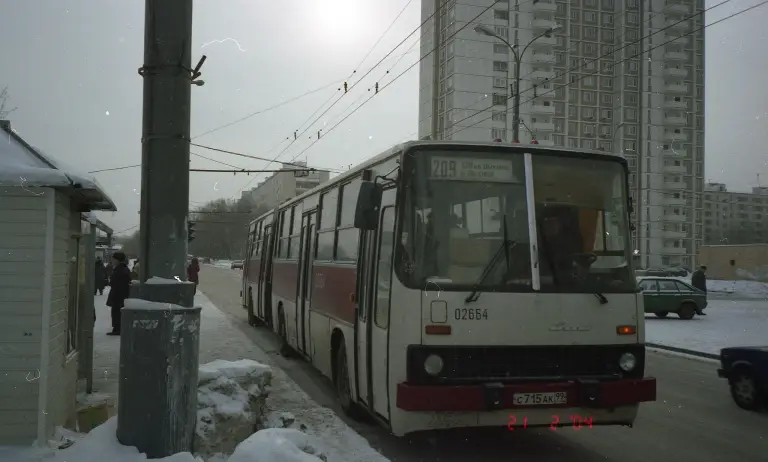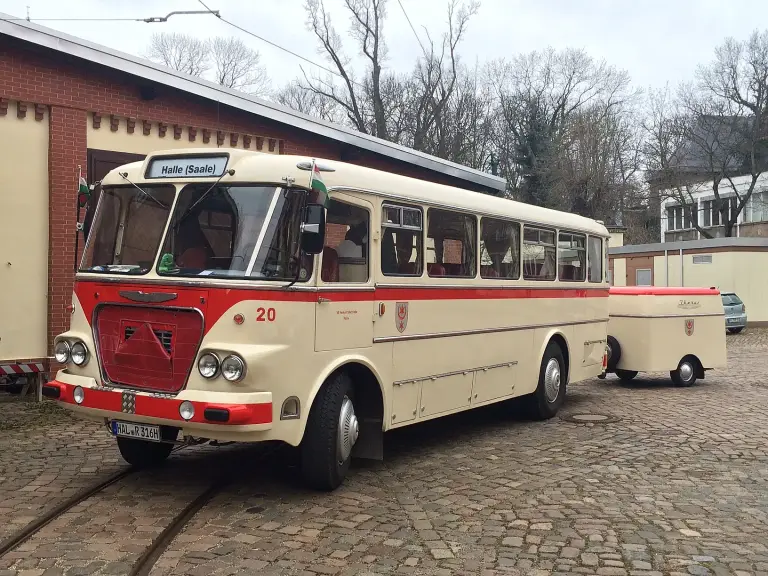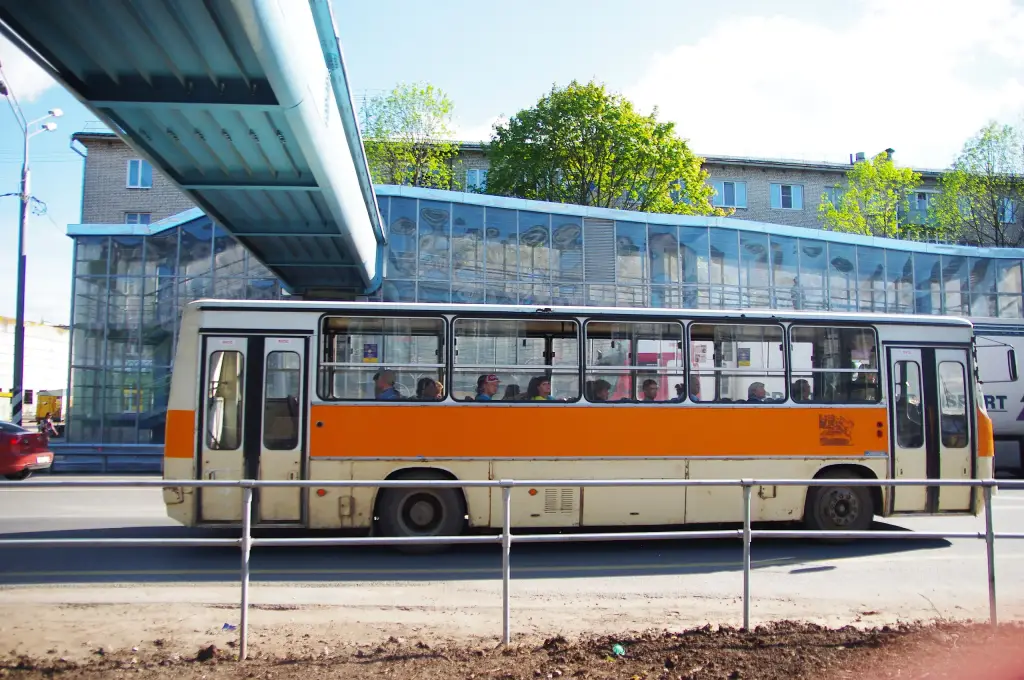
The Ikarus 260 was the solo city and suburban bus of the 200 family and the most successful model the factory ever made. It was built from 1972 to 2002, 72,547 of them left the plants at Mátyásföld and Székesfehérvár, and it was still carrying passengers in Budapest in 2022.
Ikarus 260 at a glance
| Maker | Ikarus, Budapest-Mátyásföld and Székesfehérvár |
|---|---|
| Type | high-floor city and suburban bus |
| Production | 1972–2002; first prototype 1971 |
| Built | 72,547 |
| Length | 11 m |
| Layout | high floor, engine under the floor |
| Doors | three, with twin doors 1,300 mm wide |
| Gearbox | Praga automatic, later Csepel and ZF; manual for many interurban buses |
| Steering | hydraulic power steering |
| BKV purchases | more than 2,400 new buses, 1972–1992 |
| Articulated version | Ikarus 280 |
| Intended successor | Ikarus 415 |
History of the Ikarus 260
The 200 family was laid out in 1966 by chief constructor Bálint György, chief designers Oszetzky Károly, Mádi Jenő and Varga Papp József, and stylist Finta László, who had designed the Ikarus 180, 556 and 557. The experimental K1 was ready in 1970 and was tested by the Budapest transport company; the P1 prototype went to the Soviet Union, the P2 to the Automotive Research Institute (ATUKI), where it was later rebuilt in tropical form, and the P3 to the BKV. The first three prototypes left the Mátyásföld plant in 1970, the type was shown in 1971 and series production began in 1972.
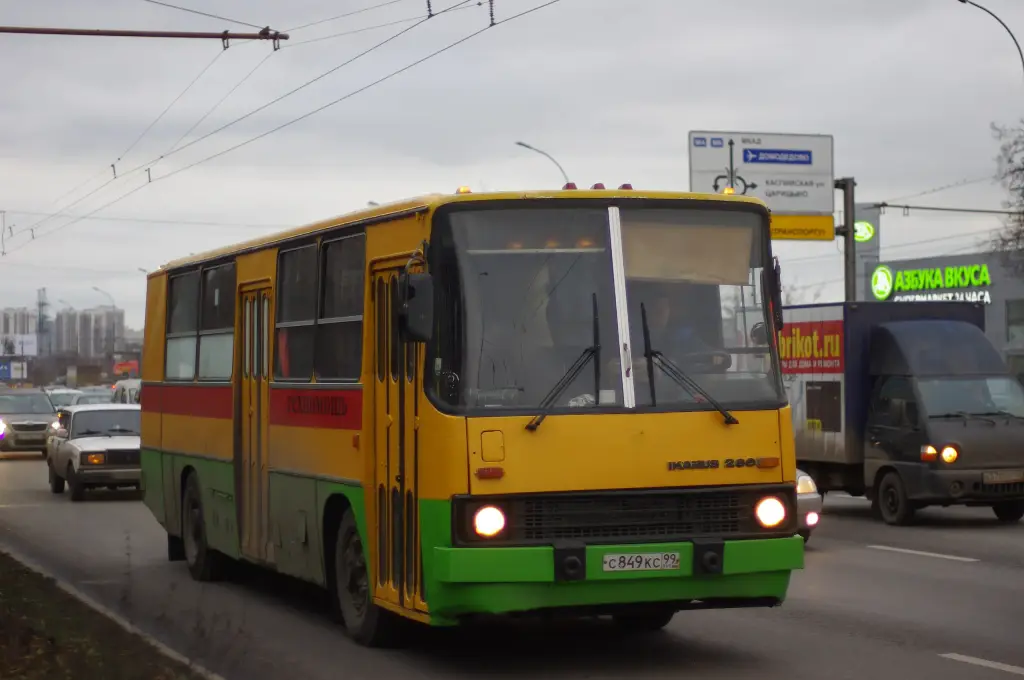
Compared with earlier Ikarus buses the 260 dropped the curved roof and used a rectangular body cross-section, so that the top of the windows sat high — the reason Hungarians called the 200 series the “panorama bus”. The twin doors were 1,300 mm wide for quick boarding. Drivers had a Praga hydromechanical automatic gearbox, later joined by Csepel and ZF units, and hydraulic power steering; manual gearboxes were mostly used in interurban versions. The first buses had a specific output of 9.92 kW per tonne and carried 75 passengers. Body details changed over the years: until 1976 the dashboard was a single higher moulding and the front carried an elongated I K A R U S lettering, later replaced by the script logo; from 1975 half-sliding windows replaced quarter-sliding ones; until 1980 the last window on the doorless side was undivided; until 1984 Trilex wheels and accordion doors were standard.
The largest customer in Hungary was the BKV, which bought more than 2,400 new buses between 1972 and 1992, and the Volán companies used the type in towns and on interurban routes. Exports went above all to the Soviet Union and East Germany, with large numbers also to Poland and Turkey and deliveries to Venezuela, Madagascar, Syria, Taiwan and Iceland. Two 260T trolleybus prototypes were built, one for Budapest and one for Weimar, and eight CNG buses of 1999 went to Tisza Volán in Szeged. The factory also tried a modernised Classic version, the C60, but only one was sold; it served Eger until 2021. The last 260 left Székesfehérvár in 2002 and went to Szeged. Budapest kept the type until November 2022, and in March 2021 fifty buses were still at work outside the capital.
Design and features
- Rectangular body without a roof camber: high window line and a bright interior, nicknamed the panorama bus.
- Twin doors 1,300 mm wide: quick passenger exchange at busy stops.
- Automatic gearbox and power steering: easier work for the driver; manual gearboxes mainly for interurban versions.
- 11 metres, 75 passengers: the solo counterpart of the articulated Ikarus 280.
- Adaptable to the customer: many technical variants were built to suit importing countries.
Ikarus 260 versions
- 260 (1972–2002): the standard city bus, automatic or manual.
- Interurban versions: manual gearbox and different seating for the Volán companies.
- 260.30 CNG: eight gas-powered buses of 1999 for Tisza Volán.
- 260T: two trolleybus prototypes, for Budapest and Weimar.
- C60: the Classic facelift, one example sold, used in Eger until 2021.
- Railcar experiment: a 260 converted with the MáV, which came to nothing.
The 260 was the solo member of the family whose articulated version was the Ikarus 280; its suburban relative was the Ikarus 266, and the type meant to replace it was the Ikarus 415. More buses are in the Ikarus collection.
Video: Ikarus 260 280 365 – Bus factory in 1986
Video by anjelojetta on YouTube.
Sources
- Ikarus 260, English Wikipedia: production years, exports, C60
- Ikarus 260, Hungarian Wikipedia: design, body details, production totals, operators