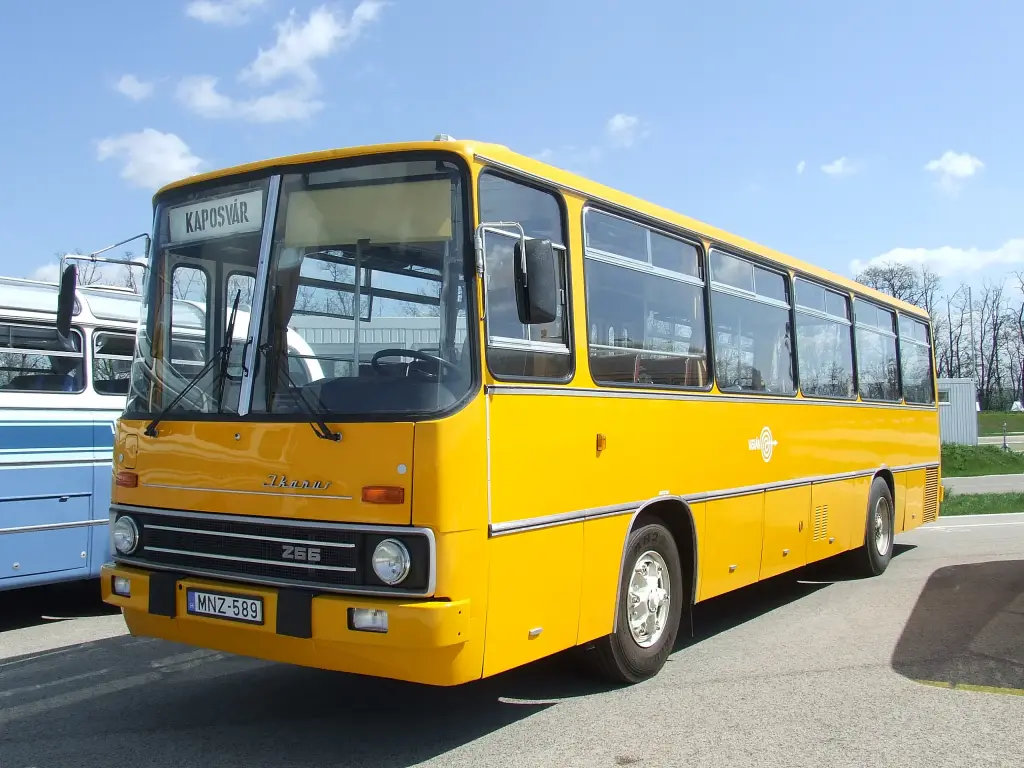
The Ikarus 266 was the suburban version of the Ikarus 255 and one of the most widespread types of the 200 family. Leaf springs, accordion doors and the Rába D2156 diesel made it cheap and tough, and for a quarter of a century it was the defining bus of Hungarian interurban traffic.
Ikarus 266 at a glance
| Maker | Ikarus, Székesfehérvár |
|---|---|
| Type | suburban and interurban bus |
| Debut | 1971 Budapest International Fair |
| Production | 1972–1990 |
| Built | more than 6,600 |
| Layout | rear engine, leaf-spring suspension |
| Engine | Rába D 2156 HM6U diesel |
| Gearbox | five-plus-one, later six-plus-one manual |
| Doors | 2-4-0 arrangement; an early city version had 2-4-2 |
| Hungarian Volán fleet | about 5,000 |
| Sibling | the long-distance Ikarus 255 |
Based on one source: the Hungarian Wikipedia article on the Ikarus 266.
History of the Ikarus 266
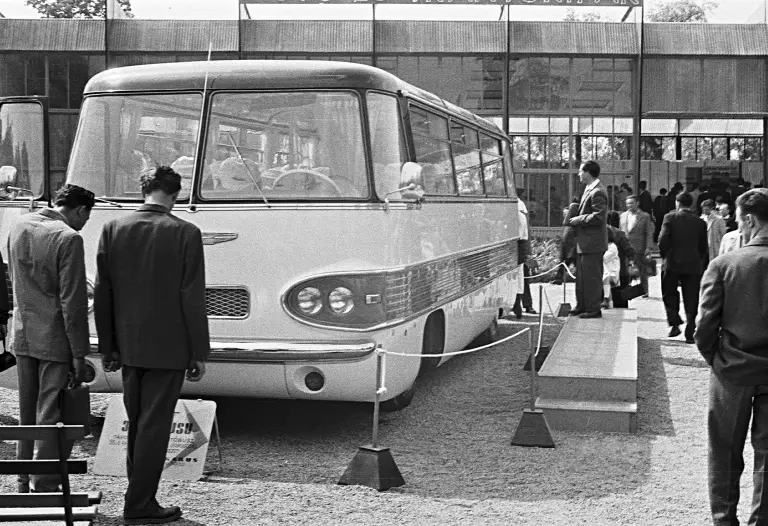
The 266 was presented at the 1971 Budapest International Fair. It had the same main dimensions as the long-distance Ikarus 255 and was its suburban counterpart, designed with simplicity and low cost in mind. The type provoked argument between the two factory units, but time proved the solution right: more than 6,600 were completed between 1972 and 1990, and about 5,000 of them entered service with the Hungarian Volán companies, making it the defining type of Hungarian interurban transport for a quarter of a century.
The bus had a rear engine and leaf-spring suspension and was built almost entirely as an interurban vehicle with a 2-4-0 door arrangement; an early city version with 2-4-2 doors also existed. Throughout production the type used accordion doors and Trilex wheel rims on the front axle. Power came from the Rába D 2156 HM6U diesel, first with a five-plus-one and later with a six-plus-one mechanical gearbox. Its popularity owed something to the fact that it was based on its predecessors, the Ikarus 55 and 66.
From 1982 some Volán companies began buying the more modern Ikarus 260 instead, and from the late 1990s the 266 was increasingly withdrawn. In 2012 the Borsod, Kunság, Nógrád, Pannon, Vasi, Gemenc and Somló Volán companies still had the type; in 2014 one example was restored at Kapos Volán for heritage use; by 21 December 2015 none remained at DAKK, the successor of Kunság Volán. The type said goodbye in Transdanubia in 2016 and in Nógrád county in 2017, and the last bus in public service, BHR-335 of the North Hungarian transport centre, lost its technical certificate on 8 May 2017.
Design and features
- Leaf-spring suspension: simple and cheap, suited to the rough roads of interurban routes.
- Rába D 2156 HM6U diesel: the standard engine of the type throughout its life.
- Mechanical gearbox: five-plus-one at first, six-plus-one later.
- 2-4-0 doors: a layout built for suburban stops rather than city interchange.
- Built on proven parts: the type drew on the Ikarus 55 and 66 and shared its dimensions with the 255.
Ikarus 266 versions
- 266.20: domestic city version with 1-2-0 doors and a single seat row on the left, 1972–1977.
- 266.25: domestic version of 1972–1990, also sold to Bulgaria in 1978–1979.
- 266.70: three-door city version for Hungary, 1972–1975.
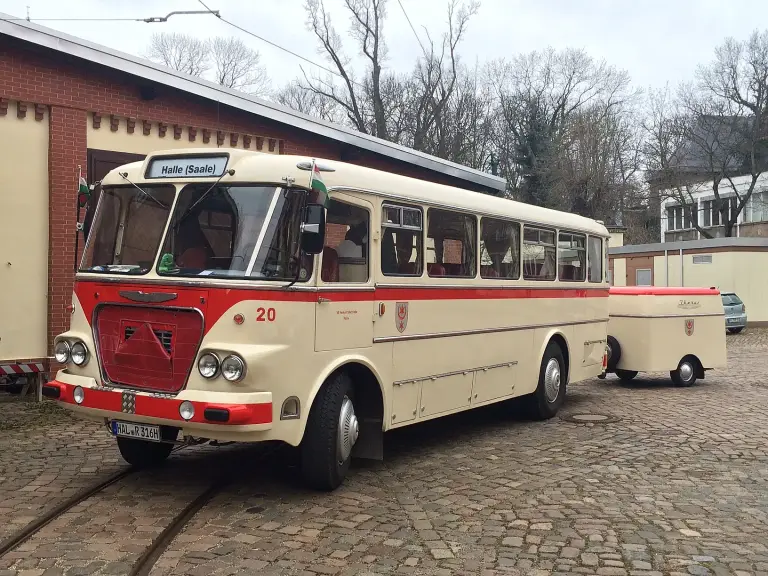
- 266.31 and 266.53: versions for East Germany.
- 266.09 and 266.26: versions for China.
- 200-M: a single open-top bus built for Székesfehérvár’s millennium in 1972 and later used for sightseeing in Budapest.
The 266 was the suburban counterpart of the Ikarus 255 and was gradually replaced by the Ikarus 260. More buses are in the Ikarus collection.
Video: Ikarus 266.25, Kapos Volán Zrt, MNZ – 589
Video by Dávid Buruncz on YouTube.
Sources
- Ikarus 266, Hungarian Wikipedia: history, layout, production, variants, operators