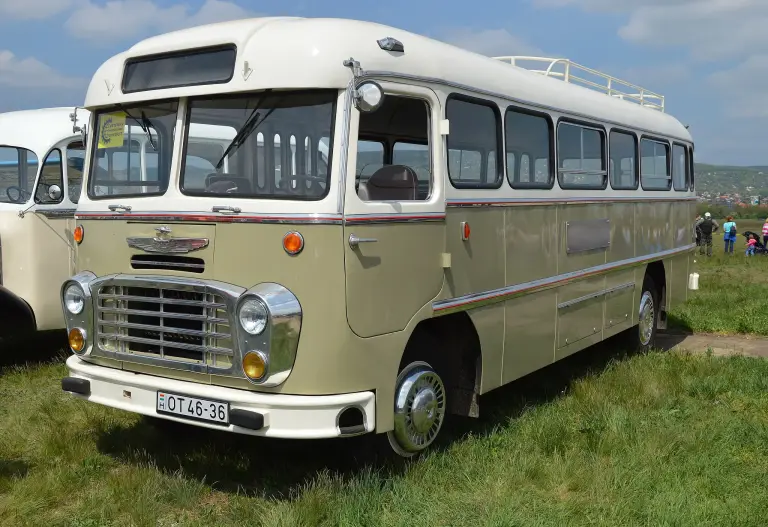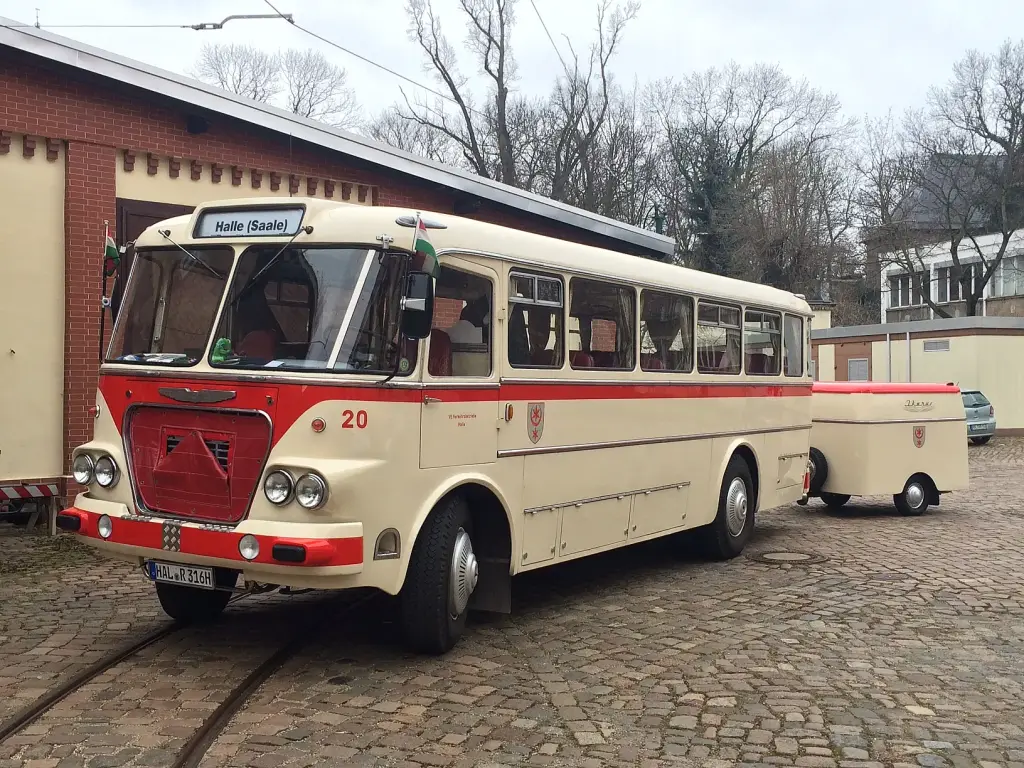
The Ikarus 630 was the long-distance version of the Ikarus 620, built from 1959 to 1971 and differing from the city bus mainly in its bodywork. It sold in modest numbers, above all to the Soviet Union, and today a single example survives — a 1971 cabriolet in the BKV heritage fleet.
Ikarus 630 at a glance
| Maker | Ikarus, Budapest-Mátyásföld |
|---|---|
| Type | long-distance bus |
| Production | 1959–1971 |
| Basis | Ikarus 620 |
| Difference from the 620 | mainly the bodywork |
| Main export market | Soviet Union, in small numbers |
| Surviving example | 1971 cabriolet, BKV heritage fleet, FKF-550 |
The 630 is described in a short Hungarian article; details of the family come from the Russian article on the Ikarus 620.
History of the Ikarus 630
The 630 was the long-distance member of the 620 family and differed from the city and suburban 620 only slightly, in its bodywork. It was built from 1959 to 1971. The city bus itself was based on the Ikarus 60, kept a frame construction and a front-mounted engine, and was built at three enterprises, with Ikarus making the standard buses, Mávaut the articulated ones and Puli the articulated and special vehicles.
Abroad, the 620 was exported to many Warsaw Pact countries and used in large capital transport undertakings such as Warsaw and Prague. From 1959 the bus was supplied to the Soviet Union in solo form and, more rarely, as the intercity Ikarus 630; special vehicles were built on the same basis, including mobile X-ray units and dental surgeries, and buses of this type ran in Soviet cities until the end of the 1970s.
Of the 630 itself only one example is known to survive anywhere in the world. The bus is a 1971 model that served in East Germany and was found in Cottbus by a Hungarian collector. On its return home it underwent a complete restoration, during which it was converted into a cabriolet and given a period FAÜ paint scheme; it kept its original engine and gearbox. In 2017 the BKV bought it, and since then it has been part of the company’s heritage fleet with the registration FKF-550, in working order.
Design and features
- Coach body on the 620 basis: the long-distance version of the city bus, differing mainly in bodywork.
- Front engine and frame: the same conventional layout as the Ikarus 620.
- Rare survivor: a single 1971 cabriolet, restored with its original engine and gearbox.
Ikarus 630 versions
- Standard 630: the long-distance bus built from 1959 to 1971.
- Cabriolet: the 1971 bus converted during restoration and now in the BKV heritage fleet.
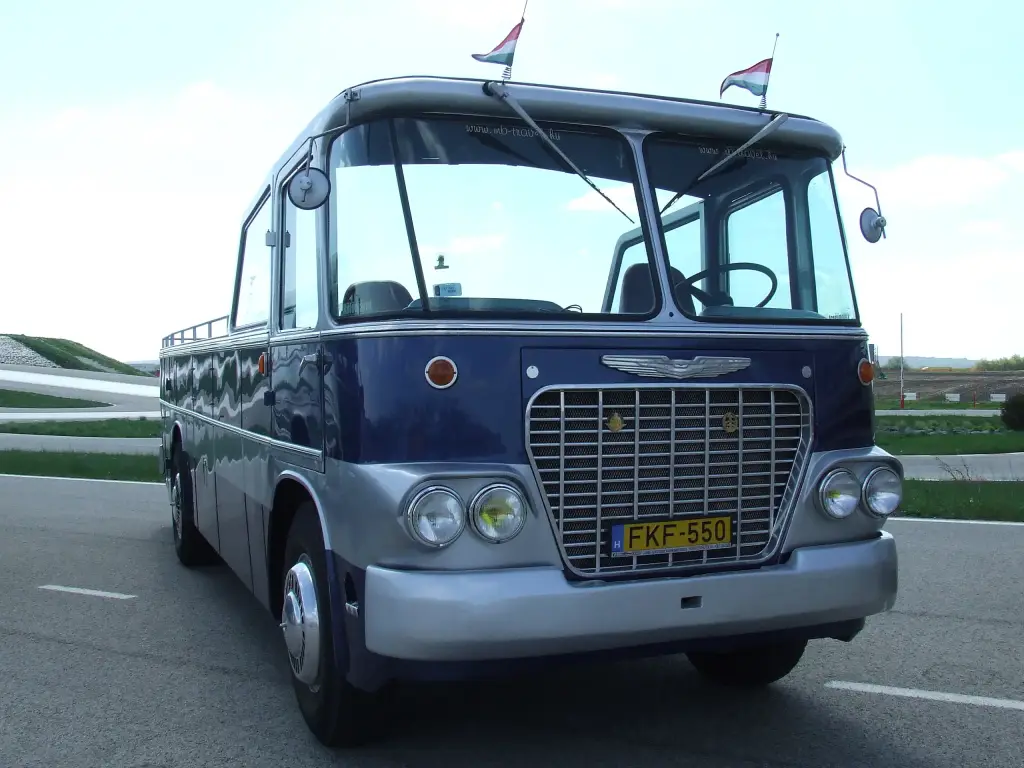
The 630 was the long-distance version of the Ikarus 620, which in turn came from the Ikarus 60. More buses are in the Ikarus collection.
Video: Ikarus 630 beim Oldtimer-Treffen Werdau 2012
Video by Tommy F. on YouTube.
Sources
- Ikarus 630, Hungarian Wikipedia: production, differences from the 620, surviving cabriolet
- Ikarus 620, Russian Wikipedia: basis, exports to the USSR, service life