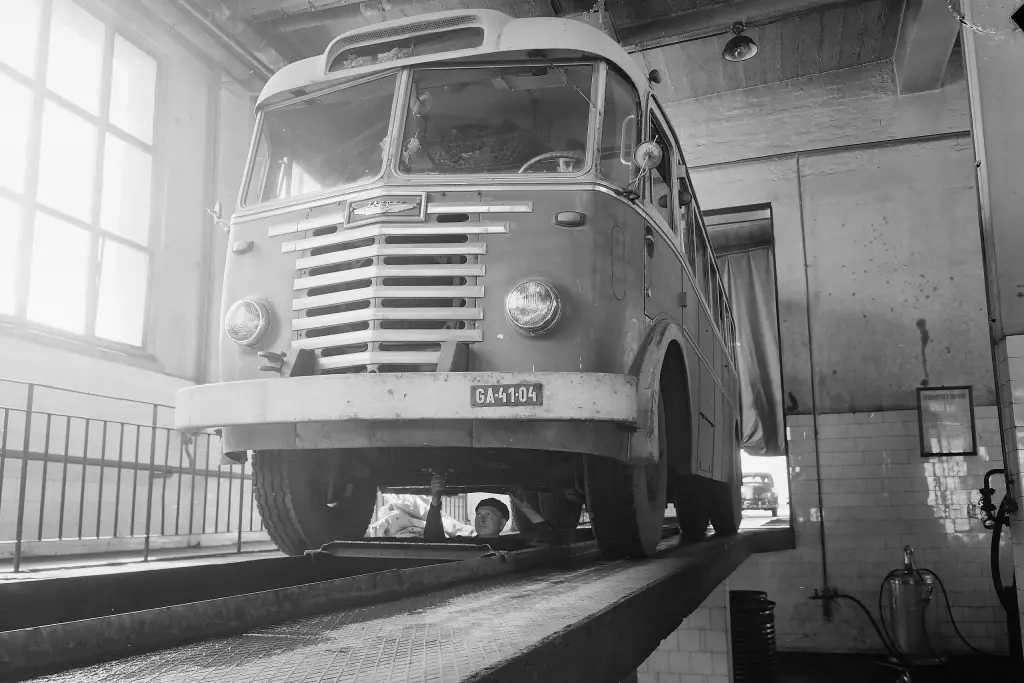
The Ikarus 60 was the bus of the first five-year plan and the backbone of Budapest transport in the 1960s. Built from 1952 to 1959 in almost 2,000 examples, it carried its diesel in the middle of the driver’s cab and stayed in service for nearly a quarter of a century.
Ikarus 60 at a glance
| Maker | Ikarus, Budapest-Mátyásföld |
|---|---|
| Type | city bus, with a long-distance version |
| Production | 1952–1959 |
| Built | almost 2,000 |
| Layout | chassis, front engine in the driver’s cab |
| Engine | Csepel D-613 six-cylinder diesel |
| Gearbox | five-speed, unsynchronised |
| Brakes | air-operated drum brakes |
| Seats | 20 seated and 40 standing; 24 and 36 in early Budapest buses |
| Budapest peak | more than 500 buses in 1959–1960 |
| Last in Budapest | 1966 |
Based on one source: the Hungarian Wikipedia article on the Ikarus 60.
History of the Ikarus 60
The Ikarus 60 was designed in 1951 at the Mátyásföld works to the targets of the first five-year plan, through cooperation between the Csepel motor works and Steyr. Its trolleybus version was the Ikarus 60T. Series production began in 1952 after approval from the Ministry of Metallurgy and Machine Industry, the central committee of the Hungarian Workers’ Party and Rákosi Mátyás himself. The factory director until 1957 was Szőcs András, the chief constructor Zerkovitz Béla and the party secretary Marián József, who left for the West in 1956; when Rákosi visited the factory, attempts were made to keep Zerkovitz away from him, but the ice broke when it turned out that the designer of the prototype was the son of the famous composer, whose songs the party leader liked.
The sample buses began test runs in the spring of 1952 carrying the inscription “Here is the result of planned economy! The sample of the new 1952 buses. Designed and made by Hungarian industry.” Once production started, the spacious and comfortable buses appeared on FAÜ routes, considerably more comfortable, roomier and more reliable in operation than their predecessors, the Tr 3, the Tr 5, the 5 NIK and the IK 30.
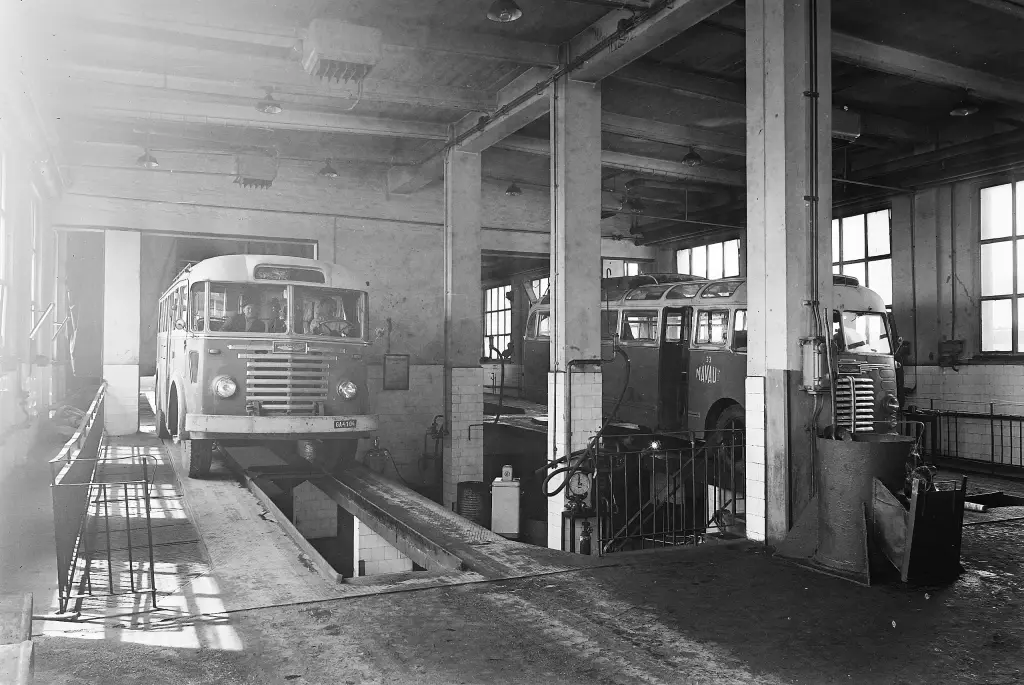
Economic policy demanded a chassis and the trambus layout, with the engine in the middle of a cab separated from the passengers. Because the technology of the day did not allow the engine to be sunk completely under the floor, it worked in the centre of the cab right beside the driver; the advantage was that the engine bay did not stick out beyond the cab, the disadvantage that it took space from the passenger compartment. The chassis were built at Csepel and driven on their own wheels by test drivers to Mátyásföld, until supply problems led Ikarus to build frames as well. The engine was the six-cylinder Csepel D-613 known from the Csepel 700, famous for its economy and reliability rather than for quiet running or power. Transmission was a mechanical clutch, an unsynchronised five-speed gearbox and a propeller shaft to the leaf-sprung rigid rear axle; steering was simple and unassisted, the drum brakes and the two accordion doors were operated by compressed air, and a warning on the rear wall told following traffic. MáVAUT used the type for a long time; its long-distance version had a swing door and a slightly longer final drive for a higher top speed. Driving was hard work because of the manual gearbox, clutch and steering, the noisy, vibrating cab that overheated in summer and smelled of engine.
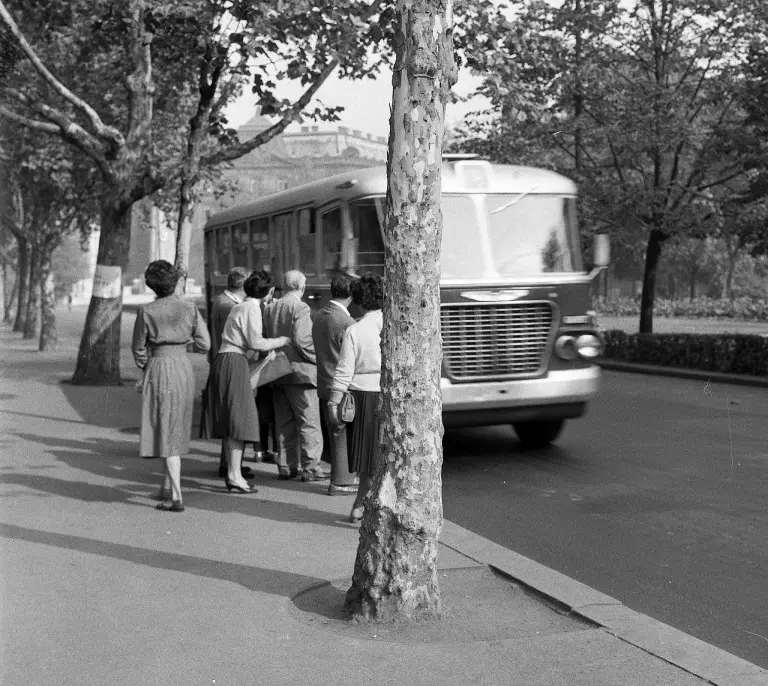
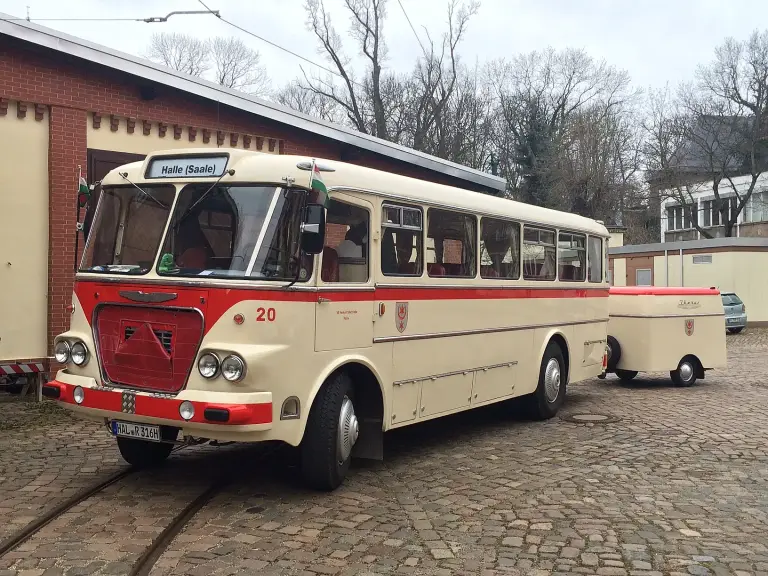
Inside there were 20 seats and 40 standing places, with the conductor’s seat beside the rear door; the layout stayed unchanged for a long time and was carried over to the successors, the 620 and 630. Although the bus was comfortable by the standards of its predecessors, the small windows and the curved roof made the interior feel cramped for standing passengers. In Budapest the first buses entered service in 1952 with 0-2-2 doors and 24 seats plus 36 standing places, and the fleet peaked at more than 500 vehicles in 1959–1960 before slowly declining; the last Ikarus 60 left Budapest service in 1966 as the Ikarus 630 took over. In the mid-1950s the FAÜ introduced trailer operation to save money on maintenance, using trailers made from old scrapped buses; the swaying made manoeuvring difficult and the combination was less successful downtown, while trailer trolleybuses ran on route 75 until the second half of the 1960s. In 1960 the first articulated Ikarus 60 was built: at the FAÜ’s Sallai main workshop on Gyömrői road, articulated buses were converted for the FAÜ until 1967, at first with the passenger compartment of a scrapped MÁVAG TR-5 and later with the rear section of a scrapped Ikarus 60. Some of these conversions went to the countryside, most stayed in Budapest, and a trolleybus version existed too; in 1967 nearly three hundred articulated vehicles were running, and the articulated version disappeared in the first half of the 1970s, last from routes 61–62, replaced by the Ikarus 180. The last trolleybus based on the Ikarus 60 was scrapped in 1976, and the type had been part of the Budapest streetscape for almost 25 years.
Design and features
- Csepel D-613: a six-cylinder diesel known for economy and reliability rather than power.
- Engine in the driver’s cab: the layout economic policy demanded, at the cost of passenger space.
- Air-operated doors and brakes: two accordion doors and drum brakes ran on compressed air.
- Spacious by the standards of 1952: 20 seats and 40 standing places, 24 and 36 in the first Budapest buses.
- Long Budapest career: more than 500 buses at the peak and service until 1966.
Ikarus 60 versions
- City bus: the standard version with 20 seats and 40 standing places.
- Long-distance version: a swing door and a longer final drive for MáVAUT.
- Ikarus 60T: the trolleybus version.
- Articulated conversions: made at the FAÜ workshop until 1967, with an articulated trolleybus variant.
- Trailer operation: buses towing trailers built from scrapped buses.
The 60 was followed by the Ikarus 620 and Ikarus 630, and its rear-engined successor was the Ikarus 55. More buses are in the Ikarus collection.
Sources
- Ikarus 60, Hungarian Wikipedia: design, production, mechanics, Budapest service, conversions