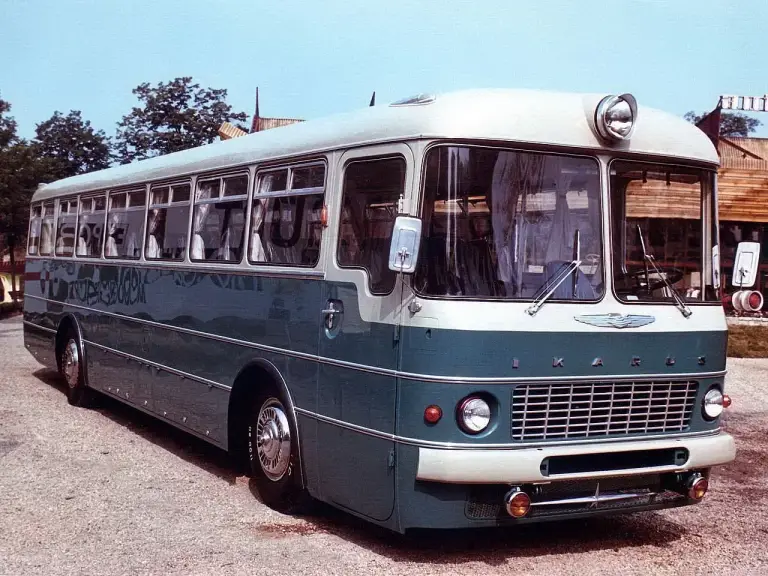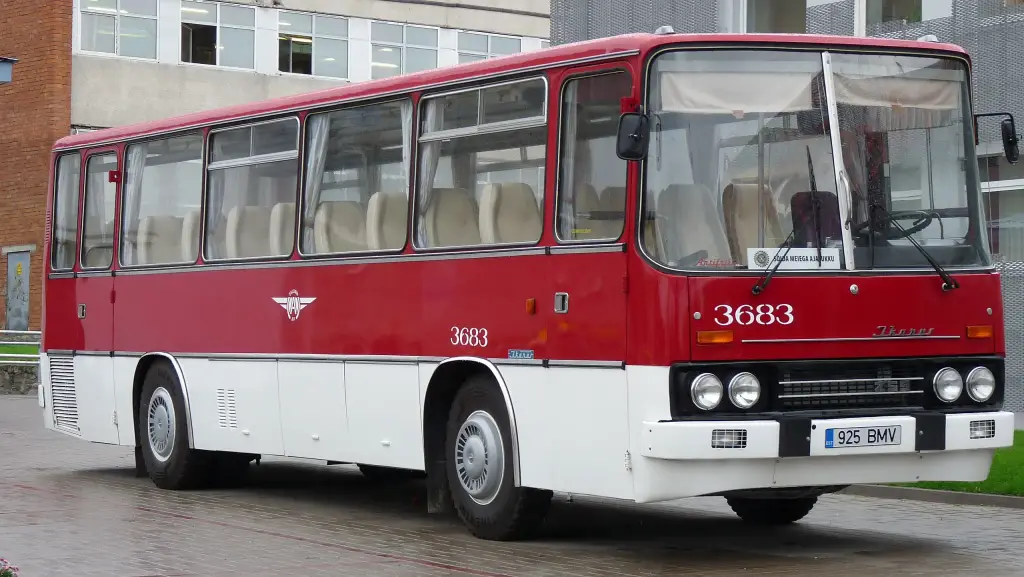
The Ikarus 255 was the cheap long-distance bus of the 200 family, developed in 1970 together with its suburban sibling, the Ikarus 266. It was built to undercut the Ikarus 250 while using as much of the older Ikarus 55 as possible, and the factory sold more than thirty thousand of the 255 and 266 pair.
Ikarus 255 at a glance
| Maker | Ikarus, Székesfehérvár |
|---|---|
| Type | long-distance coach |
| Developed | 1970, together with the suburban Ikarus 266 |
| Basis | as much of the Ikarus 55 and Ikarus 252 as possible |
| Suspension | leaf springs instead of air springs |
| Price | 800,000 forints, about 200,000 less than the Ikarus 250 |
| First series | ten buses in 1972 with Ikarus 55 seats |
| In Hungary | 2,194 in service |
| Soviet Union | 16,219 |
| East Germany | 4,971 |
| Also exported to | Korea, Iraq, Egypt, Libya, Tunisia, China, West Germany |
Based on one source: the Hungarian Wikipedia article on the Ikarus 255.
History of the Ikarus 255
Even early in the life of the 200 family the two Ikarus plants disagreed about whether a cheaper category was needed. The Budapest works argued that such buses would only damage the reputation of the series, while the country plant at Székesfehérvár insisted that operators wanted something cheaper and easier to maintain beside the 250, 260 and 280. Time proved the Székesfehérvár engineers right: more than 30,000 of the 255 and 266 pair were built.
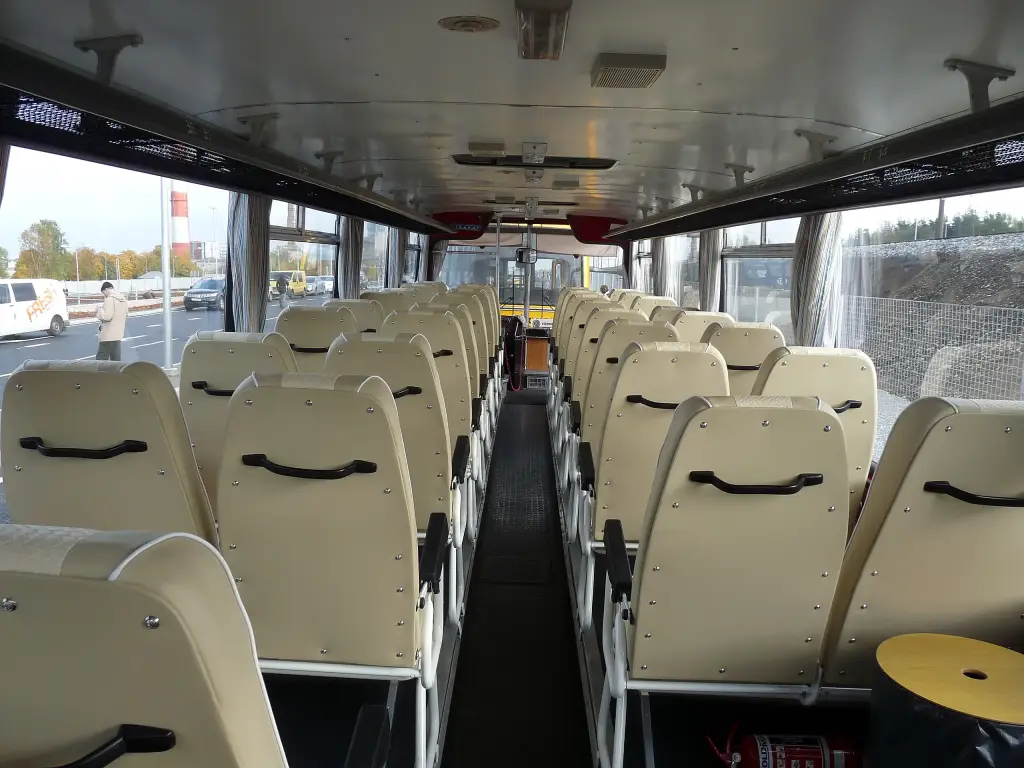
In development the factory worked as far as possible on the basis of the Ikarus 55 to keep investment down, and the Ikarus 252 was an important starting point as well. The first prototype was shown at the 1970 Budapest International Fair; it was built directly on an Ikarus 55 frame, was powered by a Csepel D-614 and had square headlamps. Compared with the 250 and 252, the type used several cost-cutting solutions: the floor was 100 mm lower, which reduced luggage space; the passenger compartment had no air ducts and no reading lamps; and leaf springs replaced air suspension. The first series of ten, in 1972, still used the seats of the Ikarus 55, and later buses received standardised parts. Special orders were still accepted: the Yemeni 255.80 had lower windows, and the 255.73 for cold climates had extra insulation. The new model cost 800,000 forints, about 200,000 less than the Ikarus 250, and became a sound design with no serious production faults.
In Hungary the 255 began replacing the outmoded Ikarus 55 in the Volán fleets between 1973 and 1977, when almost 600 were bought; a total of 2,194 entered service in the country, with industrial companies, institutions, the army and even the BKV among the buyers for special trips. After 1977 the air-sprung Ikarus 256 gradually replaced it, yet some buses ran into the early 2000s despite a planned life of eight to ten years. Abroad the main customers were the Soviet Union, with 16,219, and East Germany, with 4,971; the type also reached Korea, Iraq, Egypt, Libya, Tunisia, China and West Germany.
Design and features
- Lower price: 800,000 forints, about 200,000 below the Ikarus 250.
- Leaf springs: a cheaper and simpler suspension than the air springs of the 250.
- Simplified interior: no air ducts and no reading lamps; the floor sat 100 mm lower, cutting luggage space.
- Ikarus 55 heritage: the body was developed from the older coach to keep tooling costs down.
- Climate versions: lower windows for Yemen and extra insulation for cold countries.
Ikarus 255 versions
- Prototype (1970): Ikarus 55 frame, Csepel D-614 engine, square headlamps.
- First series (1972): ten buses with seats taken from the Ikarus 55.
- Standard series: leaf springs, simplified interior and standardised parts.
- 255.80: the Yemeni version with lower windows.
- 255.73: the cold-climate version with stronger insulation.
The 255 was developed together with the suburban Ikarus 266 and was replaced in Hungarian service by the air-sprung Ikarus 256. More buses are in the Ikarus collection.
Video: Timeless Buses Ikarus 255 (1979)
Video by Timeless Buses on YouTube.
Sources
- Ikarus 255, Hungarian Wikipedia: development, cost savings, Hungarian and export sales