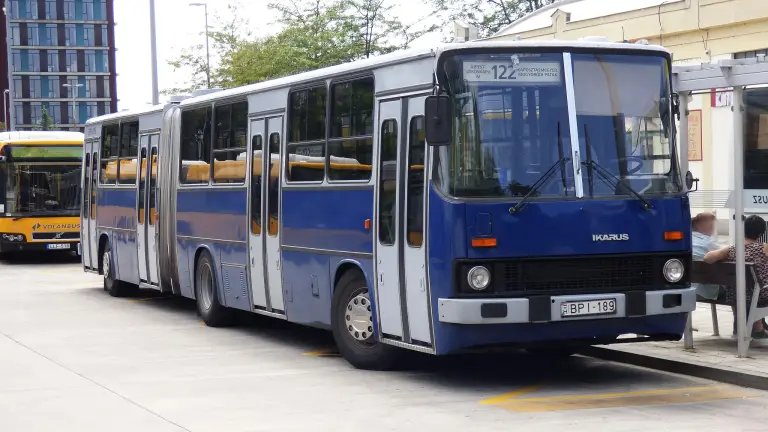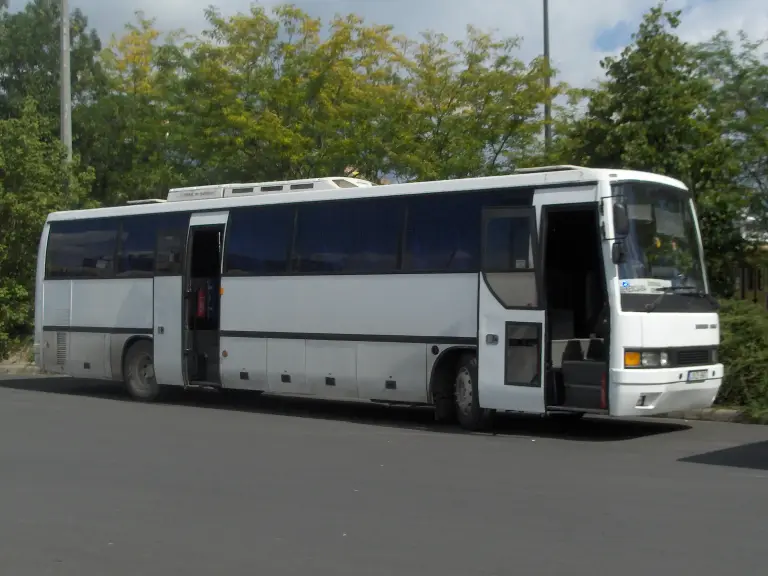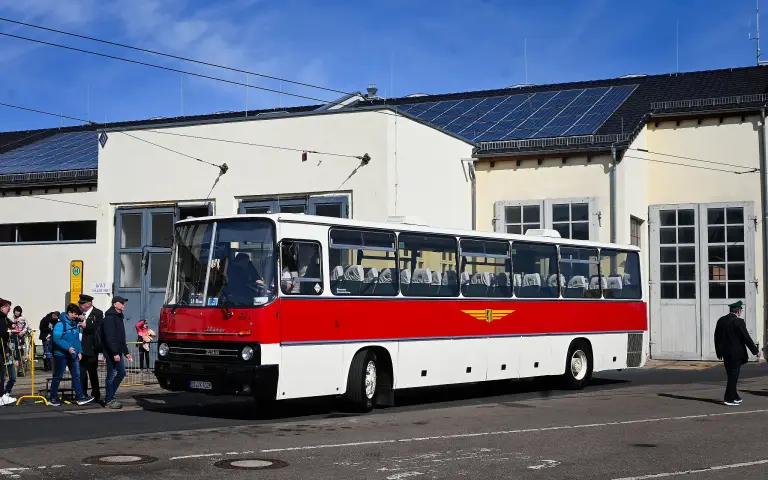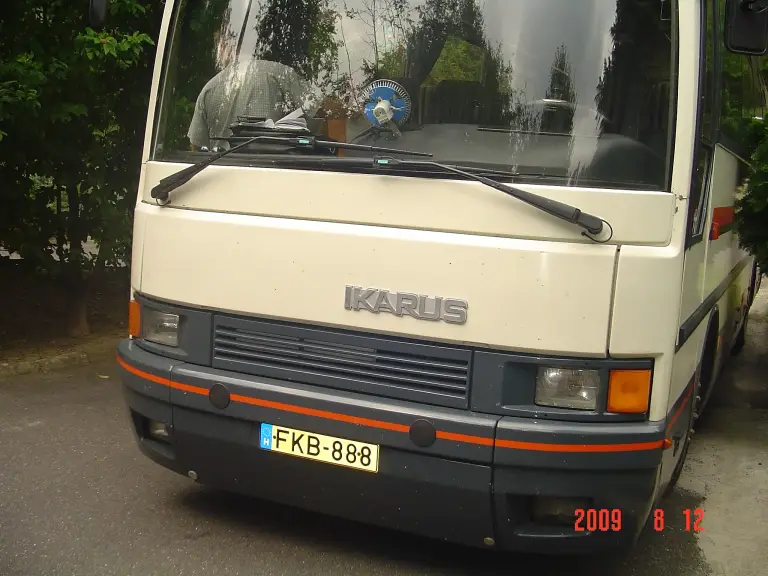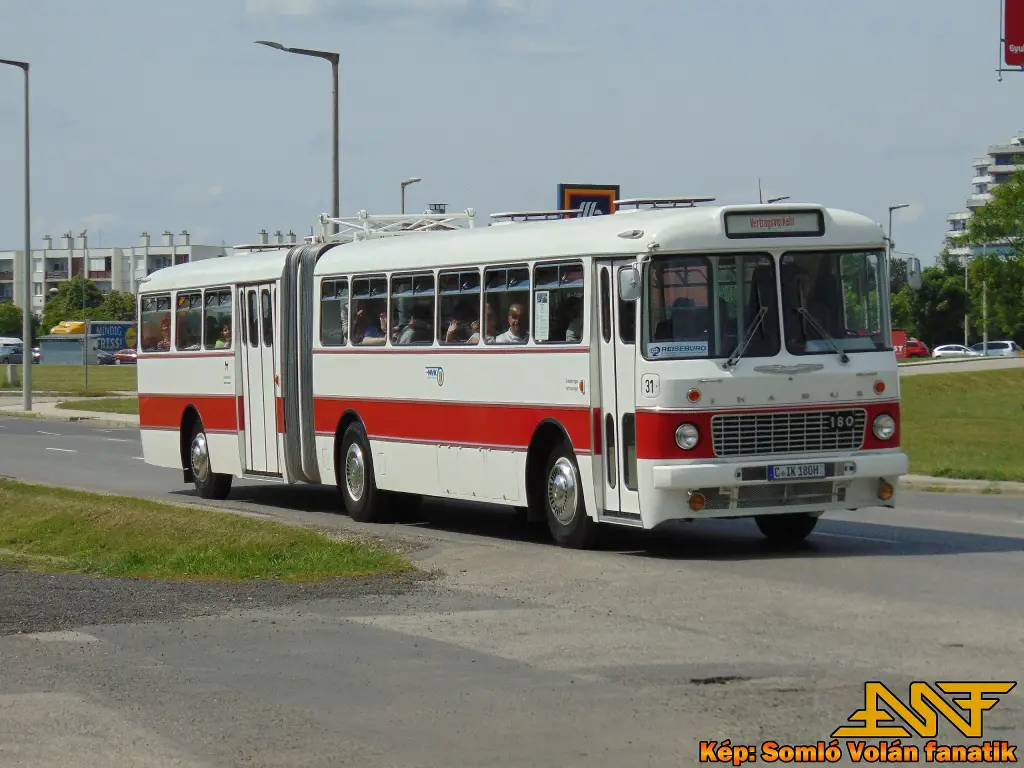
The Ikarus 180 was the first articulated bus that the Ikarus factory put into series production. Built in Budapest-Mátyásföld between 1966 and 1973, it replaced the chassis-based, front-engined buses of the previous generation and set the pattern for the articulated Ikarus 280 that followed it.
Ikarus 180 at a glance
| Maker | Ikarus Body and Vehicle Factory, Budapest-Mátyásföld |
|---|---|
| Type | articulated city and suburban bus |
| Production | 1966–1973; prototype 1961, pre-series 1963 |
| Built | 7,802, of which 520 for Hungary and 416 for Budapest |
| Layout | three axles, articulated joint, engine under the floor |
| Body | ladder frame with combined leaf and air suspension |
| Engine | Csepel in the pre-series; Rába-MAN D.2156 HM6U from 1968 |
| Capacity | 180 passengers, the source of the type number |
| Design | Finta László (styling), Schmiedt Kázmér (engineering) |
| Solo relatives | Ikarus 556 and Ikarus 557 |
| Replaced by | Ikarus 280 from 1973 |
Most of the detail comes from the Hungarian Wikipedia article; the English article is a single sentence.
History of the Ikarus 180
Development began in 1958 under the factory code K-180, with the West German Henschel HS 160 USL as the pattern. Ikarus wanted to get away from the outmoded chassis-based, front-engined trambuses such as the Ikarus 620 and 630. Instead of a chassis the designers devised a ladder frame with combined leaf and air suspension and laid the engine flat under the floor. Finta László, later responsible for the 200 series, did the styling, and Schmiedt Kázmér was the engineer.
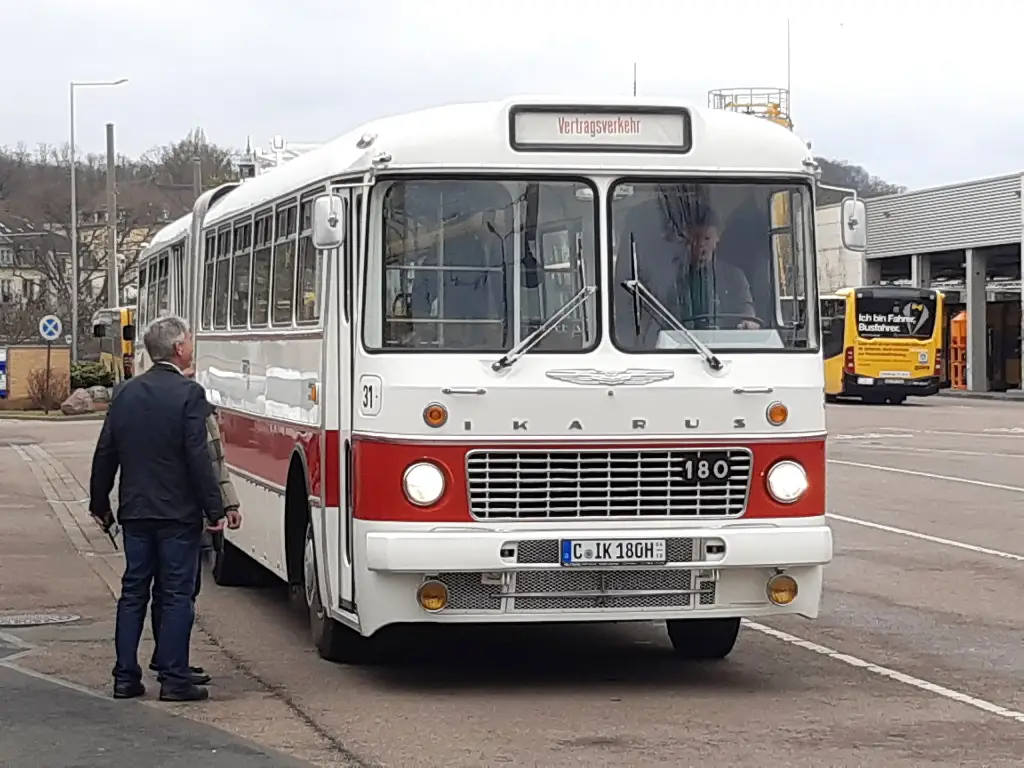
The bus was presented without an engine in 1961 at the Budapest Local Industry Fair. It could take 180 people, and that capacity gave the type its number. Above the windows the livery was white and below them red, with a black band running round the bus at the height of the headlamps and radiator grille. Power steering and the underfloor engine were novelties in a Hungarian bus. The pre-series was completed in 1963, still with a Csepel engine; in 1964 the FAÜ took ten of them as GA-85-10 to GA-85-19, first on route 5 and then on route 12.
Early troubles — burst air springs and a rear door that tore out or hung open — meant that later batches were bought in smaller numbers, but once the faults were corrected the type became dependable. In 1968 the Csepel engine gave way to the Rába-MAN D.2156 HM6U. Production stopped in 1973, at the same time as series production of the 200 family began; the Ikarus 280 took the 180’s place. The last Hungarian 180 was struck off the BKV fleet on 20 January 1980, and one bus, LZZ-330, now runs in the BKV heritage fleet.
Design and features
- Room for 180: the capacity of the prototype gave the type its number and made it the largest Ikarus of its day.
- Underfloor engine and power steering: both were novelties for the factory and freed space in the passenger compartment.
- Ladder frame with combined leaf and air suspension: a substitute for the chassis that the factory could no longer obtain.
- Articulated joint: the first Ikarus articulated bus to reach series production and the direct ancestor of the 280.
Ikarus 180 versions
- Prototype (1961): shown without an engine at the Budapest Local Industry Fair.
- Pre-series (1963): Csepel engine; ten buses entered service with the FAÜ in 1964.
- Series with Csepel engine (1966–1968): the first production buses.
- Series with Rába-MAN D.2156 HM6U (1968–1973): the most developed form of the type.
- Solo relatives: the Ikarus 556 and 557 used the same design in a single-deck, non-articulated body.
The 180 was the articulated member of a family whose solo versions were the Ikarus 556 and Ikarus 557. It was replaced by the Ikarus 280; more buses are in the Ikarus collection.
Video: Veterán Ikarus 180 – Oldtimer coach in Budapest
Video by jazzcool on YouTube.
Sources
- Ikarus 180, Hungarian Wikipedia: development, production, operators, survivors
- Ikarus 180, English Wikipedia: type and production years