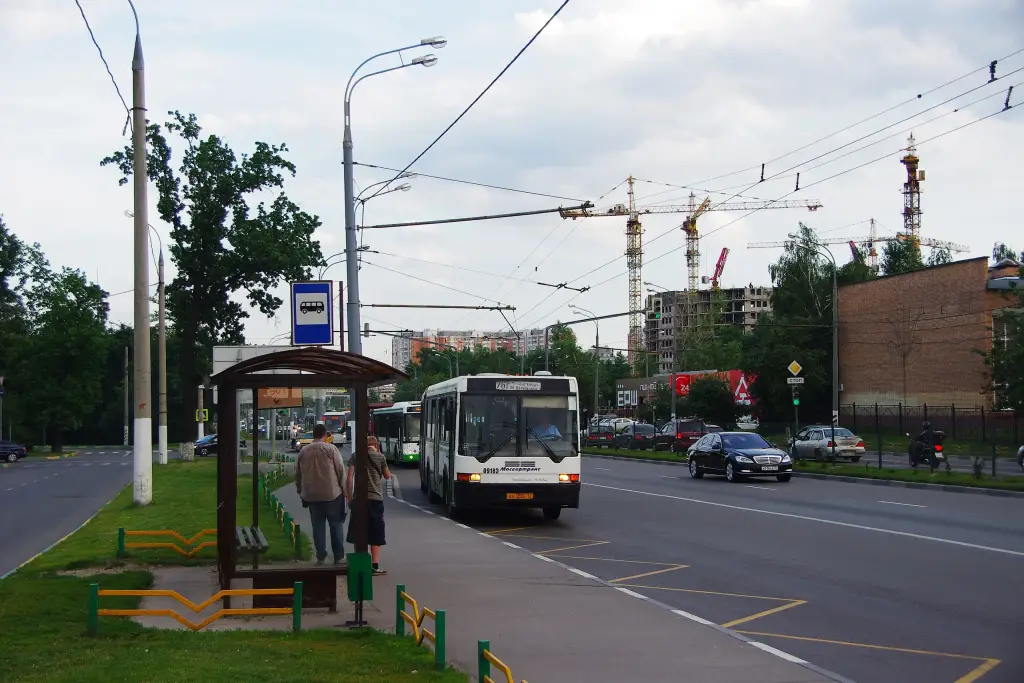
The Ikarus 435 was the articulated city and suburban bus of the 400 family and the pusher counterpart of the Ikarus 280. The first series appeared in 1985 and the second in 1994 with DAF engines; with 157 places it was the largest city bus Ikarus built in numbers, and Budapest kept it until November 2022.
Ikarus 435 at a glance
| Maker | Ikarus, Budapest and Székesfehérvár |
|---|---|
| Type | articulated city and suburban bus, pusher layout |
| First series | 1985 |
| Second series | 1994, with DAF LT 195 Euro 1 engine |
| Capacity | 157, of which 44 seated |
| Doors | three full-size doors at the front, a 660 mm half-door at the rear |
| Passenger information | FOK-Gyem on Budapest buses except BPO-583; BUSE displays on some refurbished buses |
| Hungarian fleet | 171 buses in Budapest at its peak |
| Slovakia | 109 buses of the 435.18 type in Bratislava, Košice and Prešov |
| Trolleybus version | 435T, 15 bought by the BKV in 1995 |
Based on one source: the Hungarian Wikipedia article on the Ikarus 435.
History of the Ikarus 435
The 435 was the articulated member of the 400 family and, unlike the Ikarus 280, used a pusher layout with the engine at the rear. The first series was built from 1985 and the second from 1994, by then with the DAF LT 195 Euro 1 engine. The prototype served local transport in Salgótarján until 2018. The bus has 157 places, 44 of them seats, and the factory built a great many variants with different door and seating layouts. The three doors at the front are full size, but the rear door is only a 660 mm half-door because a wider one could not be fitted.
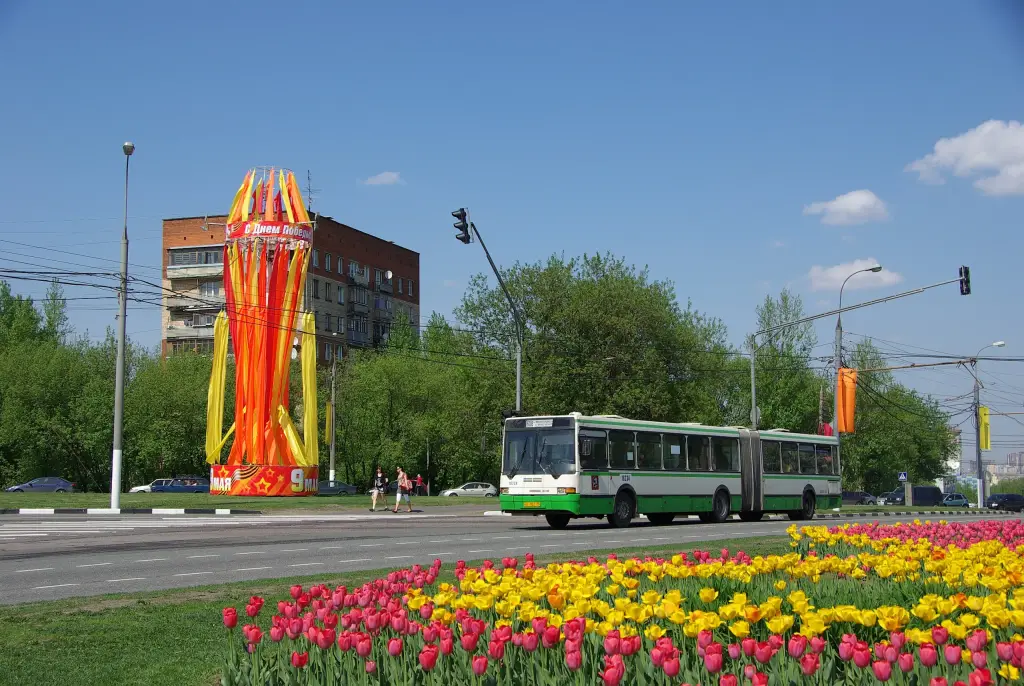
Budapest buses were fitted with the FOK-Gyem passenger information system, except the first bus, BPO-583, which arrived with conventional boards; the system showed the route number and destination on the front and side, the time, route number, next stop and connections inside, and the route number on a small rear display. Over time the displays failed and few worked properly. From 2013 the FUTÁR system brought audible announcements as well, and some buses received new BUSE displays during refurbishment.
Of the 171 buses in Budapest, none remain in BKV service, and two belong to Volánbusz; the type can still be seen on local routes in Dunaújváros and Salgótarján. A few were owned by private operators, including two at ArrivaBus, one of them a demonstrator and the other once seen in Várpalota; both were scrapped. Pécs kept its last 435s at Tüke Busz until July 2015, Miskolc had 21 until March 2016, Csongrád county said goodbye at the start of 2017, Szeged saw its last in 2016 and Szombathely in November 2021; the Volánbusz bus at Kecskemét was stopped in March 2022 and the last BKV buses left service on 12 November 2022. The Volánbusz heritage programme took in PTZ-387, formerly DUA-460, a 435.02 that had run in Nógrád county. Abroad, Slovakia had 109 buses of the 435.18 type: 96 in Bratislava, 11 in Košice and 2 in Prešov. The 435T trolleybus, with Obus-Kiepe electronics, was bought by the BKV in 1995 — fifteen vehicles, mostly on routes 80 and 82A — and a single 435TD of 1992 could run either as a diesel bus or as a trolleybus; the experiment was not repeated, the bus went to Alba Volán, was converted back to diesel and ran in Dunaújváros until 2020.
Design and features
- Pusher layout: the engine at the rear, in contrast to the puller Ikarus 280.
- 157 places: 44 seats and standing room for 113 more.
- FOK-Gyem displays: route, destination, time and connections, later supplemented by FUTÁR announcements.
- Many variants: door and seating layouts changed with the customer, from Nógrád Volán to Moscow.
- Trolleybus and dual-mode versions: the 435T and the single 435TD.
Ikarus 435 versions
- 435.02: built for Nógrád Volán and Germany; one is in the Volánbusz heritage programme.
- 435.06: built for the BKV.
- 435.10 and 435.14: for Hungary, Germany and Volánbusz.
- 435.17: for Nógrád Volán and Moscow.
- 435.18: the Slovak version, 109 buses in Bratislava, Košice and Prešov.
- 435T and 435TD: the trolleybus and the single dual-mode bus.
The 435 followed the Ikarus 280 in articulated service and belongs to the same family as the Ikarus 415. More buses are in the Ikarus collection.
Video: Ikarus 435 Very Bad Engine! BPO 542
Video by Imre Bajomi-Nagy (Ikarus95) on YouTube.
Sources
- Ikarus 435, Hungarian Wikipedia: series, capacity, equipment, operators, variants, trolleybus